Hugo Selenski: The Murders, Backyard Graves, and Prison Escape
Background
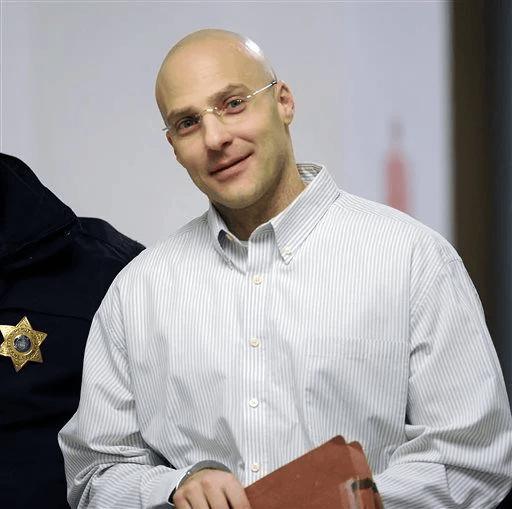
Hugo Marcus Selenski became one of Pennsylvania’s most notorious convicted murderers after investigators discovered the remains of multiple people on property where he lived in Kingston Township, Luzerne County. The case attracted widespread attention because of the number of bodies found, the brutality described by prosecutors, Selenski’s alleged efforts to obtain money from his victims, and his dramatic escape from the Luzerne County Correctional Facility.
Selenski was born on August 13, 1973, and spent much of his life in northeastern Pennsylvania. Before the murder investigation, he accumulated a criminal history that included robbery-related offenses. Authorities eventually portrayed him as a manipulative and violent offender who targeted people he believed had access to money, drugs, jewelry, or other valuables. However, an important distinction must be made: although Selenski has frequently been described as a serial killer and several sets of human remains were found on the property, he was convicted of murdering two people—Michael Jason Kerkowski and Tammy Lynn Fassett. He was tried but acquitted of murdering two other identified victims found there.
The Disappearance of Michael Kerkowski and Tammy Fassett
Michael Jason Kerkowski was a pharmacist who owned a Medicine Shoppe pharmacy in Wyoming County. He had become involved in the illegal distribution of prescription drugs and was awaiting sentencing after pleading guilty to drug charges. Prosecutors later argued that Selenski knew Kerkowski had earned and concealed a substantial amount of money through the illegal operation.
Kerkowski and his girlfriend, Tammy Lynn Fassett, disappeared during the first days of May 2002. Family members reported them missing on May 6 after they could not be contacted. Kerkowski subsequently failed to appear for a scheduled court proceeding, initially causing some people to believe that he had deliberately fled to avoid sentencing. That belief gave the killers time to conceal what had actually happened.
According to the prosecution’s case, Selenski and his associate, Paul Raymond Weakley, went to Kerkowski’s home in Hunlock Township on May 3, 2002, intending to rob him. Prosecutors alleged that Kerkowski was restrained and tortured as the attackers demanded information about money. Fassett was also bound and was killed because she was a witness to the crime.
Both victims were strangled with plastic flex cuffs. Fassett’s hands, ankles, and neck were bound, while Kerkowski’s hands were restrained and duct tape covered his eyes. The prosecution maintained that Kerkowski was forced to endure an extended ordeal before his death as Selenski and Weakley attempted to obtain money from him.
The Theft of the Kerkowski Family’s Money
The violence was followed by an elaborate attempt to exploit Kerkowski’s disappearance. Michael Kerkowski had previously entrusted approximately $60,000 to his father, who hid the money inside an unused vent in his basement. Selenski knew about the money because Kerkowski had introduced him to his father as a trusted friend.
After Kerkowski was dead, Selenski allegedly told Kerkowski’s father that Michael was still alive and needed money for his legal defense. Believing that Selenski was communicating with his missing son, the father handed over money on more than one occasion. Prosecutors described this as part of a calculated deception in which Selenski used his friendship with Kerkowski to steal from the victim’s family after participating in his murder.
Investigators also alleged that money stolen from Kerkowski was used to cover financial problems involving Selenski’s girlfriend. The combination of robbery, deception, intimidation, and murder became central to the prosecution’s argument that the killings were planned for financial gain rather than committed during a spontaneous confrontation.
The Backyard Burial Site
After the murders, Kerkowski and Fassett were transported to a residence on Mount Olivet Road in Kingston Township where Selenski was living. Their bodies were placed in a shallow grave behind the house. The burial remained undiscovered for more than a year.
The investigation changed dramatically when Paul Weakley began cooperating with authorities. Weakley supplied information that led law enforcement officers to the property. On June 5, 2003, police executed a search warrant and began excavating the yard. They soon uncovered the remains of Kerkowski and Fassett.
The search did not end with the discovery of the missing couple. Investigators found the remains of at least three additional people in or near burned burial areas on the property. Two were identified as Frank James and Adeiye Keiler. Additional human remains, including part of a jawbone, could not be conclusively identified. The quiet residential property had become a concealed graveyard containing evidence connected to several violent deaths.
Frank James and Adeiye Keiler
Frank James, who was also known as “Rudy,” and Adeiye Keiler were men from the New York area who were described during the investigation as being connected to drug activity. Prosecutors alleged that they were lured to the Kingston Township property in May 2003, robbed, and shot with a shotgun. Their bodies were then burned in a pit, broken apart, and buried or scattered on the property.
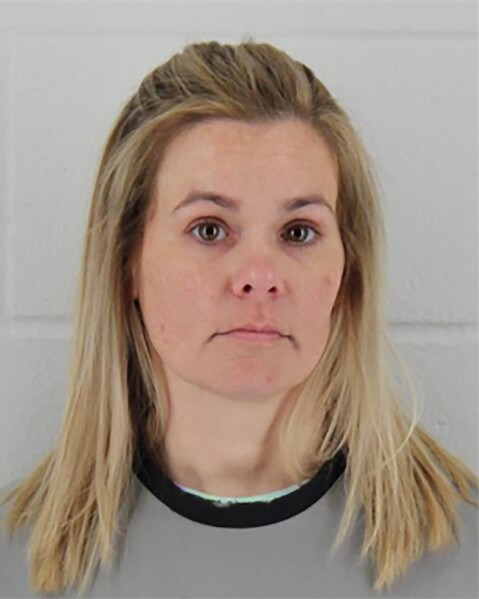
Patrick Russin admitted participating in the killings of James and Keiler. He pleaded guilty to two counts of third-degree murder, along with robbery and abuse-of-corpse offenses. Russin claimed that Selenski was also involved, and prosecutors charged Selenski with murdering both men.
Selenski went to trial for the deaths of James and Keiler in 2006. The jury acquitted him of their murders. He was nevertheless convicted of abusing their corpses because evidence showed that he had participated in burning, breaking apart, or concealing their remains. The acquittals mean that Selenski cannot accurately be described as legally responsible for murdering James and Keiler, despite the allegations presented by prosecutors and Russin’s account of the crimes.
Victims and Human Remains Found on the Property
- Michael Jason Kerkowski — May 3, 2002 — Hunlock Township and Kingston Township, Pennsylvania: Kerkowski, a 37-year-old pharmacist, was restrained, robbed, tortured, and strangled in his Hunlock Township home. His body was transported to the Mount Olivet Road property in Kingston Township and buried in a shallow grave. Selenski was convicted of first-degree murder in his death.
- Tammy Lynn Fassett — May 3, 2002 — Hunlock Township and Kingston Township, Pennsylvania: Fassett, Kerkowski’s 36-year-old girlfriend, was bound at her hands, ankles, and neck before being strangled. Prosecutors said she was killed because she witnessed the attack on Kerkowski. Her body was buried beside his in Selenski’s yard. Selenski was convicted of first-degree murder in her death.
- Frank “Rudy” James — May 2003, exact day not conclusively established in the publicly available court record — Kingston Township, Pennsylvania: James, age 29, was shot and his body was burned and dismembered at the Mount Olivet Road property. Patrick Russin pleaded guilty to third-degree murder in James’s death. Selenski was tried for the killing but was acquitted of murder and convicted of abusing James’s corpse.
- Adeiye Keiler — May 2003, exact day not conclusively established in the publicly available court record — Kingston Township, Pennsylvania: Keiler was shot during the same general episode as James. His remains were burned and concealed on the property. Russin pleaded guilty to third-degree murder. Selenski was acquitted of murdering Keiler but was convicted of abusing his corpse.
- Unidentified individual — Date and location of death unknown: Investigators recovered additional human remains, including a portion of a jawbone, from a burn area on the Kingston Township property. The remains have not been conclusively identified, and no verified date of death has been publicly established.
Selenski’s Escape from Jail
Selenski’s case became even more sensational on October 10, 2003, when he escaped from the Luzerne County Correctional Facility in Wilkes-Barre. Selenski and fellow inmate Scott Bolton removed or damaged a window and used a rope made from bedsheets to descend from an upper floor of the jail.
Bolton was seriously injured during the escape, but Selenski successfully fled the grounds. A large manhunt followed as police searched northeastern Pennsylvania. Selenski remained free for approximately three days before surrendering on October 13. His escape strengthened his public image as a dangerous and unpredictable prisoner and added another major criminal case to the charges already pending against him.
Selenski was later convicted of escape-related offenses. The incident also exposed serious security failures at the correctional facility and became one of the most widely remembered parts of the case.
Additional Robbery and Assault Conviction
Selenski was also prosecuted for the January 27, 2003, home invasion of jewelry-store owner Samuel Goosay in Monroe County. Two masked attackers entered Goosay’s home, restrained him with plastic flex cuffs, assaulted him, and stole money and valuables.
Evidence found during the investigation of Selenski’s property connected him to the Goosay attack. Police recovered flex cuffs, duct tape, masks, restraints, a BB pistol, and other items. Investigators concluded that the flex cuffs used against Goosay and those found in Selenski’s possession had come from a common source.
Selenski was convicted of charges connected to the robbery and assault. The Goosay case was important because it demonstrated a pattern involving masked intruders, restraints, threats, and financially motivated violence similar to elements described in the Kerkowski and Fassett murder prosecution.
The Murder Trial for Kerkowski and Fassett
Years of legal disputes, appeals, changes in attorneys, and pretrial proceedings delayed Selenski’s trial for the murders of Kerkowski and Fassett. The case finally went before a Luzerne County jury in January 2015.
Paul Weakley became the prosecution’s central witness. He testified that he and Selenski participated in the robbery and killings and later buried the bodies. The defense attacked Weakley’s credibility, emphasizing his criminal history, his involvement in the crimes, and the benefits he hoped to receive through cooperation with prosecutors.
Physical evidence supported important parts of Weakley’s account. The victims had been found bound and buried on the property where Selenski lived. Investigators also recovered restraints, duct tape, masks, handcuffs, and other items from locations connected to Selenski. Prosecutors presented evidence concerning the money taken from Kerkowski and the false statements made to Kerkowski’s father after the couple disappeared.
On February 11, 2015, the jury found Selenski guilty of two counts of first-degree murder, robbery, theft, and related conspiracy offenses. The verdict established his legal responsibility for intentionally killing Kerkowski and Fassett during a financially motivated robbery.
Sentencing
Prosecutors sought the death penalty, arguing that the murders were calculated, cruel, and committed during the course of another felony. Selenski’s defense asked the jury to spare his life. After hearing evidence during the penalty phase, jurors chose life imprisonment rather than execution.
On March 27, 2015, Selenski was sentenced to two consecutive terms of life imprisonment without the possibility of parole for the murders. The court added a consecutive sentence of 56 to 120 years for the accompanying robbery, conspiracy, theft, and related offenses. The structure of the sentence ensured that Selenski would remain imprisoned for the rest of his life even if one portion of the judgment were later changed.
Classification as a Serial Killer
Selenski is frequently called a serial killer because multiple bodies were discovered on his property and because prosecutors accused him of participating in more than one separate episode of murder. His confirmed legal record, however, requires careful explanation. He stands convicted of two murders committed during the same criminal event: the May 3, 2002, killings of Michael Kerkowski and Tammy Fassett.
He was acquitted of murdering Frank James and Adeiye Keiler, although he was convicted of abusing their corpses. Patrick Russin accepted criminal responsibility for participating in those two killings. The unidentified remains found on the property have never been publicly linked to a murder conviction against Selenski.
For that reason, descriptions of Selenski as a serial killer are based partly on the broader allegations, the multiple burial sites, and suspicions surrounding the property rather than solely on the two murder convictions. The discovery of five sets of remains created an enduring belief that the full extent of the violence associated with Selenski and the Mount Olivet Road residence may never be completely known.
Legacy of the Case
The Hugo Selenski investigation remains one of the most disturbing criminal cases in northeastern Pennsylvania. It combined the disappearance of a pharmacist and his girlfriend, financial manipulation of a grieving family, multiple bodies hidden behind a residence, burned and fragmented human remains, conflicting testimony from criminal associates, and an escape from a county jail.
At the center of the case were Michael Kerkowski and Tammy Fassett, whose disappearance was initially mistaken for an attempt by Kerkowski to avoid sentencing. Their discovery revealed that they had instead been restrained, killed, and secretly buried. The investigation then uncovered the remains of Frank James, Adeiye Keiler, and an unidentified person, transforming a missing-person inquiry into a much larger examination of violence and concealed deaths.
Selenski continues to serve consecutive life sentences without parole. Despite appeals and challenges to his convictions, the verdicts for the murders of Kerkowski and Fassett have remained in place. Questions continue to surround the unidentified remains and the precise circumstances of every death connected to the property, leaving a portion of the Mount Olivet Road mystery unresolved.