Gary Don Franklin: A Detailed Account of His Crimes
Background
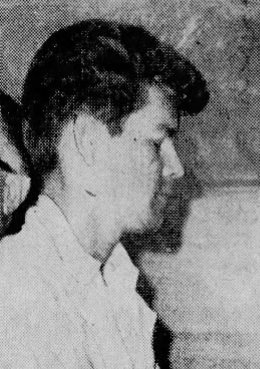
Gary Don Franklin was born on May 28, 1946, in Crossett, Arkansas. He is identified in modern serial-killer databases as an American killer whose known or attributed crimes stretched from California to Alaska and Louisiana between 1967 and 1970. Six victims are commonly attributed to him. The surviving record is unusually fragmented: some of Franklin's crimes are preserved mainly in later victim databases and genealogical records, while the strongest official documentation concerns the Louisiana murder for which he was convicted. Franklin was eventually sentenced to life imprisonment and remained associated with a series of shootings that included an elderly married couple, a young mother and her two small children, and another man in Louisiana.
The 1967 California Double Murder
The earliest killings commonly attributed to Franklin occurred on January 6, 1967. The victims were Floyd Omar Harvey and his wife, Reba Elizabeth Harvey. Floyd was 61 years old, while surviving sources differ slightly over whether Reba was 59 or 60. Records place Floyd Harvey's death in Shasta County, California, and later serial-killer compilations list the husband and wife together as Franklin's first known victims.
Compared with Franklin's later crimes, remarkably little reliable narrative information about the Harvey killings is readily available. Modern case databases identify both deaths as homicides and associate them with Franklin's multi-state series, but the publicly accessible accounts do not provide a well-preserved description of the exact crime scene, motive, sequence of events, or investigative evidence. Because of those gaps, claims about the precise manner in which the Harveys were attacked should be treated cautiously. What can be established is that both died on the same date and that their deaths later became part of the six-victim series attributed to Franklin.
The Gregoroff Family Murders in Alaska
Two years later, Franklin was linked to a far more devastating multiple homicide in Kodiak, Alaska. On January 21, 1969, 22-year-old Kathleen, or "Kathy," Gregoroff and two very young children were killed. The children were Melissa Gregoroff, age 3, and an infant whose name appears as Genai or Genei Gregoroff in different records. She was approximately 10 months old.
Genealogical information identifies Melissa as the daughter of Kathleen Adel Patsel and Tom Gregoroff and lists Genei as Melissa's sister. This is important because some later summaries mistakenly describe the three Alaska victims simply as siblings. The available family records instead indicate that Kathleen was the mother and that Melissa and the infant were her daughters.
The three deaths occurred in Kodiak on January 21, 1969. Serial-killer and homicide databases describe the deaths as shootings and attribute all three to Franklin. The killing of a young mother and two children represents the largest single group of victims connected to him. As with the Harvey case, however, many details that would normally appear in a complete homicide history are difficult to reconstruct from surviving public material. There is little dependable information available about Franklin's relationship to the family, what brought him to the location, or what immediately preceded the shootings. The dates and identities, however, are consistently preserved, and Melissa's death date and place are independently reflected in genealogical records.
The Louisiana Murder and Franklin's Arrest
Franklin's criminal activity came to an end in Louisiana in January 1970. Modern serial-killer listings identify his sixth victim as Robert T. Dunn, a 36-year-old man killed in Louisiana during January 1970. Unlike the other five victims, the exact day and precise location of Dunn's death are not preserved consistently across accessible modern sources, so it is safer to identify his verified death period simply as January 1970 rather than assign him an uncertain specific day.
A Louisiana Supreme Court decision provides much stronger documentation concerning the murder prosecution that led to Franklin's conviction. The indictment in that case alleged a murder on January 14, 1970, but the coroner's inquest established that the victim actually died on January 15. Franklin's lawyers later raised that difference during the trial, but the court ruled that the one-day discrepancy did not invalidate the murder charge.
Franklin was arrested shortly afterward. His own trial testimony indicated that he had been taken into custody while leaving the area of an attempted bank robbery. Police recovered objects from him that prosecutors said connected him with the earlier murder. Franklin then made two confessions on January 16. The first was given to a police sergeant early that morning. A second statement was given to a police captain later that evening, during an interrogation lasting approximately from 9:00 p.m. until 10:55 p.m. The Louisiana courts ultimately accepted police testimony that these statements had been made voluntarily after Franklin was informed of his constitutional rights.
Confessions to Other Murders
The investigation soon expanded beyond Louisiana. Franklin later claimed that he had been subjected to psychological pressure after speaking with a Baptist minister. Following that religious counseling, he confessed to several murders in Alaska and California. Those additional confessions are especially significant because Franklin was subsequently associated with the Harvey killings in California and the Gregoroff family murders in Alaska.
However, the distinction between an attributed crime and a crime proved in court is important. The Louisiana Supreme Court specifically noted that the later Alaska and California confessions were not introduced as evidence during Franklin's Louisiana murder trial. The court therefore did not have to decide whether those later confessions were voluntary or whether every crime Franklin described in them had been independently proved. Modern sources consequently describe Franklin as a six-victim serial killer, while the most readily available official court record directly documents his conviction for the Louisiana murder.
Victims Attributed to Gary Don Franklin
- Floyd Omar Harvey — Age 61. Died January 6, 1967, in Shasta County, California. He and his wife Reba are listed as Franklin's earliest known victims.
- Reba Elizabeth Harvey — Died January 6, 1967. She was killed on the same date as her husband, Floyd. Modern records associate her death with the California portion of Franklin's series, although surviving sources disagree slightly about her age and are less consistent about the precise location than they are for Floyd.
- Kathleen "Kathy" Gregoroff — Age 22. Died January 21, 1969, in Kodiak, Alaska. She is identified as the mother of Melissa and the infant Genei/Genai Gregoroff and is listed as a shooting victim.
- Melissa Gregoroff — Age 3. Died January 21, 1969, in Kodiak, Alaska. Genealogical records independently confirm her death date and place. She was killed during the same incident as her mother and infant sister.
- Genai or Genei Gregoroff — Approximately 10 months old. Died January 21, 1969, in Kodiak, Alaska. Different records use slightly different spellings of her first name. She was the youngest known victim attributed to Franklin.
- Robert T. Dunn — Age 36 in modern victim listings. Died in Louisiana in January 1970. The surviving online sources do not consistently establish an exact day or parish for Dunn, so a more precise death date should not be stated as certain.
Conviction and Death Sentence
Franklin was convicted of murder in Louisiana and initially sentenced to death. His case reached the Louisiana Supreme Court, which considered several arguments raised by the defense, including challenges to evidence recovered during his arrest and to the admissibility of his confessions. The court rejected the challenges to his murder conviction.
The death sentence, however, could not remain in force. In 1972, the United States Supreme Court's decision in Furman v. Georgia invalidated the manner in which many states, including Louisiana, were then imposing capital punishment. On October 26, 1972, the Louisiana Supreme Court affirmed Franklin's murder conviction but annulled his death sentence. The case was returned to the trial court with instructions that Franklin be sentenced to life imprisonment instead.
Later Years and Death
Franklin lived for more than two decades after his death sentence was replaced with life imprisonment. He died on April 26, 1995. Because his birthday was May 28, 1946, he was 48 years old at the time of his death. Genealogical records place his burial at Methodist Protestant Cemetery in Lettsworth, Pointe Coupee Parish, Louisiana.
Legacy and Limits of the Record
Gary Don Franklin is a comparatively obscure figure in American serial-killer history, and the surviving information about him illustrates the difficulty of reconstructing crimes committed more than half a century ago. The Louisiana prosecution is supported by a published appellate decision containing specific information about the murder charge, the January 1970 arrest, Franklin's confessions, his trial, and his sentence. The California and Alaska murders are preserved largely through later databases, family records, and references to Franklin's additional confessions.
For that reason, the most responsible account separates facts that are firmly documented from details that remain uncertain. Six victims are commonly attributed to Franklin, and verified records establish the principal death dates listed above. The evidence also establishes that Franklin confessed to multiple killings in Alaska and California after his Louisiana arrest. What has not survived as clearly is the complete investigative history behind each individual attribution. Even with those limitations, the known record describes a violent multi-state sequence stretching from the January 1967 deaths of Floyd and Reba Harvey through the 1969 killing of a mother and her two young daughters in Kodiak and finally to Franklin's capture and murder conviction in Louisiana in 1970.