Lester Ford: The Queens Strangler
Overview
In the span of seven terrifying months in 1991, a series of brutal attacks against women instilled fear in the borough of Queens, New York. The perpetrator, Lester Ford, a mail clerk with a criminal past, murdered three women and committed at least two other violent rapes. His crimes were marked by a chilling blend of opportunism and violence, targeting women in the familiar surroundings of their own neighborhoods. The spree came to an end not through a complex forensic breakthrough, but by the courageous actions of a survivor who spotted him on the street. Ford’s subsequent confession brought a swift, if somber, conclusion to a case that left a permanent scar on the community and on the families of the women he killed.
Early Life and Criminal History
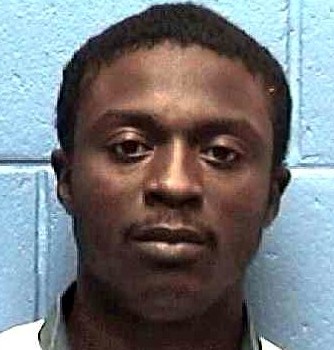
Lester Ford was born on February 11, 1963, in the St. Albans neighborhood of Queens, New York, one of six siblings. His life was marked by early encounters with the criminal justice system. In 1979, at the age of 16, he was arrested following a drug deal that went wrong, resulting in a five-year prison sentence. After his release in 1985, his freedom was short-lived. A year later, in 1986, he was arrested again, this time for attempting to sell drugs to an undercover police officer. This second conviction sent him back to prison.
Ford was paroled in September 1989. He returned to Queens, moving into his mother's home in St. Albans, which he shared with his stepfather and several siblings. He found a job as a mail clerk for the telephone company NYNEX in Long Island. To neighbors, he was a quiet presence, earning the nickname "Justice," a moniker that would later stand in stark and bitter contrast to the crimes he committed. By the beginning of 1991, this seemingly unremarkable man was leading a dark double life.
The Murders
The series of killings began on the cold night of January 6, 1991. Sheilda Dixon, a 36-year-old mother of two, was walking home in the Hollis neighborhood after attending a wedding. Ford accosted her, throwing her to the ground. He used tape to bind her ankles and seal her mouth shut before strangling her to death. He then carried her body to the nearby Peters Park baseball field and concealed it under a set of bleachers. For nearly three weeks, Dixon’s fate remained a mystery until her body was discovered on January 24. Without identification on her person, it was her husband, Eugene, who would later provide a positive identification.
A month later, on February 23, Ford struck again. His second victim was Tracy Covington, a 28-year-old former social worker. He attacked her outside her home in southeastern Queens, employing the same terrifying method he had with his first victim. He bound her ankles and mouth with tape and strangled her. Ford then dumped her body behind a convenience store on Linden Boulevard. When Covington's body was found, detectives quickly noted the similarities to the Dixon case, realizing that a serial killer was preying on the women of Queens. The discovery prompted police to issue a public warning, urging women in the area to be vigilant.
For several months, the killer seemed to lay dormant. But in July, the violence escalated. On the night of July 4, Ford raped a 16-year-old girl in St. Albans, though he spared her life. Twenty days later, on July 24, he committed his most shocking crime. He targeted 20-year-old Sabrina Bost, who was eight months pregnant, as she walked to a bus stop. Ford raped her at gunpoint and then shot her in the face before fleeing the scene. First responders rushed Bost to Jamaica Medical Center. Doctors, in a desperate attempt to save her and her unborn child, placed her on life support and performed an open-heart massage. Tragically, Sabrina Bost never regained consciousness and was declared dead. In a small miracle amid the horror, her baby boy was successfully delivered approximately six hours after she arrived at the hospital.
The Victims
- Sheilda Dixon, 36 — Murdered on January 6, 1991, in Hollis, Queens. A mother of two, she was on her way home from a wedding when she was attacked. Her husband and children were devastated by her death, and the family later moved to Virginia to escape the painful memories.
- Tracy Covington, 28 — Murdered on February 23, 1991, in southeastern Queens. She was a former social worker who was attacked just outside her own home. The similarity of her murder to Sheilda Dixon's helped police link the cases.
- Sabrina Bost, 20 — Murdered on July 24, 1991, in St. Albans, Queens. She was eight months pregnant when Ford raped and shot her. Though she succumbed to her injuries, doctors were miraculously able to deliver her baby boy.
Investigation and Capture
The discovery of Tracy Covington’s body and its connection to the murder of Sheilda Dixon confirmed the New York City Police Department's fears: a serial killer was at large in Queens. The department issued public warnings, and a palpable sense of fear gripped the community as the months went on without an arrest. The brazen attack on Sabrina Bost in late July only heightened the urgency of the investigation.
The day after murdering Bost, Ford attacked again, raping a 29-year-old woman but, for reasons unknown, leaving her alive. This attack would prove to be his undoing. The survivor provided police with a detailed description of her assailant. On July 26, 1991, just two days after Sabrina Bost's murder, the victim was riding with police in an unmarked surveillance van, scanning the streets of southeastern Queens. In a remarkable turn of events, she spotted Ford walking down the street and positively identified him as the man who had attacked her.
Police arrested him on the spot. Ford quickly became the prime suspect in the string of murders and rapes. A search of his mother's home, where he lived, uncovered a .25 caliber handgun. Ballistics testing confirmed it was the same weapon used to shoot Sabrina Bost.
With physical evidence linking him to at least one of the murders, Ford was brought in for questioning. He was interrogated by renowned NYPD detective Bill Clark, who was famous for his role in securing the confession of "Son of Sam" killer David Berkowitz. Faced with the evidence against him and Clark's expert interrogation, Lester Ford confessed to the three murders and the rapes. He reportedly told the detective that he was a "sexually determined young man." Following the confession, the NYPD held a press conference to announce that the Queens serial killer was in custody.
Trial and Sentence
After his arrest and confession, the legal proceedings against Lester Ford moved swiftly. However, the case was not without further drama. In an act of misguided loyalty and intimidation, Ford's girlfriend, Lisa Cruell, and her friend, Cynthia Walker, located one of Ford's surviving rape victims. They confronted and physically assaulted her, threatening to kill her if she testified against Ford. Both women were promptly arrested and charged with assault and witness tampering.
In March 1992, rather than face a jury trial, Lester Ford accepted a plea agreement. He pleaded guilty to three counts of second-degree murder and one count of first-degree rape. In exchange for his plea, he was sentenced to a term of 40 years to life in prison. This sentence ensured he would likely spend the rest of his natural life behind bars. He was transferred to the Elmira Correctional Facility, a maximum-security state prison in upstate New York, to begin serving his sentence.
Aftermath and Legacy
The arrest and conviction of Lester Ford brought an end to the fear that had plagued the women of Queens in 1991. His crimes, however, left an indelible mark on the community and, most profoundly, on the families of his victims. The randomness and brutality of his attacks highlighted the vulnerability of ordinary people in their daily lives.
The case is a stark example of a serial offender who did not fit a sensationalized profile but was instead a quiet neighbor with a hidden, violent compulsion. The capture, reliant on the bravery and sharp eye of a survivor, underscored the critical role that victims and witnesses play in bringing criminals to justice. While Lester Ford's name has largely faded from the headlines, the memory of his victims—Sheilda Dixon, Tracy Covington, and Sabrina Bost—and the terror of his seven-month reign remain a dark chapter in the history of New York City crime.