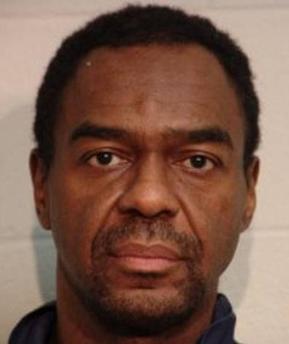
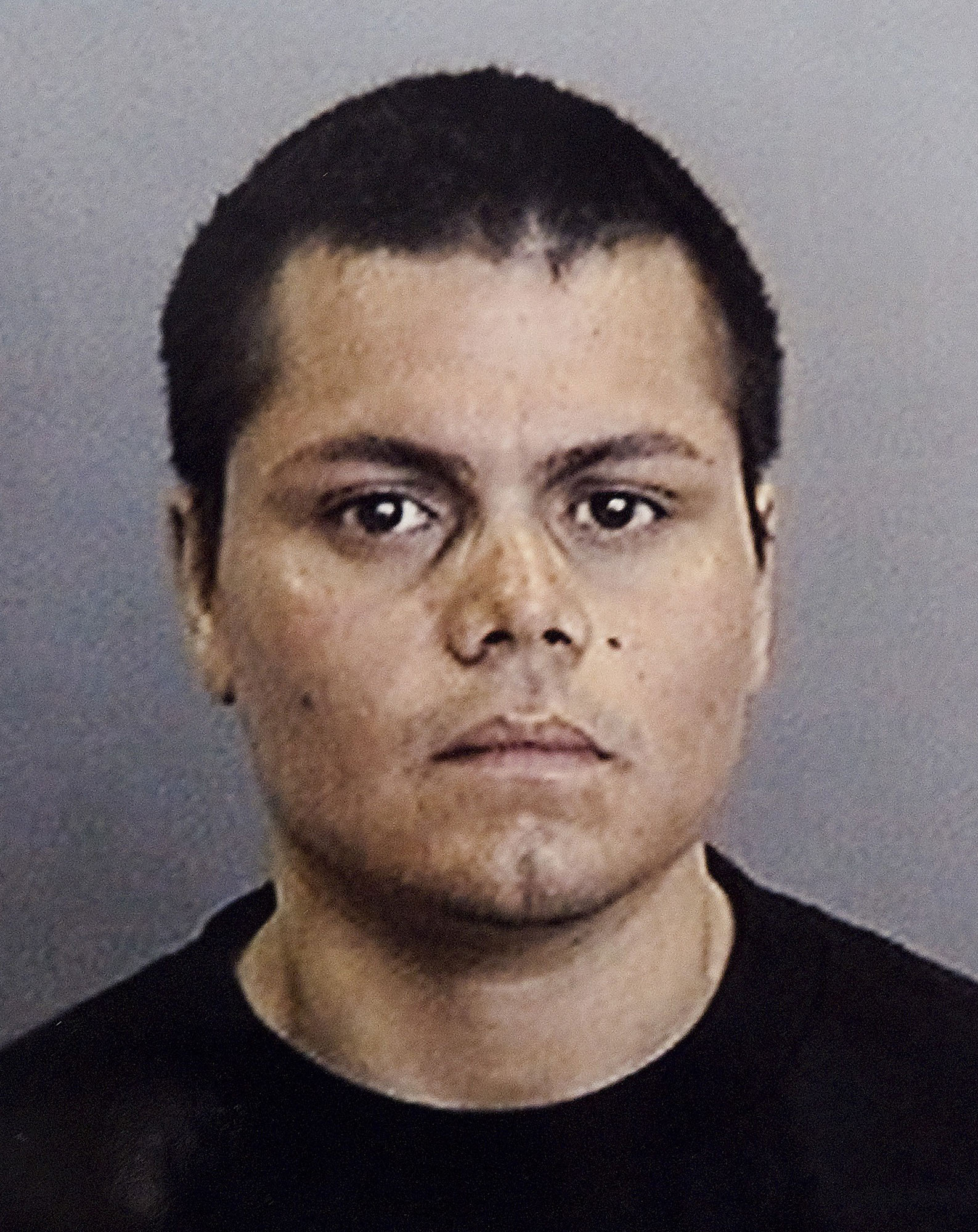
Clarence Hill: The Duck Island Killer
Background
Clarence Hill was an American serial killer associated with a series of shootings and assaults near Trenton, New Jersey, between 1938 and 1942. He became known as the “Duck Island Killer” because several of the crimes occurred on Duck Island, an isolated industrial area along the Delaware River that was commonly used as a lovers’ lane. Newspapers also called the unknown attacker the “Mad Killer of Duck Island” and the “Moon-Mad Murderer.”
Hill generally targeted couples sitting in parked automobiles late at night. The attacker carried a 12-gauge shotgun, approached without warning, and demanded money or opened fire at close range. In several incidents, victims who tried to escape were chased and beaten. Six people were killed in three double murders, while several other people survived similar attacks.
The First Double Murder
On the night of November 8, 1938, Vincenzo “Jim” Tonzillo and Mary Myatovich were sitting in a parked automobile on Duck Island. A man carrying a shotgun approached the vehicle and demanded money. When Tonzillo resisted, the attacker fired at him at close range, killing him inside or beside the automobile.
Myatovich ran from the vehicle but was shot in the lower part of her body. The gunman pursued her, sexually assaulted her, and left her seriously wounded. People who heard her screams contacted the police. She was taken to St. Francis Hospital in Trenton and was able to describe portions of the attack before dying from her injuries on November 10, 1938.
The Second Double Murder
On the night of September 30, 1939, Frank J. Kasper and Katherine Werner drove to the Duck Island area. Kasper, a mechanic, was found inside a parked automobile after being struck by shotgun blasts to the head and neck. Werner attempted to flee from the attacker despite having an artificial leg. Her body was discovered a short distance from the vehicle. Her skull had been crushed, indicating that she had been beaten to death after leaving the car.
The bodies were discovered on October 1, 1939, when a junk collector noticed Werner’s artificial leg protruding from debris. Police initially investigated the victims’ spouses because Kasper and Werner were reportedly engaged in an affair, but both spouses had strong alibis. The manner of the attack, the isolated location, and the use of a shotgun connected the killings to the earlier Duck Island murders.
The Cypress Lane Murders
On November 16, 1940, Ludovicum J. Kovacs and Caroline Moriconi were found dead in a parked automobile in a wooded area near Cypress Lane in Hamilton Township, New Jersey. Although the location was several miles from Duck Island, it was another secluded place where couples parked for privacy.
Both victims had been killed by close-range shotgun fire. The attack closely resembled the earlier murders: two people were surprised inside a stationary vehicle, the killer used a shotgun, and the scene offered darkness and isolation. These were the final deaths attributed to the Duck Island Killer, although related nonfatal attacks continued afterward.
Known Murder Victims
- Vincenzo “Jim” Tonzillo — Killed on November 8, 1938, on Duck Island near Trenton, New Jersey. He was approximately 20 years old and was shot at close range while sitting in a parked automobile.
- Mary Myatovich — Attacked on November 8, 1938, on Duck Island near Trenton, New Jersey. She was approximately 15 or 16 years old. She was shot, pursued, and sexually assaulted before dying at St. Francis Hospital in Trenton on November 10, 1938.
- Frank J. Kasper — Killed on September 30, 1939, on Duck Island near Trenton, New Jersey. The 28-year-old mechanic was shot in the head and neck. His body was discovered inside an automobile on October 1, 1939.
- Katherine Werner — Killed on September 30, 1939, on Duck Island near Trenton, New Jersey. She was approximately 36 years old and was beaten to death after apparently attempting to escape. Her body was discovered on October 1, 1939.
- Ludovicum J. Kovacs — Killed on November 16, 1940, near Cypress Lane in Hamilton Township, New Jersey. He was approximately 35 years old and died from close-range shotgun wounds inside a parked automobile.
- Caroline Moriconi — Killed on November 16, 1940, near Cypress Lane in Hamilton Township, New Jersey. She was approximately 27 years old and was found with Kovacs inside the automobile. Her name has also appeared in records as Carolina Maroconi.
Surviving Victims and Later Attacks
After the Duck Island murders received widespread publicity, many couples stopped visiting the area and began using other isolated roads. Similar attacks nevertheless continued around Trenton and across the Delaware River in Pennsylvania. In one incident, 19-year-old Howard Wilson was wounded in the arm by a shotgun blast after a gunman approached him and his companion.
The most important surviving attack occurred near Morrisville, Pennsylvania, on March 7, 1942. John Testa, aged 25, and Antoinette Marcantonio, aged 21, were sitting in an automobile when an armed man robbed them of approximately $9.30. He fired at the couple and then pursued them as they escaped. Testa and Marcantonio were beaten with the wooden stock of the shotgun but managed to survive.
During the struggle, part of the shotgun stock broke away. The surviving couple gave the fragment to the police. Investigators found a partial serial number on it and eventually traced the weapon through sales and ownership records. This piece of physical evidence became the major break in a case that had remained unsolved for years.
Identification and Arrest
The shotgun was traced to Clarence Hill, a married father of two who had previously worked as a Sunday school teacher. Hill had entered the United States Army in 1943 and was stationed at a military installation when investigators located him. He was arrested on December 29, 1943, at an Army camp in the Charleston area of South Carolina and was later transferred to Fort Dix, New Jersey.
During questioning in January 1944, Hill signed a confession connecting himself to the six murders and the nonfatal attacks. Authorities charged him with six counts of murder. Hill later withdrew the confession and stated that investigators had beaten and threatened him until he admitted responsibility. Medical witnesses disagreed about whether his physical condition supported that allegation, and the court ultimately allowed the confession to be used.
Trial and Conviction
Hill was tried specifically for the murder of Mary Myatovich. Prosecutors relied on his confession, the evidence connected to the shotgun, and Myatovich’s description of her attacker. Hill testified that he was innocent and repeated his claim that the confession had been forced from him.
On December 29, 1944, exactly one year after his arrest, a jury found Hill guilty of first-degree murder. The jury recommended mercy, preventing a death sentence, and Hill was sentenced to life imprisonment. Although he was publicly blamed for all six deaths and had reportedly confessed to the entire series, the conviction concerned Myatovich’s murder rather than separate trials for every victim.
Imprisonment, Release, and Death
Hill spent approximately nineteen years in prison and developed a reputation as a cooperative, well-behaved inmate. By the early 1960s, he was suffering from throat cancer. He was granted medical parole in 1964 because of his declining health. Pennsylvania officials sought to prosecute him for attacks committed in that state, but New Jersey authorities did not approve his extradition.
After his release, Hill continued to say that he was innocent and that his confession had been obtained through violence. He died from cancer on July 9, 1973. Questions about the reliability of his confession have continued, but the traced shotgun component, the similarities among the attacks, and the evidence presented at his trial led authorities to identify him as the Duck Island Killer.