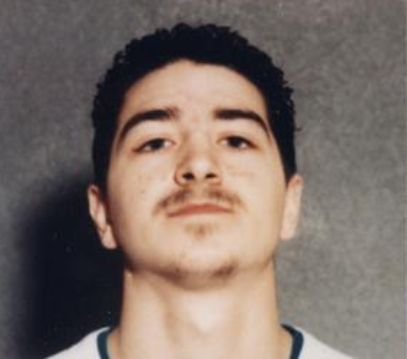
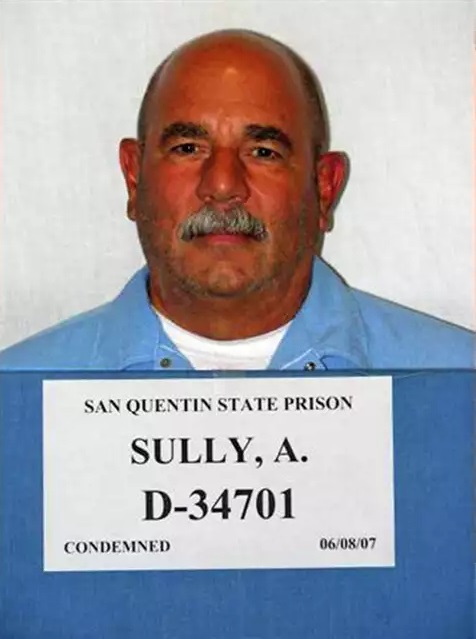
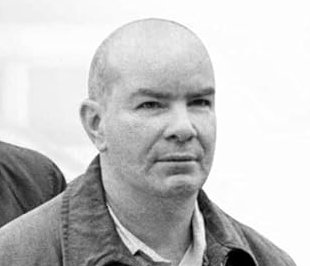
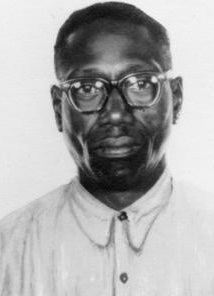
William Scott Smith: The Salem Serial Killer
Overview
William Scott Smith is an American serial killer, kidnapper and sexual predator responsible for murdering at least four young women in and around Salem, Oregon, between 1981 and 1984. His crimes involved women who were alone or temporarily separated from others, including a tavern patron, a pizza delivery driver, a convenience-store clerk and a university student. Smith used isolation, deception and sudden violence to overpower his victims before strangling them and abandoning or concealing their bodies.
For many years, Smith was convicted only of the 1984 murders of Rebecca Anne Darling and Katherine Iona Redmond. The earlier disappearances and deaths of Terry Cox Monroe and Sherry Melissa Eyerly remained unresolved until Smith confessed decades later. Those admissions established that his known series began in 1981 and continued until his arrest in April 1984. Investigators have also considered the possibility that he committed additional crimes, although no other murders have been conclusively attributed to him.
Confirmed Victims
- Terry Cox Monroe, 21 — February 12, 1981 — Salem, Oregon: Monroe disappeared after stepping outside the Oregon Museum Tavern in Salem. Her clothing and personal documents were found near the Willamette River, and her body was recovered from the river on March 15, 1981. An autopsy determined that she had died from homicidal asphyxiation consistent with strangulation. Smith confessed to killing her in 2012.
- Sherry Melissa Eyerly, 18 — July 4, 1982 — Salem, Oregon: Eyerly disappeared while delivering pizzas to a fictitious address on Riverhaven Drive South. Her vehicle was found abandoned with its door open, her dog still inside and the undelivered pizzas nearby. Her body has never been recovered. Smith confessed that she was strangled and disposed of in the Willamette River.
- Rebecca Anne Darling, 21 — February 19, 1984 — Salem, Oregon: Darling vanished while working the overnight shift at a Circle K convenience store. Her purse, coat, keys and automobile remained at the business. Her body was discovered in the Little Pudding River on March 25, 1984. Investigators determined that she had been strangled.
- Katherine Iona Redmond, 18 — April 7, 1984 — near Salem, Oregon: Redmond, a freshman at Willamette University, disappeared after leaving a gathering during the early morning hours. The borrowed car she had been driving was found abandoned with the engine running and the door open. Her body was discovered several days later in a wooded area outside Salem. She had been sexually assaulted and strangled.
The Murder of Terry Cox Monroe
On the evening of February 12, 1981, Terry Cox Monroe was socializing with friends at the Oregon Museum Tavern in Salem. At some point during the evening, she told her companions that she was going outside for fresh air. She never returned. When she failed to report to work the following day, her family and friends contacted authorities and began searching for her.
Monroe’s clothing and personal documents were found along the bank of the Willamette River near the tavern. The discovery suggested that she had met with violence shortly after leaving the building. On March 15, more than a month after her disappearance, a boater discovered her body lodged among debris in the river. She was positively identified the following day, and the medical examination showed that she had been asphyxiated.
The murder initially generated several theories. Investigators examined whether Monroe’s death might have been connected to other crimes occurring in Oregon, including the offenses attributed to the so-called I-5 Killer. No evidence established such a connection, and Monroe’s case remained unsolved for more than three decades.
In October 2012, while already serving life sentences for other murders, Smith admitted that he had killed Monroe. His confession finally provided investigators with the evidence necessary to resolve the long-standing cold case. He later entered a guilty plea and received another life sentence for her murder.
The Abduction of Sherry Melissa Eyerly
Sherry Melissa Eyerly had recently graduated from high school and was working part-time as a delivery driver for a Domino’s Pizza restaurant in Salem. On the night of July 4, 1982, she was dispatched to deliver an order to an address on Riverhaven Drive South, near a remote section of the Willamette River. The address supplied by the caller did not actually exist.
Eyerly left the restaurant at approximately 9:30 p.m. and was never seen alive again. Her delivery vehicle was found abandoned along a dirt road. The driver’s door was open, pizza boxes were scattered nearby and her collie remained inside the vehicle. Investigators traced the telephone number supplied with the order to a Salem motel, but the name and delivery information given by the caller were false.
Search teams examined the surrounding roads, fields and riverbanks, but Eyerly’s body was never found. Her disappearance became one of Oregon’s most publicized missing-person cases and was later featured in national television reports. Although tips continued to arrive, the case remained unresolved for more than two decades.
In November and December 2006, Smith confessed that he and an associate, Roger Noseff, had planned to kidnap a different Domino’s employee and demand a ransom. According to Smith, Eyerly was mistakenly sent on the delivery instead of their intended target. Smith stated that he strangled Eyerly and disposed of her body in the Willamette River. Noseff had died in 2003 and therefore could not be prosecuted.
Smith pleaded guilty to Eyerly’s murder in December 2007 and received an additional life sentence. Because her remains have never been recovered, the exact location where she was killed and the place where her body was left have never been independently confirmed.
The Murder of Rebecca Anne Darling
Rebecca Anne Darling was working the graveyard shift at a Circle K convenience store in Salem during the early morning hours of February 19, 1984. A customer saw her inside the store at approximately 3:20 a.m. Roughly half an hour later, another patron entered and discovered that no employee was present.
Darling’s disappearance immediately appeared suspicious. Her Volkswagen Beetle remained in the parking lot, while her purse, coat and keys were still inside the store. There were no obvious signs of robbery or a prolonged struggle. She was known as a dependable employee and was not believed to have voluntarily abandoned her shift.
Investigators learned that a strange man had visited the store and asked for Darling by name several times before she began working that night. Police prepared a composite image of a person they wanted to question, but no immediate arrest followed. Darling remained missing until March 25, when a farmer discovered a body caught in brush in the Little Pudding River.
The remains were identified as Darling’s. An autopsy determined that she had been strangled. Her death, combined with other disappearances and killings in the Salem area, intensified public anxiety and prompted detectives to examine men with histories of harassment or violence toward women.
The Murder of Katherine Iona Redmond
Katherine Iona Redmond was an 18-year-old freshman at Willamette University. During the early morning hours of April 7, 1984, she left a social gathering in a borrowed automobile. The car was discovered a short time later outside Salem with its engine still running, a door open and Redmond’s purse inside.
The abandoned vehicle suggested that Redmond had been interrupted or forcibly removed. Police officers, students and local residents organized an extensive search of the surrounding area. Several days later, an Oregon State Police trooper found her body in a wooded location approximately half a mile from where the automobile had been discovered.
Investigators determined that Redmond had been sexually assaulted and strangled. Her murder occurred only weeks after Darling’s body was recovered, causing many Salem residents to fear that a repeat killer was operating in the area. Women were warned against traveling alone, and student organizations arranged escort programs for those crossing the Willamette University campus after dark.
Investigation and Arrest
After Redmond’s murder, investigators focused on William Scott Smith, a 24-year-old unemployed truck driver who had a documented history of harassing women. Complaints involving Smith dated back several years and included obscene or threatening telephone calls. Authorities believed his behavior was escalating and began examining his possible connection to the recent killings.
On April 23, 1984, Smith pleaded guilty to a misdemeanor charge involving harassing telephone calls made to a Salem woman. Two days later, he was formally charged with murdering Rebecca Darling and Katherine Redmond. The arrest brought relief to a city that had been shaken by repeated disappearances and killings, but detectives still had to prove that Smith was responsible.
During questioning, Smith provided written confessions describing the Darling and Redmond murders. His attorneys attempted to prevent the statements from being used in court, arguing that they should be suppressed. The court rejected the motion. Smith was examined by mental-health professionals, but he was found competent and legally responsible for his actions.
A psychiatrist who evaluated Smith described him as a sexually sadistic serial killer and warned that he presented an extreme danger to women. The assessment indicated that his crimes were not isolated acts committed under temporary emotional pressure, but part of an established pattern of predatory and violent conduct.
Convictions and Life Sentences
On July 9, 1984, Smith was found guilty of murdering Rebecca Darling and Katherine Redmond. He received two consecutive life sentences. The sentencing judge characterized the murders as exceptionally cruel, while Smith reportedly displayed little visible emotion during the proceedings.
At that time, prosecutors could not prove that Smith had murdered Terry Monroe or Sherry Eyerly. Both cases remained open while Smith served his sentences. Detectives continued comparing his known behavior with unsolved disappearances and homicides involving women in the Salem region.
Smith’s 2006 confession to killing Eyerly led to a guilty plea on December 18, 2007, and a third life sentence. His 2012 admission to killing Monroe produced another murder conviction and a fourth life sentence. The later confessions confirmed that his series of murders extended across at least three years and involved four known victims.
Possible Additional Victims
During the early 1980s, several women in the Salem area disappeared or were killed under suspicious circumstances. Investigators examined whether Smith could have been responsible for additional cases because of the timing, location and similarities between some of the crimes. However, suspicion alone has not been sufficient to classify those women as confirmed victims.
Smith’s delayed confessions also demonstrated that he was capable of withholding information for decades. His admission to Monroe’s murder came more than 31 years after her death, while his confession regarding Eyerly was made approximately 24 years after her disappearance. These delays have contributed to continued questions about whether he has disclosed the full extent of his crimes.
Legacy of the Case
William Scott Smith’s murders deeply affected Salem during the early 1980s. Women altered their routines, university students organized safety escorts and residents purchased personal-protection devices in response to the growing fear. The cases also revealed how seemingly unrelated disappearances could remain disconnected until a repeat offender was identified.
The eventual resolution of the Monroe and Eyerly cases showed the importance of preserving evidence and continuing cold-case investigations. Although nothing could return the victims to their families, Smith’s confessions provided long-delayed answers and allowed prosecutors to formally hold him accountable for all four known murders.
Smith received four life sentences for the killings of Terry Cox Monroe, Sherry Melissa Eyerly, Rebecca Anne Darling and Katherine Iona Redmond. His known crimes involved calculated abduction, sexual violence, strangulation and the disposal of victims in isolated areas or waterways. He remains one of Oregon’s most disturbing serial offenders, and the possibility that he committed additional crimes has never been completely eliminated.