Unknown: The Atlanta Lover's Lane Killer
Overview
In the cold, early months of 1977, a shadow fell over Atlanta, Georgia, long before the city was gripped by the infamous Child Murders. An unidentified serial shooter began a brief but terrifying reign, targeting young couples seeking privacy in the secluded "lovers' lanes" of city parks. Over a span of just 55 days, from January to March, three attacks occurred with an unnerving, almost clockwork precision. The assailant, armed with a .38 caliber pistol, left three people dead and three others seriously wounded.
The killer’s method was consistent and brutal: he approached parked cars in the dead of night and opened fire without warning or apparent motive. Robbery and sexual assault were not part of his violent signature, deepening the mystery surrounding his intentions. Survivors could only offer a vague description of a tall Black man. The Atlanta Police Department, under the leadership of Public Safety Commissioner Reginald Eaves, initially withheld the connections between the shootings from the public, hoping to avoid panic and set a trap for the killer. This strategy proved fruitless. The attacks ceased as suddenly as they had started, leaving behind a trail of grief and a cold case that has remained unsolved for decades, a chilling and often-overlooked chapter in Atlanta's criminal history.
A City on Edge
Atlanta in 1977 was a city of contrasts and tensions. Maynard Jackson, the city's first Black mayor, was in office, and the city was navigating a complex period of social and political change. The police force, still predominantly white, was viewed with mistrust in many of the city's Black neighborhoods. Public Safety Commissioner A. Reginald Eaves, a controversial appointee and college classmate of the mayor, was tasked with tackling a high crime rate.
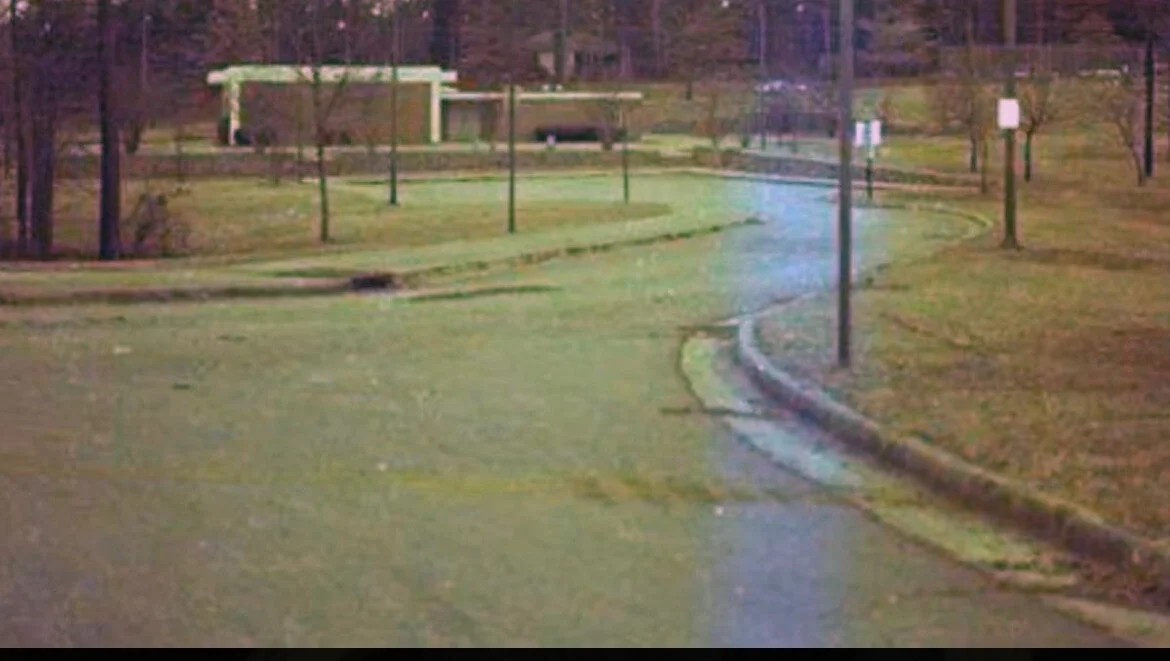
Against this backdrop, public parks in southwest Atlanta, like Adams Park and West Manor Park, served as unofficial social spaces. For young couples with limited privacy, the dark perimeters of these parks became lovers' lanes. This seclusion, however, created a perfect hunting ground for a predator. The fear that would soon permeate these spaces was foreshadowed by a popular culture fascinated with similar crimes. The film "The Town That Dreaded Sundown," based on the real-life unsolved Texarkana Phantom Killer who targeted couples in 1946, had been released in late 1976 and was playing in Atlanta theaters. Simultaneously, New York City was in the grip of fear over the ".44 Caliber Killer," David Berkowitz, who also targeted couples in parked cars. This national climate of anxiety was about to become a terrifying local reality.
The First Attack: LaBrian Lovett and Veronica Hill
The violence began in the pre-dawn hours of Sunday, January 16, 1977. Police were called to what looked like a routine car accident near Adams Park in southwest Atlanta. A car had careened across an intersection and smashed into a street sign. When officers looked inside, they discovered a horrific scene. The driver, LaBrian Lovett, and his passenger, Veronica Hill, were both naked and suffering from multiple gunshot wounds.
Lovett, shot in the head, stomach, right leg, and left arm, was slumped in the driver's seat. Hill was in the backseat, partially covered by a coat, with wounds to her abdomen and left leg. Miraculously, both were still alive. They were rushed to Grady Memorial Hospital, but their injuries were too severe. Lovett died shortly after arrival, followed by Hill.
Investigators pieced together their final moments. The couple had been parked in a secluded area of Adams Park when an unknown man approached and fired through the car's window. The gravely wounded Lovett had apparently tried to drive to get help before losing consciousness and crashing. Sources conflict on the victims' ages; reports list Lovett as either 20 or 26, and Hill as 20, 25, or 26. Both were parents of young children. Before she died, Hill reportedly gave conflicting statements, at one point suggesting she knew the attacker and at another saying she did not. Police eventually ruled out friends and ex-boyfriends as suspects. Ballistics tests confirmed the killer had used a .38 caliber pistol.
The Second Attack: Dennis Langston and Deitira Tatum
For nearly a month, the brutal murders of Lovett and Hill remained an isolated incident in the public eye. The police did not publicize the attack, and the city's lovers' lanes continued to be frequented by unsuspecting couples.
On Saturday, February 12, 1977, twenty-seven days after the first attack, the killer struck again. Around 2:00 a.m., 18-year-old Dennis Langston and 17-year-old Deitira Tatum were in a parked car at West Manor Park, about four miles from the site of the first murders. An assailant approached the passenger side of the vehicle and tried to open the door. Finding it locked, he fired six shots through the window.
Langston and Tatum were both struck by bullets and seriously injured, but they survived the terrifying ordeal. They were able to provide investigators with the first and only description of the attacker: a tall Black man. They recounted seeing only "glass and fire from the trigger" as the shots rang out. The bullets recovered from the scene were a crucial piece of evidence. Ballistics tests confirmed they were fired from the same .38 caliber pistol used to murder LaBrian Lovett and Veronica Hill, officially linking the two attacks and confirming the presence of a serial killer in Atlanta.
The Third Attack: Diane Collins and Gordon Whitfield
The pattern continued. Almost exactly a month later, on Saturday, March 12, 1977—28 days after the second attack—the killer returned to Adams Park. His victims this time were 20-year-old Diane Collins and her 21-year-old fiancé, Gordon Whitfield. The couple was enjoying a date night; they had seen a movie and then driven to the park. Whitfield, who went by his middle name Darnell, had recently returned to Atlanta after a six-month tour of active duty with the Army. Collins was a student at a local beauty school.
As they sat in their car, the gunman approached the passenger-side window and, without a word, fired six rounds into the vehicle. Diane Collins was killed instantly. Gordon Whitfield was shot in the head, neck, and jaw but survived. In an incredible display of will, the severely wounded Whitfield managed to drive from the park to his home, where he called for an ambulance. Due to the suddenness of the attack and his injuries, he was unable to provide a detailed description of the shooter. Ballistics tests once again provided a definitive link: the bullets were from the same .38 caliber weapon, connecting all three attacks to a single, unknown killer.
The Victims
- LaBrian Lovett, 26 — On January 16, 1977, in Atlanta, he was a young father who died after heroically trying to drive for help after being shot multiple times in Adams Park.
- Veronica Hill, 25 — On January 16, 1977, in Atlanta, she was a mother to a young daughter. She was found critically wounded alongside LaBrian Lovett and succumbed to her injuries at the hospital.
- Diane Collins, 20 — On March 12, 1977, in Atlanta, she was a beauty school student engaged to be married. She was killed instantly during the third attack in Adams Park, just two months after the first.
Investigation and a Failed Trap
With three attacks linked by the same gun and modus operandi, the Atlanta Police Department was facing a full-blown serial killer investigation. Homicide detective Lt. W.K. Perry was assigned to the case. Investigators noted the killer's specific choice of ammunition: .38 caliber "wadcutters," a type of flat-fronted bullet typically used for target practice. The most significant clue, however, was the timing. The attacks occurred 27 and 28 days apart, suggesting a chilling monthly cycle.
Fearing widespread panic, and hoping to use the killer's pattern against him, police leadership made a controversial decision: they kept the linked nature of the shootings a secret from the public. They shared their information with Ken Willis, a reporter for the *Atlanta Journal-Constitution*, who agreed to hold the story. Police theorized the killer would strike again in early April, roughly 28 days after the murder of Diane Collins.
An elaborate trap was set. For several nights between April 6th and 8th, undercover officers, posing as couples, staked out Adams Park and West Manor Park. They sat in unmarked cars, waiting for the killer to appear. But the trap failed. The calculated dates came and went with no attack. The killer either sensed the police presence, was deterred by the increased patrols, or had simply stopped for reasons unknown.
After the unsuccessful stakeout, on April 19, 1977, the police finally went public, acknowledging that a serial shooter, now dubbed the "Lover's Lane Killer" by the press, was responsible for the three attacks. "He waits until his victims are all alone," Lt. Perry told the media. "He has a job to do, and is willing to wait until the right time." But the public warning came after the fact. The killer never struck again.
A Cold Case and Lingering Questions
With no new attacks and no new leads, the investigation into the Lover's Lane Murders stalled. The vague description of the shooter and the lack of motive left detectives with little to go on. The case grew cold.
Just two years later, in 1979, Atlanta was plunged into a new and even more profound state of terror with the beginning of the Atlanta Child Murders. Over the next 22 months, at least 29 Black children, adolescents, and young adults were murdered, drawing national attention and a massive law enforcement response. The focus of the Atlanta Police Department, the media, and the public shifted entirely to this new crisis. The Lover's Lane case was effectively eclipsed and forgotten. By 1980, police admitted the investigation had reached a dead end. Wayne Williams was convicted for two of the adult murders in the "Child Murders" spree in 1982, but he has never been considered a suspect in the 1977 park shootings.
The abrupt end to the Lover's Lane attacks remains one of the case's most perplexing mysteries. Theories abound: the killer could have died, been imprisoned for an unrelated crime, or moved away from Atlanta. Decades later, the case remains officially open but inactive at the Atlanta Police Department. In 2019, a cold case investigator noted that they were trying to track down stored evidence, including a potential blood sample from the killer, which could possibly be tested for DNA—a technology unavailable in 1977.
Aftermath and Legacy
The Atlanta Lover's Lane Murders represent a terrifying, unsolved crime spree that has been largely overshadowed by the city's later tragedies. For the families of LaBrian Lovett, Veronica Hill, and Diane Collins, there has been no justice and no closure. For the three survivors—Dennis Langston, Deitira Tatum, and Gordon Whitfield—the physical and emotional scars of the attacks undoubtedly lingered for a lifetime. The case serves as a grim reminder of a time when a phantom gunman haunted the quiet, dark corners of Atlanta, his identity and motives lost to history, leaving only questions and the memory of the lives he so senselessly destroyed.