Nollie Lee Martin: The Parolee Killer
Overview
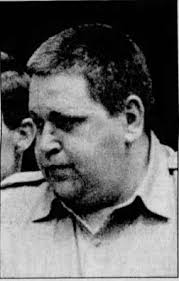
Nollie Lee Martin was an American serial killer whose crimes spanned two states and were separated by a brief and tragically flawed period of incarceration. In 1972, he murdered a mother and her two young daughters in High Point, North Carolina, by setting fire to their apartment building. After serving only four and a half years for this triple homicide, he was paroled due to prison overcrowding. Just two months after his release, in June 1977, he kidnapped, raped, and murdered a 19-year-old college student in Delray Beach, Florida, with the help of his cousin. The brazen nature of his crimes and the systemic failures that allowed him to kill again brought notoriety to his case. After years of appeals, Martin was executed by the state of Florida in 1992.
Early Life and Background
Nollie Lee Martin was born on January 29, 1949, in North Carolina. Detailed information about his upbringing is scarce, but a report by Amnesty International after his death stated he was born into great poverty and was subjected to both physical and sexual abuse throughout his early life. The report also noted that he suffered from severe mental illness, including paranoia, hallucinations, and deep depression, for which he required medication. By his early twenties, he was married and living in an apartment in High Point, North Carolina.
The Hogan Family Murders
On the night of June 28, 1972, a fire broke out in the High Point apartment building where 23-year-old Nollie Martin and his wife, Brenda, lived. The blaze was deliberately set, with lighter fluid used as an accelerant to speed its spread up a stairway. The smoke and flames overwhelmed the apartment across the hall from Martin, killing three of its occupants. The victims were Josephine Hogan, 50, and her two daughters, 14-year-old Karen Elaine and 10-year-old Linda Ann Hogan. Six other residents of the building managed to escape.
Martin and his wife also sustained burns in the fire and were taken to a local hospital for treatment. Investigators quickly determined the fire was an act of arson. Suspicion fell on Martin, and investigators found a jacket in his apartment containing bottles that smelled of lighter fluid. While still hospitalized for his injuries, Martin was arrested on July 5, 1972. He confessed to setting the fire, telling police he was angry with his wife, who had been planning to leave him. He was charged with three counts of first-degree murder and one count of arson.
First Trial and Parole
In late 1972, Nollie Martin was indicted on the murder and arson charges. Facing the possibility of a death sentence under North Carolina law, he accepted a plea bargain. He pleaded guilty to three counts of second-degree murder and was sentenced to a term of 18 to 30 years in prison.
Martin served his time at the Roanoke River Correctional Institution. In a decision that would have catastrophic consequences, he was granted parole and released on April 13, 1977, after serving just four and a half years of his sentence. His early release was attributed in part to prison overcrowding. Unable to find work in High Point due to his murder convictions, Martin received permission from the parole board to relocate to Delray Beach, Florida, where a relative had offered him a job at a service station.
The Murder of Patricia Greenfield
Just over two months after his release, on the night of June 25, 1977, Martin and his 18-year-old cousin, Gary Paul Forbes, committed another horrific crime. Their victim was Patricia "Patty" Ann Greenfield, a 19-year-old honor student at George Washington University who was home for the summer and working at a Cumberland Farm convenience store in Delray Beach to save money for college.
Shortly before 10 p.m., Martin and Forbes entered the store, robbed Greenfield at knifepoint of about $90 and two cases of beer, and then abducted her. They forced her into their car, blindfolded her with Martin's shirt, and drove her to Martin’s apartment. There, both men raped her. They assured Greenfield they would release her in a remote area and, keeping her blindfolded, drove to a county landfill near Lantana. While Forbes waited in the car, Martin walked Greenfield out of sight. He first attempted to strangle her with a rope, but she fought for her life. When strangulation failed, Martin stabbed her repeatedly in the neck and left her body in the landfill, where she was discovered four days later.
The Victims
- Josephine Hogan, 50 — A mother of four, she died alongside two of her daughters in the 1972 apartment fire intentionally set by Martin in High Point, North Carolina.
- Karen Elaine Hogan, 14 — The daughter of Josephine Hogan, she was a teenager with her life ahead of her when she was killed in the arson attack on her home.
- Linda Ann Hogan, 10 — The youngest victim of the 1972 fire, she was just a child when her life was taken along with her mother and older sister.
- Patricia Ann Greenfield, 19 — Known as Patty to her friends and family, she was a bright and promising George Washington University student from Boynton Beach, working a summer job when she was murdered.
Investigation and Capture
The investigation into Patricia Greenfield's murder began immediately after her abduction. However, the crucial break in the case came from another crime committed by Martin and Forbes. On July 3, 1977, just over a week after killing Greenfield, the pair kidnapped a female hitchhiker at knifepoint. They took her to Martin's apartment, tied her to a bed, and raped her. After they left, the woman managed to free herself and get help from a neighbor, who called the police.
She identified her attackers, and within a day, on July 4, 1977, police arrested Martin and Forbes for the kidnapping and rape of the hitchhiker. Due to the similarities between that crime and the Greenfield case, detectives began interrogating them about the convenience store abduction. Later that day, Martin confessed to killing Patricia Greenfield. He confessed again in more detail on July 11. He reportedly told detectives, "I had no alternative but to kill."
Trial and Sentence
Gary Paul Forbes accepted a plea deal in February 1978, pleading guilty to second-degree murder in exchange for his testimony against Martin. On August 23, 1978, he was sentenced to 99 years for the murder, plus three life sentences for kidnapping, rape, and robbery.
Nollie Martin was indicted for first-degree murder, kidnapping, armed robbery, and forcible sexual battery. He pleaded not guilty and attempted an insanity defense. After being found competent to stand trial, his trial began in April 1978. The jury heard Martin's detailed confessions and testimony from his accomplice. On April 29, 1978, the jury found him guilty on all counts. Following the verdict, the prosecution announced it would seek the death penalty. On May 15, 1978, the jury recommended a sentence of death.
On November 13, 1978, Circuit Judge Marvin Mounts formally sentenced Nollie Lee Martin to death in Florida's electric chair. He also received three additional life sentences for the other charges.
Appeals and Execution
For the next 14 years, Martin's case went through a lengthy and complex appeals process. His lawyers argued that his confessions were coerced and challenged his mental competency. The Florida Supreme Court upheld his conviction and sentence on September 8, 1982, and the U.S. Supreme Court denied his appeal on March 28, 1983.
Over the years, three different Florida governors signed a total of four death warrants for Martin. The first, signed in 1984, was stayed just 15 hours before the scheduled execution. Subsequent warrants were also stayed pending further appeals. His defense team repeatedly argued he was not mentally competent to be executed, at one point releasing a videotape of Martin in his cell, rocking, muttering, and picking at his skin until it bled. Prosecutors contended he was feigning his symptoms, and courts ultimately agreed.
After his final appeals were denied by the 11th Circuit Court of Appeals and the U.S. Supreme Court, his last death warrant was carried out. On the morning of May 12, 1992, at Florida State Prison, Nollie Lee Martin was executed in the electric chair. He was pronounced dead at 7:13 a.m. In a final statement, he said, "My suffering will be over in a few minutes. I don't think it's right to keep someone locked up for 15 years then kill them." He also expressed a hope to meet Patricia Greenfield in heaven.
Aftermath and Legacy
The case of Nollie Lee Martin stands as a stark example of the failures within the justice and penal systems. His parole after serving less than five years for a triple murder directly led to the death of a fourth innocent person. The murder of Patricia Greenfield became one of the most infamous crimes in the history of Delray Beach and highlighted the potential dangers of early release programs, particularly those driven by prison overcrowding. For the families of Josephine, Karen, and Linda Hogan, and Patricia Greenfield, the case left a legacy of unimaginable loss and a painful, decades-long wait for justice.