Jon Scott Dunkle: The Peninsula Serial Killer
Overview
Jon Scott Dunkle, known as "The Peninsula Serial Killer," terrorized communities in Northern California between 1981 and 1985. He murdered three young boys, including the younger brother of a friend, in a series of brutal and senseless attacks. Dunkle's crimes were characterized by their predatory nature, targeting unsuspecting children in quiet suburban areas. For years, he evaded capture, even inserting himself into the search for one of his victims. His eventual downfall came not from a brilliant piece of detective work, but from his own boasting to a fellow inmate while serving time for an unrelated crime. His confessions revealed a cold and remorseless killer, leading to a death sentence and a separate sentence of life in prison.
Early Life and Background
Jon Scott Dunkle was born on October 11, 1960, in Los Angeles, California. His childhood was marked by learning disabilities and social difficulties. He was reportedly teased by peers and struggled to fit in. Dunkle's family life was also unsettled; his parents divorced when he was nine and remarried two years later. He told friends that his father was abusive and that his brother had once pushed him out of a window as a toddler.
As a young adult, Dunkle developed a close relationship with the Davies family in Belmont, California, after their eldest son, Jimmy, introduced him at church. The family, particularly the mother, Joan, took a liking to the shy 17-year-old and welcomed him into their home. Dunkle became a frequent visitor, sharing stories of a troubled past and fabricating tales of being a police informant. The Davies family was unaware of Dunkle's growing criminal behavior, which included multiple arrests for drunk driving and hit-and-run incidents. He eventually began spending more time with the family's youngest son, 15-year-old John Davies.
The Murder of John Davies
On Saturday, November 7, 1981, 15-year-old John Thomas Davies was dropped off by his mother at the San Mateo Public Library. He was never seen alive by his family again. His parents, Jim and Joan Davies, reported him missing the next morning when they discovered his bed empty and his church clothes laid out. John had left all his possessions behind, including his only pair of shoes.
Initially, police treated the case as a runaway, but the Davies family never believed it. Dunkle, who was considered John's closest friend at the time, even helped the family post missing person flyers. He then ceased all contact with them. The case went cold for years. It was only after Dunkle's later confessions that the truth emerged. He admitted to luring John out that night, killing him, and burying his body in Edgewood Park near Redwood City. He would later lead investigators to the remains.
Other Crimes and Escalation
In the years following John Davies's disappearance, Dunkle's violent behavior continued. On November 5, 1982, he intentionally struck 16-year-old Steve Murphy with his car, put him in the trunk, and dumped him in a ravine. Murphy survived but suffered severe internal injuries. Just weeks later, on New Year's Eve, Dunkle attacked another 15-year-old boy, Monte Hansen, striking him with a wooden board at his home. Hansen also survived the assault. These attacks demonstrated an escalating pattern of violence that would culminate in two more murders.
The Murder of Lance Turner
On October 2, 1984, 12-year-old Lance Turner was dropped off at the soccer fields of Ralston Intermediate School in Belmont. His body was later found near Water Dog Lake. He had been brutally stabbed 23 times. The senseless murder shocked the community. Witnesses reported seeing a man matching Dunkle's description near the lake around the time of the murder, talking to a group of young girls.
The investigation quickly focused on Dunkle, who had been a friend of the Davies family. Police questioned him, and he provided an alibi, claiming he was out looking for a job. With no physical evidence directly linking him to the crime, authorities were unable to make an arrest. Three days after the murder, Dunkle moved from his parents' home in Belmont to live with his sister in Sacramento. In a chilling and bizarre twist, on November 19, 1984, Lance Turner's grandmother received a phone call from an unidentified man who said, "I'm sorry, I'm sorry – should I do it again – I'm sorry, really sorry."
The Murder of Sean Dannehl
Dunkle's final murder occurred on July 2, 1985. Twelve-year-old Sean Gregory Dannehl was riding his bicycle near the Old Fair Oaks footbridge in Sacramento County. Dunkle, who was sitting at a picnic table, saw Sean and decided to kill him. He got on a bike, rammed Sean's bicycle, and knocked the boy to the ground. He then led Sean into a wooded area, promising not to hurt him. There, he forced the boy to remove his clothes before stabbing him in the chest and throat. After Sean was dead, Dunkle stabbed him once in each eye. His body was discovered six days later.
The Victims
- John Thomas Davies, 15 — Disappeared on November 8, 1981, from Belmont, California. John was a high school student who was struggling to fit in and was befriended by Dunkle, his older brother's acquaintance. His family became prominent advocates for missing children after his disappearance.
- Lance Turner, 12 — Murdered on October 2, 1984, in Belmont, California. He was a student at Ralston Intermediate School who was attacked and killed while near the school's soccer fields.
- Sean Gregory Dannehl, 12 — Murdered on July 2, 1985, in Fair Oaks, California. Sean was enjoying a bike ride near the American River when he was targeted and killed in a brutal, premeditated attack.
Investigation and Capture
Despite being a suspect in the murders of Davies and Turner, Jon Dunkle remained free. The break in the case came from an unexpected source. In April 1985, while under police surveillance, Dunkle was arrested for a burglary in Rancho Cordova. He was convicted and sentenced to six years in prison.
In September 1986, while incarcerated at the California Men's Colony, Dunkle began confiding in his cellmate, a career criminal named Charles Rice. Dunkle initially spun false tales of being in the mafia and working for the FBI. Eventually, he confessed to Rice in detail about the murders of Lance Turner, Sean Dannehl, and John Davies. Rice, horrified by the emotionless confessions, decided to contact the police.
This information was the breakthrough investigators needed. They arranged for Dunkle to be taken from the prison, and he led them to the locations of the crimes, pointed out where he had hidden murder weapons, and showed them where he had buried John Davies's body, which was subsequently recovered. Back at the prison, in a recorded confession, Dunkle waived his rights and admitted to all three murders.
Trial and Sentence
Jon Dunkle's murder trial began on October 16, 1989. His mental state was a central issue throughout the legal proceedings. Despite testimony from psychiatrists who diagnosed him with schizophrenia, a jury found him competent to stand trial in August 1989.
On December 6, 1989, the jury returned a verdict, finding Dunkle guilty of two counts of first-degree murder for the deaths of John Davies and Lance Turner. In January 1990, he was sentenced to death.
Nearly five years later, on December 30, 1994, Dunkle pleaded guilty to the first-degree murder of Sean Dannehl as part of a negotiated plea. For this crime, he received a sentence of life in prison without the possibility of parole, which would stand even if his death sentence were overturned.
Aftermath and Legacy
The families of Jon Dunkle's victims were left devastated. In the wake of their son's disappearance, Jim and Joan Davies became tireless advocates for missing and exploited children, helping to establish the Violent Crimes Information Center to aid law enforcement.
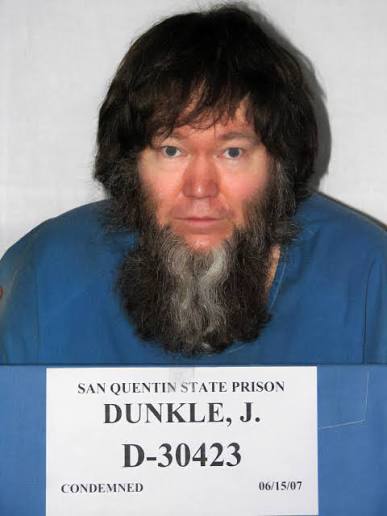
Dunkle remains on death row at San Quentin State Prison. His mental health has continued to be a subject of legal debate. He has been described as "gravely disabled" and was appointed a legal guardian in 2002. Reports from prison describe him believing he is controlled by computer chips and banging his head against the wall. Despite these issues, the California Supreme Court upheld his death sentence in a unanimous ruling on August 4, 2005, though his deteriorating mental condition may prevent the state from ever carrying out the execution. The case of Jon Dunkle serves as a chilling reminder of the hidden dangers that can lurk within a community, even in the form of a seemingly harmless acquaintance.