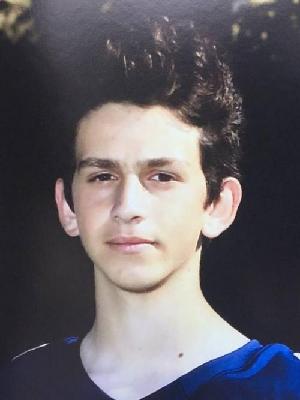
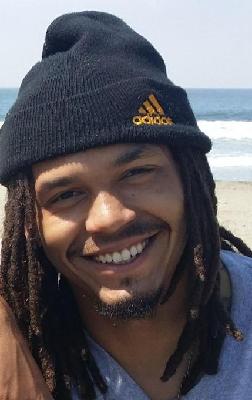
In the quiet community of Belmont, California, the Davies family was building a new life after moving from Chicago four years earlier. Fifteen-year-old John Thomas Davies, a male student at Serra High School, was navigating the challenges of adolescence. He was reportedly having a difficult time fitting in and was known to be shy. John was the youngest of three brothers and was close with his older brother, Mark. In November 1981, their family's world was irrevocably shattered.
A 21-year-old acquaintance of his older brother, a man named Jon Scott Dunkle, had befriended the family and was a frequent visitor to their home. This friendship would prove to be a fatal betrayal for young John.
On the night of Sunday, November 8, 1981, John Thomas Davies vanished from his bedroom. His parents, Jim and Joan, returned home late that evening and noticed nothing out of the ordinary. The next morning, his mother discovered his empty room. John had laid out his church clothes for the following day and left behind all his possessions, including his only pair of shoes, making it clear he had not planned to run away. In the days that followed his disappearance, Dunkle participated in the search efforts, even helping the family post flyers. It was a chilling deception, as for five long years, the Davies family relentlessly searched for their son, spending over $20,000, while his killer walked among them.
The mystery of John's disappearance began to unravel years later, intertwined with other brutal crimes that terrorized the San Francisco Peninsula. Jon Scott Dunkle, who became known as the Peninsula Serial Killer, was eventually arrested for a burglary in 1985. While serving time, he confessed his crimes to a cellmate. In October 1986, Dunkle finally admitted to law enforcement that he had murdered John. He told investigators he had lured the boy from his home, stabbed him with a paring knife, and bludgeoned him with a rock. He then drew a map that led police to John's buried remains in a secluded wooded area in Edgewood Park, near Redwood City.
The investigation revealed Dunkle was responsible for a string of violent attacks. In addition to killing John, he murdered 12-year-old Lance Turner in Belmont in 1984 and 12-year-old Sean Dannehl in Sacramento County in 1985. He also attempted to kill two other teenagers, Steve Murphy and Monte Hansen, in 1982. Dunkle's methods were vicious, primarily involving stabbing. During his trial, his sanity was a central issue, with psychiatrists offering conflicting testimonies. Some experts diagnosed him as a paranoid schizophrenic, while others believed he was faking mental illness.
On December 7, 1989, a jury found Jon Scott Dunkle guilty of the first-degree murders of John Davies and Lance Turner. In January 1990, he was sentenced to death. Later, in December 1994, he pleaded guilty to the murder of Sean Dannehl and received a sentence of life in prison without the possibility of parole. The judge who sentenced him to death remarked that Dunkle seemed to take "perverse pleasure" in causing suffering and that some people in the world "delight in doing evil."
In the agonizing years following their son's disappearance, Jim and Joan Davies became prominent and tireless advocates for missing and exploited children. They were instrumental in helping to establish the Violent Crimes Information Center, a network designed to help law enforcement agencies share resources. Joan Davies spoke of the emotional emergency her family endured, a trauma for which no professional help seemed equipped to handle at the time. Their painful journey fueled a desire to help other families facing similar tragedies, hoping to provide them with the support and resources they themselves had so desperately needed.
Jon Scott Dunkle remains on death row at San Quentin State Prison. His death sentence has been stayed, as a federal judge found him incompetent to assist in his own appeal. The case of John Thomas Davies serves as a harrowing reminder of a community gripped by fear and a family whose profound loss was channeled into a powerful force for change, forever altering the landscape of advocacy for missing children.