Henry Adolph Busch: The Psycho Strangler
Overview
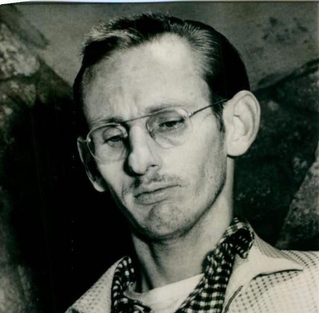
In a span of just over four months in 1960, Henry Adolph Busch, a 29-year-old optical technician with no prior criminal record, murdered three older women in Los Angeles, California. He claimed to be driven by an "irresistible urge to kill," a compulsion that brought a violent end to what had been a quiet and unremarkable life. His crimes were characterized by sudden, brutal strangulation, and his victims were all women he knew, including a close family friend and his own aunt. Busch's killing spree was brought to a halt not by police investigation, but by the fierce resistance of a fourth intended victim, whose escape led directly to his capture. His subsequent confession and trial, where he pleaded insanity, drew public attention, particularly for his claim that the Alfred Hitchcock film *Psycho* had influenced his later crimes. Busch was convicted and executed in the gas chamber at San Quentin State Prison in 1962.
Early Life and Background
Henry Adolph Busch was born Charles C. Hutchinson in California on December 30, 1931. His early life was marked by instability and trauma. For his first six years, he was moved between various foster homes, an experience that left him emotionally and physically scarred. He was reportedly emaciated and had a deformed jaw when he was finally adopted by his much older half-sister, Mae E. Busch, and her husband, Henry.
His childhood and adolescence remained difficult. Schoolmates reportedly teased him about his physical appearance, which was described as having a "rat-like" face and a scrawny physique. His relationship with his adoptive mother was strained; a psychological evaluation later noted that Mae was a cold parent and that the "usual maternal feeling between mother and son seemed totally lacking." Busch also suffered from poor concentration and severe headaches, which contributed to his poor performance in school.
As a young man, he joined the Army but was given a dishonorable discharge. Despite this, he found stable employment as an optical technician and was regarded by his employer as an "excellent lens polisher" and a good worker. He lived a solitary life in a Los Angeles apartment, and to all outward appearances, was a quiet and unassuming member of society before the violent urges he claimed to harbor began to manifest.
The First Murder: Elmyra Miller
The first known murder committed by Henry Busch occurred on the evening of May 1, 1960. The victim was 74-year-old Elmyra Myrtle Miller, a woman Busch had known and been friends with since he was a child. He went to her apartment, and the two spent a pleasant evening talking and watching television together.
According to Busch's confession, as he was preparing to leave around 9 or 10 p.m., he saw Mrs. Miller standing with her back to him. He was suddenly overcome by an overwhelming impulse to kill her. Acting on this urge, he wrapped his left arm around her neck from behind and strangled her to death.
In a calculated effort to mislead investigators, Busch staged the scene to look like a sexually motivated crime. He pulled Mrs. Miller's housecoat over her hips and tore her underclothing. He then locked the front door from the inside and left through the rear entrance. The murder baffled police, and the case went cold. Elmyra Miller's body was discovered the following day, May 2, by her doctor who was making a routine visit.
A Weekend of Terror: Shirley Payne and Margaret Briggs
For four months, Busch's homicidal impulse lay dormant. Then, over Labor Day weekend in 1960, it resurfaced with terrifying intensity. On Sunday, September 4, Busch was at his adoptive mother's apartment building when he encountered 65-year-old Shirley Payne, who lived in an apartment upstairs. He invited her to see the recently released and controversial Alfred Hitchcock thriller, *Psycho*.
After the movie, they returned to Busch's apartment and drank beer. Busch later claimed they had consensual sex. As Mrs. Payne was getting ready to leave, the murderous urge returned. He attacked her from behind and strangled her. He initially wrapped her body in a bedsheet. The next day, concerned about fluids leaking from the body, he purchased a waterproof sleeping bag, trussed the body up, and sealed it inside. He kept the body in his apartment.
The very next evening, Monday, September 5, Busch went to the apartment of 53-year-old Margaret Briggs. Mrs. Briggs was the half-sister of Busch's adoptive mother, and he considered her an aunt, often turning to her for advice. He brought with him a knife and a pair of handcuffs. He later told police he had considered confessing the murder of Shirley Payne to his aunt but ultimately decided against it.
They spent several hours watching television together. As the evening ended, and Mrs. Briggs was standing in the room, Busch attacked her from behind, grabbing her in a chokehold. She fought back more fiercely than his other victims, knocking over furniture in the struggle. During the attack, Busch reportedly told her he was sorry but could not control his urge to kill her. After he had strangled her, he used the knife he had brought to cut her clothing from her body, inflicting a cut on her breast in the process. Police later noted other injuries, including bruises and possible cigarette burns, which Busch did not explain. He then went to sleep in his deceased aunt's bed.
The Victims
Henry Busch's proven victims were three older women who lived in his community.
- Elmyra Myrtle Miller, 74 — Murdered on May 1, 1960, in her Los Angeles apartment. She had been a friend of Busch's since his childhood and had welcomed him into her home for a friendly evening before he took her life.
- Shirley Payne, 65 — Murdered on September 4, 1960, in Busch's apartment. She was a neighbor of Busch's adoptive mother and accepted his invitation for a date to the movies, an evening that ended in her death.
- Margaret Briggs, 53 — Murdered on September 5, 1960, in her apartment. She was a relative whom Busch regarded as an aunt and a confidante, yet he came to her home with a weapon and killed her after a quiet evening together.
Investigation and Capture
The investigation into the murders of Elmyra Miller and Shirley Payne had yielded no suspects. It was Henry Busch's own actions on the morning of Tuesday, September 6, 1960, that led to his downfall. After killing his aunt, Busch had taken her car keys and drove her car to the factory where he worked as an optical lens grinder.
He met a 49-year-old coworker, Magdalena A. Parra, with whom he sometimes had coffee before their shift. The coffee shop they usually frequented was closed, so Busch offered to drive her to another one. She accepted and got into the car. Once inside, Busch attacked her, attempting to strangle her.
Mrs. Parra fought back desperately, screaming and managing to escape the vehicle. Her screams attracted the attention of two nearby truck drivers, who saw Busch flee the car. They gave chase and quickly apprehended him. When police officers arrived, they searched Busch and found a knife and a pair of handcuffs on his person.
While being driven to the police station, Busch spontaneously confessed. He told the officers he had killed two other women over the weekend and offered to lead them to the bodies. As the investigation into those crimes began, he went on to confess to the murder of Elmyra Miller four months earlier.
Trial and Sentence
Henry Busch was charged with three counts of first-degree murder for the deaths of Elmyra Miller, Shirley Payne, and Margaret Briggs, and one count of assault with intent to commit murder for his attack on Magdalena Parra. He pleaded not guilty by reason of insanity.
During the trial, his defense argued that he was mentally ill and incapable of premeditation or deliberation, motivated instead by uncontrollable urges. A psychologist testified that Busch was of low intelligence and could not reflect on his homicidal tendencies. A psychiatrist diagnosed him as a schizoid personality prone to schizophrenic outbursts. The defense also attempted to introduce testimony from a doctor who had used hypnosis to examine Busch, but the court ruled this testimony inadmissible. Busch himself did not take the stand in his own defense.
The prosecution countered that Busch was a sadist who knew exactly what he was doing. They pointed to his efforts to stage the first crime scene and his decision to bring a knife to Margaret Briggs's apartment as evidence of premeditation. Busch himself had admitted to police that he knew it was wrong to kill his victims.
The jury ultimately rejected the insanity defense. They found Busch guilty of first-degree murder in the case of Margaret Briggs, citing the evidence of premeditation (bringing the knife). For the killings of Elmyra Miller and Shirley Payne, he was convicted of second-degree murder. He was also found guilty of assault with intent to commit murder for the attack on Magdalena Parra.
For the first-degree murder conviction, the jury did not recommend mercy, resulting in a mandatory death sentence. For the other counts, he was sentenced to the terms prescribed by law, to be served concurrently. After his appeals failed, Henry Adolph Busch was executed in the gas chamber at San Quentin State Prison on June 6, 1962. He was 30 years old.
Aftermath and Legacy
The case of Henry Busch stands as a chilling example of a spree killer who, for a brief but terrifying period, acted on violent compulsions while maintaining a facade of normalcy. His claim that the film *Psycho* influenced his later crimes added a layer of cultural notoriety to the case, linking his real-world violence to the fictional horrors that were captivating the nation at the time.
His capture was not the result of detective work but the bravery of his final victim, Magdalena Parra, and the quick actions of two citizens. His immediate and detailed confessions provided a swift resolution to the series of murders that had begun to plague Los Angeles. The legal proceedings highlighted the complexities of the insanity defense and the legal standards for premeditation. Ultimately, the court found that despite his psychological issues, Busch was legally sane and responsible for his actions, a decision that led him to the gas chamber and closed a dark chapter in the city's history.