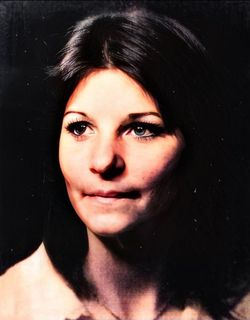
Elmyra Myrtle Miller, 74, was a woman who valued friendship and trust, qualities that tragically led to her death on May 1, 1960. She had known a young man named Henry Adolph Busch since he was a child and considered him a friend. On that Sunday evening in her Los Angeles, California, apartment, she welcomed the 28-year-old inside for a friendly visit.
They spent the evening together, talking and watching television, a comfortable and ordinary scene that belied the horrific violence to come.
The evening seemed entirely normal as it drew to a close. As Busch prepared to leave, he saw Elmyra with her back turned to him. It was in that moment that an impulse he would later describe as an overwhelming and irresistible urge to kill took over. He lunged at the elderly woman, a friend who had just shared her home and her time with him, and strangled her to death. After the murder, Busch manipulated the scene, tearing Elmyra's underclothing and pulling her housecoat up in a calculated effort to make the crime appear to be a sexually motivated attack and mislead investigators. The following day, Elmyra’s body was discovered by her doctor, who was making a routine visit.
For four months, the murder of Elmyra Miller remained a baffling case for the Los Angeles police. There were no immediate leads, and the staged crime scene sent detectives down the wrong path. The break in the case came unexpectedly in September 1960, following a series of brutal attacks that terrorized the city and earned their perpetrator the moniker "The Psycho Strangler."
The strangler’s spree escalated dramatically over Labor Day weekend. On September 4, Busch murdered 65-year-old Shirley Payne after they had watched the Alfred Hitchcock film "Psycho." The next day, he murdered his own aunt, 67-year-old Frieda Briggs. His violent rampage was finally halted on September 6, when he attacked a coworker, Magdalena Parra, who managed to fight him off and escape. Two truck drivers nearby heard her screams and apprehended Busch, holding him until police arrived.
During his interrogation for the attack on Parra, Busch began to confess. He admitted to the recent murders of Shirley Payne and Frieda Briggs and then, to the shock of investigators, confessed to the four-month-old unsolved murder of Elmyra Miller. He explained that he had known her for years and that his motive was simply an uncontrollable urge to kill.
Henry Adolph Busch was charged with three counts of first-degree murder and one count of assault with intent to commit murder. He pleaded not guilty by reason of insanity. During the trial, his defense did not have him take the stand. The jury ultimately convicted him of first-degree murder for the death of his aunt, finding it was premeditated, and second-degree murder for the killings of Elmyra Miller and Shirley Payne. He was also found guilty of the assault on his coworker.
For the first-degree murder conviction, the jury did not recommend mercy, resulting in a death sentence. For the two second-degree murder convictions, he received what were effectively life sentences. After his appeals were exhausted, Henry Adolph Busch was executed in the gas chamber at San Quentin State Prison on June 6, 1962. The case of the kind, trusting woman who opened her door to a childhood friend was officially closed, but the memory of her brutal and senseless murder serves as a chilling reminder of a friendship betrayed.