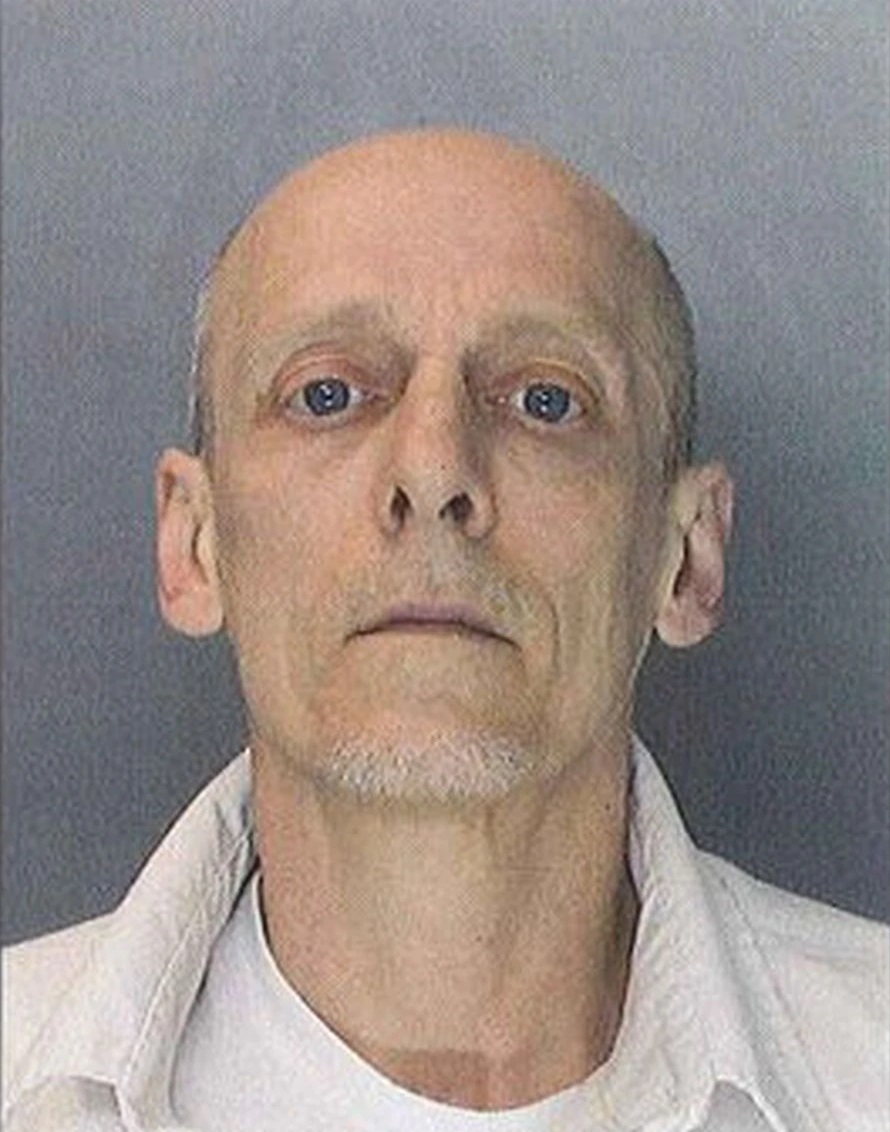
James Ray Cable: Kentucky Serial Killer and Rapist
Overview
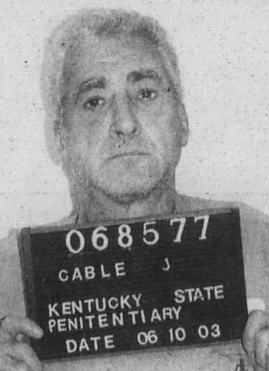
James Ray Cable was a Kentucky serial killer and repeat sexual offender whose documented history of violence stretched from the early 1970s through his final arrest in 1990. His known record includes the killing of a fellow prisoner, three murders of women later connected to him through DNA evidence, and the kidnapping and sexual assault of a 15-year-old girl whose escape ultimately brought his freedom to an end. Cable also was implicated in the suspected murders of two teenage girls who disappeared in 1990, although he was never convicted of killing them.
What makes Cable's case especially troubling is the amount of time he spent outside prison despite an already serious criminal history. He received a life sentence for the rape of a young child, killed another inmate while incarcerated, and nevertheless was eventually paroled. Several of the killings later attributed to him occurred during periods when he was free on parole. Years afterward, advances in DNA testing allowed investigators to connect evidence preserved in old homicide cases to Cable, transforming several long-unsolved murders into cases prosecutors believed they could finally take to trial.
Early Criminal History
Cable was born in Kentucky in 1948. His documented criminal record was already severe by 1971, when a Daviess County jury convicted him of raping a 7-year-old girl. He received a life sentence. On June 11, 1972, while incarcerated at the Kentucky State Reformatory, Cable escaped, but authorities captured him later the same day.
His violence continued inside prison. In April 1977, Cable attacked fellow inmate Willie S. Daniels in the prison gymnasium. Daniels, 35, was struck in the head with a metal object and suffered fatal injuries. Cable was subsequently convicted of first-degree manslaughter for Daniels' death. The conviction added another sentence to a record that already included the child rape and prison escape.
Known and DNA-Linked Victims
- Willie S. Daniels, 35 — April 24, 1977 — Kentucky State Reformatory, La Grange, Kentucky: Daniels was a fellow prisoner when Cable attacked him in the institution's gymnasium, striking him in the head with a metal object. Daniels was taken for medical treatment but died from his injuries. Cable was convicted of first-degree manslaughter in connection with the killing in 1978.
- Sandra Gail Kellems, 18 — June 8, 1982 — Owensboro, Kentucky: Kellems disappeared on her 18th birthday while walking to meet friends in Owensboro. Her body was discovered the following day, June 9, in a vacant lot near 12th and Sweeney streets. She had been severely beaten and suffered fatal blunt-force injuries to the head, and investigators found evidence indicating that she had been sexually assaulted. More than two decades later, DNA evidence connected Cable to the crime. A Daviess County grand jury indicted him for Kellems' murder in 2004.
- Oma Marie Bird, 26 — December 10, 1986 — Louisville, Kentucky: Bird's partially clothed body was found in an alley in the 1000 block of Dixie Highway in Louisville. She had suffered a fatal head injury, and investigators determined that she had been sexually assaulted. Cable was on parole at the time. Years later, DNA evidence associated with the crime was linked to Cable, and he was indicted for Bird's murder and rape.
- Helen V. Booth, 24 — May 11, 1989 — Riverside Park, Louisville, Kentucky: Booth's body was discovered in Riverside Park near 3900 Lees Lane. She had been sexually assaulted and suffered a fatal head injury inflicted with a sharp or heavy object. Booth was pregnant at the time of her death. Cable became a person of interest long before DNA testing finally connected him to the killing. In 2004, he was indicted in Jefferson County for Booth's rape and murder.
The Murder of Sandra Gail Kellems
Sandra Gail Kellems was celebrating her 18th birthday on June 8, 1982, when she set out on foot to meet friends in Owensboro. She never reached them. The following day, her body was discovered concealed in vegetation in a vacant lot near the intersection of 12th and Sweeney streets. Investigators determined that she had been violently beaten and struck in the back of the head. Evidence at the scene also led police to believe that she had been sexually assaulted.
The case remained unresolved for years. Cable had been paroled in 1981 and was free when Kellems was killed. He returned to prison in 1983 following another offense and parole violation, but at the time investigators did not have the forensic technology necessary to identify him from the biological evidence preserved in Kellems' case. That changed two decades later. A DNA comparison eventually connected Cable to evidence from the crime scene, and in 2004 prosecutors charged him with Kellems' murder.
The Murder of Oma Marie Bird
Cable was paroled again in February 1986. Approximately ten months later, 26-year-old Oma Marie Bird was found dead in Louisville. Her body was discovered on December 10, 1986, in an alley off Dixie Highway. She was partially clothed, had suffered severe trauma to the head, and investigators concluded that she had been sexually assaulted.
Bird's killing remained unsolved for many years. When investigators later reviewed old homicide evidence with modern forensic methods, DNA from Bird's case was connected to Cable. The connection between Bird and other unsolved killings became a critical part of the investigation that eventually caused Louisville police to describe the murders as the work of a serial killer. Cable was ultimately indicted for both murder and rape in Bird's death.
The Murder of Helen V. Booth
On May 11, 1989, 24-year-old Helen V. Booth was found dead in Louisville's Riverside Park. Booth had been sexually assaulted and suffered a devastating head injury caused by a sharp or heavy object. She was also pregnant. Her homicide would later become especially significant because Cable had been suspected in connection with the case years before forensic evidence was strong enough to support criminal charges.
One of the early clues came from Phillip Clopton, a man who later became Cable's accomplice in another horrifying crime. Information contained in Clopton's writings implicated Cable in Booth's death, but investigators initially lacked enough evidence to prosecute him. When DNA technology improved, preserved biological evidence provided the connection investigators had been missing. Cable was eventually indicted for Booth's murder and rape alongside the charges involving Oma Bird.
Bridgett Allen and Sherri Wilson
Two additional teenagers became closely associated with the Cable investigation in 1990. Bridgett Allen and Sherri Wilson, both 14, disappeared on January 25, 1990. The girls knew Phillip Clopton, Cable's later accomplice, and they were also acquainted with the 15-year-old girl whom Cable and Clopton would abduct several months later.
- Bridgett Allen, 14 — Disappeared January 25, 1990 — Louisville, Kentucky: Allen vanished with Sherri Wilson. Evidence discovered after Clopton's death, combined with statements reported by the surviving kidnapping victim, implicated Cable and Clopton in killing the girls. Investigators searched areas of LaRue, Nelson and Hardin counties after discovering information describing the disposal of human remains. A severed arm recovered during the investigation was later identified as belonging to Allen. An exact date of death was never independently established, and Cable was not convicted of her murder.
- Sherri Wilson, 14 — Disappeared January 25, 1990 — Louisville, Kentucky: Wilson disappeared with Bridgett Allen. The surviving kidnapping victim testified that statements made by Cable and Clopton indicated that the two men had killed both missing teenagers. Clopton's writings also implicated the men in the deaths and described dismemberment and the disposal of remains in several Kentucky counties. Wilson's exact date of death was never established, and Cable was never convicted of killing her.
The 1990 Kidnapping and the Survivor Who Brought Cable Down
On April 5, 1990, Cable and Phillip Clopton abducted a 15-year-old girl identified in court records by her initials. She was taken to a remote area of LaRue County, where Cable bound her and sexually assaulted her. The girl was kept captive at an isolated campsite and subjected to repeated violence and sexual abuse.
During the ordeal, statements made by the two men became important evidence concerning Bridgett Allen and Sherri Wilson. According to testimony later examined by the Kentucky Court of Appeals, Cable made a statement indicating that the surviving teenager was to be killed in the same manner as Bridgett and Sherri. Clopton subsequently told the girl that he and Cable had murdered her two missing friends.
The captivity continued for approximately three weeks. On April 26, 1990, while Cable was away and Clopton was guarding the teenager, she obtained Clopton's shotgun and shot him. Clopton died, and the girl escaped from the isolated area and reached help. Her survival gave investigators both a living witness and access to evidence left behind by Clopton.
The Evidence Left by Phillip Clopton
Authorities searching the campsite and Clopton's belongings discovered writings and a hand-drawn map containing disturbing information about the missing teenagers. Investigators believed the material described the murders and dismemberment of Bridgett Allen and Sherri Wilson and indicated locations where body parts had allegedly been scattered across rural areas of LaRue, Nelson and Hardin counties.
The investigation also produced information implicating Cable in Helen Booth's 1989 murder. Although the statements and writings were significant, prosecutors at that time did not possess the forensic evidence they would later obtain through DNA testing. The 1990 investigation nevertheless established Cable's involvement in the kidnapping and sexual assault of the surviving teenager and ensured that he would not again be released into the community.
Conviction and 300-Year Sentence
Cable was prosecuted for the kidnapping and sexual assault of the 15-year-old survivor. A jury found him guilty of kidnapping, first-degree rape, first-degree sodomy and persistent-felony-offender charges. The resulting punishment included three 100-year terms, effectively guaranteeing that Cable would spend the remainder of his life in prison.
His conviction was particularly important because the murder cases that would later establish the broader scope of his crimes had not yet been solved. At the beginning of the 1990s, Cable was imprisoned because of the survivor's testimony and escape, not because authorities had successfully prosecuted him for the unsolved murders of Kellems, Bird and Booth.
DNA Connects Three Cold Cases
Advances in forensic DNA analysis eventually accomplished what investigators in the 1980s could not. During a review of old evidence, authorities discovered biological links among several unsolved Kentucky homicides. Investigators compared the evidence with a DNA sample obtained from Cable, who was already serving his lengthy prison sentence.
The results linked Cable to Sandra Gail Kellems, Oma Marie Bird and Helen V. Booth. The cases stretched from Owensboro to Louisville and from 1982 to 1989. Cable had been out of prison when each of the three women was killed. In March 2004, grand juries returned murder indictments against him. Louisville prosecutors also charged him with rape in connection with the Bird and Booth homicides and prepared to seek the death penalty.
Other Crimes Investigated for Possible Connections
Once Cable's DNA was connected to multiple murders, authorities began examining whether he might have been responsible for additional unsolved killings. Investigators in Daviess County considered testing evidence from the brutal 1990 murder of a man whose body had been discovered outside Owensboro. The victim, later identified as William Dennis Mathews, had been subjected to extensive violence and dismemberment. Cable's name had surfaced during the original investigation, but no publicly established DNA match ultimately identified Cable as Mathews' killer.
Owensboro investigators also reviewed other unsolved crimes committed during periods when Cable was outside prison. The existence of these inquiries does not establish Cable's responsibility for those cases. The strongest documented murder evidence remains the Daniels conviction, the DNA evidence connecting him to Kellems, Bird and Booth, and the testimony and writings implicating Cable and Clopton in the deaths of Bridgett Allen and Sherri Wilson.
Death Before the Murder Trials
Despite the 2004 indictments, the three DNA-linked murder cases moved slowly through the Kentucky court system. Prosecutors intended to pursue the Louisville cases involving Bird and Booth before proceeding with the Owensboro prosecution for Kellems' murder. Questions concerning Cable's mental capacity and the constitutionality of imposing a death sentence also complicated the proceedings.
Cable remained in prison while the cases were pending. He never confessed to the three DNA-linked murders. On December 3, 2013, James Ray Cable died in Kentucky state custody at the age of 65. His death ended the prosecutions before juries could determine his guilt in the murders of Sandra Kellems, Oma Bird and Helen Booth.
Legacy of the James Ray Cable Case
James Ray Cable's criminal history illustrates both the extraordinary value of preserved forensic evidence and the consequences of unresolved violent crime. One homicide resulted in a manslaughter conviction almost immediately, while three other killings remained unsolved for years until DNA technology allowed investigators to identify a common suspect. By then, Cable was already serving what amounted to a life sentence because a teenage kidnapping victim had survived long enough to expose him and his accomplice.
The documented record leaves four deaths at the center of Cable's history: Willie Daniels, whose killing resulted in Cable's manslaughter conviction, and Sandra Gail Kellems, Oma Marie Bird and Helen V. Booth, whose deaths were connected to him through DNA and resulted in murder indictments. Bridgett Allen and Sherri Wilson remain additional alleged victims supported by the testimony surrounding the 1990 kidnapping and evidence associated with Phillip Clopton. Because Cable died before the cold-case murder trials could occur, the courtroom process that might have established a final legal accounting of his crimes was never completed.