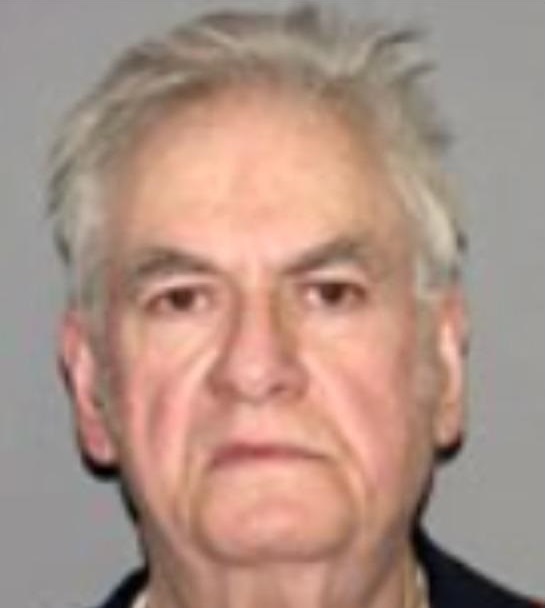
Donald Harvey: The Hospital Serial Killer Known as the “Angel of Death”
Donald Harvey was an American serial killer who used his employment in hospitals and medical facilities to murder vulnerable patients. His crimes continued for approximately seventeen years, beginning in Kentucky in 1970 and ending in Cincinnati, Ohio, in 1987. Because many of his victims were already seriously ill, their deaths initially appeared natural and often received little additional investigation.
Harvey pleaded guilty to thirty-seven killings in Ohio and Kentucky. He gave investigators several different estimates of his actual victim count, sometimes claiming that he had killed more than seventy people and, on other occasions, suggesting that the total may have been as high as eighty-seven. The exact number will probably never be known.
Harvey used numerous methods, including suffocation, interruption of oxygen supplies, deliberate medication overdoses, arsenic, cyanide, rat poison and other toxic substances. He also tampered with feeding tubes, intravenous equipment, catheters and respiratory equipment. Many of these acts were concealed within ordinary medical routines.
Early Life
Donald Harvey was born on April 15, 1952, in Hamilton, Ohio. He was raised near Booneville, Kentucky, in a financially struggling rural household. Harvey later described a troubled childhood that included sexual abuse by people close to him. Although these experiences formed part of his personal history, they do not excuse or adequately explain the deliberate violence he later committed.
Harvey left school during the ninth grade but later obtained a high-school equivalency diploma through a correspondence program. In May 1970, when he was eighteen years old and had little formal medical training, he began working as an orderly at Marymount Hospital in London, Kentucky.
The Beginning of the Murders at Marymount Hospital
Marymount Hospital gave Harvey direct access to elderly, disabled and critically ill patients. His duties included cleaning rooms, assisting patients and handling equipment. The position placed him near people who were frequently unable to speak, resist or report mistreatment.
Harvey later identified Logan Evans, an eighty-eight-year-old stroke patient, as his first deliberate murder victim. Evans died on May 31, 1970. Harvey admitted smothering him with a pillow and a plastic covering after becoming angry during an incident involving the patient’s incontinence.
That first killing established a pattern. Harvey learned that a medically fragile patient could be killed without automatically creating suspicion. Staff members and physicians often expected such patients to die, and autopsies were not routinely performed. Harvey subsequently interfered with oxygen equipment, administered excessive medication, suffocated patients and deliberately mishandled medical devices.
Harvey sometimes described the murders as acts of mercy, claiming that he wanted to end suffering. His own accounts, however, repeatedly contradicted that explanation. Some victims were killed because they irritated him, resisted him or caused him additional work. Other killings appear to have been committed for excitement, revenge, control or experimentation.
Documented Kentucky Victims
The following patients were among those Harvey admitted killing or deliberately harming while working at Marymount Hospital in London, Kentucky. The dates below refer to their recorded dates of death.
- Logan Evans, 88 — May 31, 1970 — Marymount Hospital, London, Kentucky. Harvey admitted suffocating Evans with a pillow and plastic covering.
- James Tyree, 69 — May 31, 1970 — Marymount Hospital, London, Kentucky. Harvey improperly used a catheter and restrained Tyree as his condition rapidly deteriorated. Harvey later characterized the death as accidental, although it resulted from his deliberate mistreatment.
- Elizabeth Wyatt, 42 — June 22, 1970 — Marymount Hospital, London, Kentucky. Harvey admitted cutting off Wyatt’s oxygen supply.
- Eugene McQueen, 43 — July 10, 1970 — Marymount Hospital, London, Kentucky. Harvey deliberately repositioned McQueen so that the incapacitated patient aspirated fluids and died.
- Harvey Williams, 82 — July 12, 1970 — Marymount Hospital, London, Kentucky. Williams died after Harvey connected or supplied defective oxygen equipment. Harvey later called the death accidental.
- Ben Gilbert, 81 — July 28, 1970 — Marymount Hospital, London, Kentucky. Harvey deliberately injured Gilbert while handling a catheter. Gilbert went into shock, remained comatose and died several days after the initial assault.
- Maude Nichols, 64 — August 15, 1970 — Marymount Hospital, London, Kentucky. Harvey caused Nichols to receive oxygen from defective equipment, producing a fatal medical crisis.
- William Bowling, 58 — August 30, 1970 — Marymount Hospital, London, Kentucky. Harvey admitted interrupting Bowling’s oxygen supply. Bowling suffered a fatal heart attack.
- Viola Reed Wyran, 63 — November 4, 1970 — Marymount Hospital, London, Kentucky. Harvey initially attempted to suffocate Wyran and later caused her death by interfering with her oxygen equipment.
- Margaret Harrison, 91 — December 6, 1970 — Marymount Hospital, London, Kentucky. Harvey administered excessive quantities of powerful pain medication, including morphine, codeine and Demerol.
- Sam Carroll, 80 — January 6, 1971 — Marymount Hospital, London, Kentucky. Harvey caused Carroll to receive inadequate oxygen through deliberately compromised equipment.
- Maggie Rawlins — January 15, 1971 — Marymount Hospital, London, Kentucky. Harvey admitted suffocating Rawlins with a pillow and plastic covering.
- Silas Butner, 62 — January 23, 1971 — Marymount Hospital, London, Kentucky. Harvey caused Butner to receive oxygen from faulty equipment.
- John V. Combs, 68 — January 26, 1971 — Marymount Hospital, London, Kentucky. Harvey attempted to smother Combs and then interfered with the patient’s oxygen supply.
- Milton Bryant Sasser, 91 — March 14, 1971 — Marymount Hospital, London, Kentucky. Harvey killed Sasser by administering a fatal morphine overdose.
Harvey was eventually prosecuted in Kentucky for nine Marymount deaths. He pleaded guilty to eight counts of murder and one count of manslaughter. Other Marymount deaths remained part of his confessions and the larger investigation but did not result in separate convictions.
Employment After Marymount
Harvey left Marymount Hospital in 1971. He briefly joined the United States Air Force but was discharged after a short period. During the following years, he moved among medical positions and continued gaining access to patients, medication, laboratory materials and hospital equipment.
In the mid-1970s, Harvey worked at the Cincinnati Veterans Administration Medical Center. He later claimed that he killed additional patients there by reducing oxygen flow, administering poison or interfering with treatment. Investigators had difficulty proving many of these claims because years had passed, medical records were incomplete and numerous bodies had already been buried or cremated.
Harvey also worked around autopsy facilities. He was eventually dismissed from the Veterans Administration hospital after being caught taking human tissue and body parts. He claimed that he used some of the material in private occult rituals.
Murders Outside the Hospital
Harvey did not limit his violence to hospital patients. He poisoned acquaintances, neighbors and relatives of his longtime companion. These incidents undermined his later claim that he killed only to relieve the suffering of terminally ill people.
- Helen Metzger, 63 — April 10, 1983 — Cincinnati, Ohio. Metzger was Harvey’s neighbor. After a disagreement, Harvey placed arsenic in food prepared for her. Metzger became severely ill, suffered paralysis and internal bleeding and died following hospitalization.
- Henry Hoeweler, 82 — 1983 — Cincinnati area, Ohio. Hoeweler was the father of Harvey’s companion, Carl Hoeweler. Harvey repeatedly administered arsenic, contributing to kidney failure and a fatal stroke. The exact calendar date of his death is not consistently preserved in public accounts.
- Howard Vetter — 1983 — Cincinnati area, Ohio. Vetter drank alcohol that Harvey had contaminated with wood alcohol. He later suffered a fatal heart attack. Harvey described the poisoning as unintended.
- Hiram Profitt — September 19, 1984 — Cincinnati, Ohio. Harvey administered an excessive dose of the anticoagulant heparin. He later described the death as accidental.
- James Peluso, 65 — November 9, 1984 — Cincinnati, Ohio. Peluso, who had previously been personally involved with Harvey, was poisoned with arsenic.
- Edward Wilson — March 23, 1985 — Cincinnati, Ohio. Harvey mixed arsenic into Wilson’s medicine. Wilson died several days after the poisoning.
Harvey also poisoned Carl Hoeweler with arsenic on multiple occasions because he suspected that Hoeweler was being unfaithful. Hoeweler survived. Harvey poisoned a friend named Diane Alexander by placing hepatitis-contaminated material in her drink. She contracted hepatitis but survived. These attacks were among the attempted murders and assaults included in the wider criminal case.
Daniel Drake Memorial Hospital
Harvey began working at Daniel Drake Memorial Hospital in Cincinnati in 1983. Drake treated patients requiring extended care, rehabilitation or support following catastrophic illnesses and injuries. Many patients were unable to communicate and depended on feeding tubes, oxygen lines or other medical devices.
At Drake, Harvey increasingly relied on poison. Cyanide was particularly effective for his purposes because a sudden death in a seriously ill patient might be attributed to cardiac arrest or existing disease. He obtained cyanide and arsenic through his work and stored poisonous substances where he could access them.
Harvey introduced poison into fruit juice, pudding, soup, water, medicine, feeding bags, gastric tubes, nasal tubes and intravenous lines. In other cases, he smothered patients with wet plastic material or administered rat poison. He frequently selected methods that could be disguised as routine patient care.
Documented Drake Hospital Victims
- Nathanial J. Watson, 65 — April 8, 1986 — Daniel Drake Memorial Hospital, Cincinnati, Ohio. Harvey suffocated Watson with a wet plastic liner after previously making unsuccessful attempts to kill him.
- Leon Nelson, 64 — April 14, 1986 — Daniel Drake Memorial Hospital, Cincinnati, Ohio. Harvey suffocated Nelson with wet plastic material.
- Virgil Weddle, 81 — April 19, 1986 — Daniel Drake Memorial Hospital, Cincinnati, Ohio. Harvey placed rat poison in Weddle’s pudding. The poisoning caused a fatal heart attack.
- Lawrence Berndsen — April 23, 1986 — Daniel Drake Memorial Hospital, Cincinnati, Ohio. Harvey repeatedly administered rat poison. Berndsen died several days after the poisoning began.
- Doris Nally, 65 — May 2, 1986 — Daniel Drake Memorial Hospital, Cincinnati, Ohio. Harvey placed cyanide in Nally’s apple juice.
- Edward Schreibesis, 63 — June 20, 1986 — Daniel Drake Memorial Hospital, Cincinnati, Ohio. Harvey poisoned Schreibesis with arsenic placed in food.
- Robert Crockett, 80 — June 29, 1986 — Daniel Drake Memorial Hospital, Cincinnati, Ohio. Harvey introduced cyanide through Crockett’s intravenous equipment.
- Donald Barney — July 7, 1986 — Daniel Drake Memorial Hospital, Cincinnati, Ohio. Harvey administered cyanide through a feeding tube and by injection.
- James T. Woods, 65 — July 25, 1986 — Daniel Drake Memorial Hospital, Cincinnati, Ohio. Harvey delivered cyanide through Woods’s gastric tube.
- Ernst C. Frey, 85 — August 16, 1986 — Daniel Drake Memorial Hospital, Cincinnati, Ohio. Harvey administered arsenic through Frey’s gastric tube.
- Milton Canter, 85 — August 29, 1986 — Daniel Drake Memorial Hospital, Cincinnati, Ohio. Harvey placed cyanide into Canter’s nasal feeding tube.
- Roger Evans, 74 — September 17, 1986 — Daniel Drake Memorial Hospital, Cincinnati, Ohio. Harvey introduced cyanide through Evans’s gastric tube.
- Clayborn Kendrick — September 20, 1986 — Daniel Drake Memorial Hospital, Cincinnati, Ohio. Harvey administered cyanide through Kendrick’s gastric tube and by injection.
- Albert Buehimann, 69 — October 27, 1986 — Daniel Drake Memorial Hospital, Cincinnati, Ohio. Harvey dissolved cyanide in Buehimann’s drinking water.
- William Collins, 85 — October 30, 1986 — Daniel Drake Memorial Hospital, Cincinnati, Ohio. Harvey placed cyanide in Collins’s orange juice.
- Henry Cody, 78 — November 4, 1986 — Daniel Drake Memorial Hospital, Cincinnati, Ohio. Harvey administered a cyanide solution through Cody’s gastric tube.
- Mose Thompson, 65 — November 22, 1986 — Daniel Drake Memorial Hospital, Cincinnati, Ohio. Harvey introduced cyanide through Thompson’s nasal tube.
- Odas Day, 72 — December 9, 1986 — Daniel Drake Memorial Hospital, Cincinnati, Ohio. Harvey administered a cyanide solution.
- Cleo Fish, 67 — December 10, 1986 — Daniel Drake Memorial Hospital, Cincinnati, Ohio. Harvey placed cyanide in Fish’s cranberry juice. He later admitted removing a lock of her hair after her death.
- Leo Parker, 47 — January 1, 1987 — Daniel Drake Memorial Hospital, Cincinnati, Ohio. Harvey placed cyanide into Parker’s feeding system.
- Margaret Kuckro, 80 — February 15, 1987 — Daniel Drake Memorial Hospital, Cincinnati, Ohio. Harvey poisoned Kuckro with cyanide placed in orange juice. Some case chronologies identify February 5 as the date of the poisoning, but cemetery records list February 15 as her date of death.
- Stella Lemon — March 16, 1987 — Daniel Drake Memorial Hospital, Cincinnati, Ohio. Harvey administered cyanide several weeks before Lemon died.
- Joseph M. Pike, 68 — March 6, 1987 — Daniel Drake Memorial Hospital, Cincinnati, Ohio. Harvey poisoned Pike with Detachol, an adhesive-removing chemical used in medical care.
- Hilda Leitz, 82 — March 7, 1987 — Daniel Drake Memorial Hospital, Cincinnati, Ohio. Harvey placed Detachol in Leitz’s feeding tube and orange juice.
- John W. Powell, 44 — March 7, 1987 — Daniel Drake Memorial Hospital, Cincinnati, Ohio. Harvey placed cyanide into Powell’s gastric feeding tube. Powell’s death led directly to Harvey’s exposure and arrest.
The Death of John Powell and Discovery of Cyanide
John Powell had suffered devastating brain injuries in a motorcycle accident and required extensive medical support. Because Powell’s condition was serious, his death on March 7, 1987, might easily have been attributed to his injuries.
A routine autopsy changed the course of the investigation. The medical examiner detected an unusual odor and testing revealed a large quantity of cyanide in Powell’s body. Cyanide could not be explained by Powell’s treatment or medical condition. Investigators began examining the hospital staff members who had access to him.
Harvey quickly became a central suspect. He had been present around Powell, had access to the feeding tube and possessed knowledge of poisons. Investigators also learned about his dismissal from the Veterans Administration hospital and his earlier misconduct involving human tissue.
Harvey initially confessed to killing Powell. As detectives and prosecutors continued questioning him, he began describing other deaths. His admissions expanded from one killing to dozens.
Warnings From Hospital Employees
Some nurses at Drake had noticed that an unusual number of patients died while Harvey was working. Employees reportedly referred to him with dark nicknames because death appeared to follow him. Concerns were raised internally, but the pattern did not immediately produce a criminal investigation.
The patients were medically vulnerable, and each individual death appeared capable of explanation. Harvey also presented himself as a cooperative and attentive employee. His calm behavior and knowledge of hospital routines reduced suspicion.
The case demonstrated how a medical killer could hide within an institution. A death certificate might list heart failure, respiratory failure or complications of disease without identifying the poison, suffocation or deliberate interference that caused the final collapse.
Arrest and Confessions
Police arrested Harvey on April 6, 1987, for the murder of John Powell. He was thirty-four years old when Powell was killed and turned thirty-five shortly after his arrest.
Harvey’s defense attorney negotiated with prosecutors as the number of suspected murders increased. Ohio prosecutors had the option of seeking the death penalty if they proved multiple aggravated murders. Harvey agreed to confess and plead guilty in exchange for avoiding execution.
During extended interviews, Harvey described victims, methods and locations. Investigators attempted to compare his statements with medical records, death certificates and employee schedules. Some admissions contained details that appeared credible. Others could not be independently confirmed because the patients had died years earlier.
Harvey sometimes changed his claimed victim count. At different points, he spoke of approximately fifty, seventy or eighty-seven killings. Investigators believed he exaggerated some claims but also considered it possible that additional victims were never identified.
Ohio Plea and Sentencing
On August 18, 1987, Harvey pleaded guilty in Hamilton County, Ohio, to twenty-four counts of aggravated murder. He also pleaded guilty to attempted aggravated murder and felonious assault charges involving people who survived his attacks.
He received multiple life sentences. The agreement was structured to keep him imprisoned for the remainder of his natural life and allowed prosecutors to pursue additional charges if further murders were established.
Additional proceedings eventually increased the number of Ohio aggravated-murder convictions associated with Harvey to twenty-eight.
Kentucky Plea
After the Ohio case, Kentucky authorities investigated Harvey’s admissions concerning Marymount Hospital. In November 1987, he pleaded guilty in Laurel County Circuit Court to eight murders and one manslaughter committed at the hospital.
The Kentucky court imposed a life sentence plus twenty years. The combined Ohio and Kentucky proceedings established thirty-seven confirmed victims for legal and historical purposes, although not every death Harvey described resulted in an individual conviction.
Motives and Contradictory Explanations
Harvey repeatedly attempted to present himself as a mercy killer. He claimed that he had ended the lives of patients who were suffering and unable to recover. This explanation was inconsistent with the evidence.
Several victims were not terminally ill. Some were recovering or medically stable. Others were attacked because Harvey was angry, jealous or personally offended. His poisoning of friends, neighbors and members of his companion’s family had no plausible connection to mercy.
Harvey also admitted that killing produced a feeling of power. Patients were dependent on him, and he controlled whether they received oxygen, medication, food or poison. His hospital uniform allowed him to approach victims without resistance.
The variety of methods also suggests experimentation rather than a single misguided purpose. Harvey changed poisons, altered dosages and tested different ways of delivering lethal substances. He frequently observed the resulting symptoms while other staff members attempted to save the patient.
How the Crimes Remained Undetected
Harvey’s victims were usually elderly, disabled or critically ill. Their deaths did not automatically appear unusual. The absence of routine autopsies allowed poisoning and suffocation to remain hidden.
He also benefited from fragmented medical oversight. A nurse might notice one suspicious death without knowing that similar events had occurred during Harvey’s earlier employment. Hospitals did not have modern computerized systems capable of comparing death rates with employee schedules.
Harvey understood medical expectations well enough to exploit them. He selected substances and methods that could produce symptoms resembling natural complications. When a patient died, the existing illness usually became the official explanation.
Imprisonment
Harvey spent the remainder of his life in the Ohio prison system. His sentences included twenty-eight consecutive life terms and substantial financial penalties. Although he periodically gave interviews, he never produced a completely reliable or consistent account of all his victims.
Families of the victims criticized the attention given to Harvey and objected to portrayals that repeated his claims of mercy. To them, his victims were not anonymous hospital cases. They were parents, grandparents, spouses, relatives and friends whose illnesses made them dependent upon the person who killed them.
Death in Prison
On March 28, 2017, Harvey was found severely beaten in his cell at the Toledo Correctional Institution in Toledo, Ohio. He suffered extensive head injuries and was transported to a hospital.
Donald Harvey died on March 30, 2017, at the age of sixty-four. Another inmate, James Elliott, was later prosecuted for the attack and pleaded guilty to killing him.
Legacy of the Case
The Donald Harvey case remains one of the most disturbing examples of serial murder within medical institutions. His crimes exposed weaknesses in hospital supervision, employee screening, medication security and the investigation of unexpected patient deaths.
The case also demonstrated the danger of accepting a medical worker’s self-description as a mercy killer. Harvey acted without permission, medical necessity or legal authority. His victims were unable to consent, and many were killed for reasons unrelated to pain or terminal illness.
Harvey’s confirmed total of thirty-seven victims places him among the most prolific known serial killers in United States history. His own higher claims remain impossible to verify. Missing records, delayed investigations and the natural vulnerability of his victims mean that the complete number of people he killed may never be established.
Behind the statistics were individual patients whose dependence on medical care was exploited. The names and documented dates of death preserve their identities and distinguish them from the exaggerated numbers that Harvey repeatedly used to draw attention to himself.