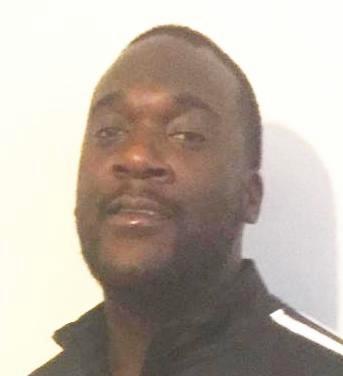
Edward F. Schreibeis, a 63-year-old man, died on June 20, 1986, while he was a patient at Daniel Drake Memorial Hospital in Cincinnati, Ohio. Contemporary reporting later identified Schreibeis as one of the hospital patients murdered by orderly Donald Harvey during a series of killings that had initially appeared to be ordinary deaths among seriously ill or elderly patients. Schreibeis’s death attracted no immediate public suspicion of homicide, and it was only after investigators uncovered Harvey’s activities the following year that the circumstances surrounding his death became part of the wider serial-murder investigation. Cemetery records confirm Schreibeis’s June 20, 1986 death date and identify him as Edward F. Schreibeis.
According to contemporary UPI reporting based on the charges and guilty pleas against Harvey, Schreibeis was killed with cyanide placed in orange juice. That account differs from some later secondary compilations that describe the killing as an arsenic poisoning involving soup; the contemporaneous account specifically identifies Schreibeis as a Drake Hospital patient who died after receiving cyanide-laced orange juice. Harvey had access to vulnerable patients through his work as an orderly, and poison was particularly difficult to recognize when used against people whose medical conditions made sudden deterioration or death appear plausible. Schreibeis was one of a succession of Drake patients whose deaths in 1986 and early 1987 would eventually be attributed to Harvey.
The investigation that ultimately exposed Schreibeis’s murder began with a different Drake Hospital patient, John Powell. Powell, who had been severely brain injured in a motorcycle accident and was not expected to recover, died in March 1987. During his autopsy, forensic pathologist Dr. Lee Lehman detected evidence suggesting cyanide, and testing confirmed that Powell had received a lethal dose. Police focused on Donald Harvey, who had been caring for patients at Drake, and Harvey admitted poisoning Powell. Cincinnati police charged him with Powell’s murder on April 6, 1987. That initial arrest opened a far larger investigation into unexplained deaths at the hospital.
As detectives examined Harvey’s history and questioned him further, the investigation expanded dramatically. Harvey began admitting responsibility for numerous deaths, including those of patients who had died months before Powell. Schreibeis’s June 1986 death was among the cases attributed to him. The pattern investigators uncovered showed that Harvey had used several methods to kill, particularly cyanide and arsenic, often introducing poisons into patients’ drinks, food, feeding tubes or other medical access points. Because many of the victims were already hospitalized with serious health problems, families and medical personnel had originally believed they had died from their illnesses rather than deliberate poisoning.
Harvey remained jailed as prosecutors prepared a much larger case. He had originally been held in connection with a single murder, with bond set at $200,000, but in August 1987 a Hamilton County Common Pleas judge revoked his bond after prosecutors indicated that numerous additional murder charges were anticipated. By then Harvey had reportedly confessed to dozens of killings, and negotiations were underway that would allow him to avoid a possible death sentence in exchange for admitting responsibility for the murders investigators could establish.
On August 18, 1987, Harvey pleaded guilty in Cincinnati to the aggravated murders of 24 people, including Schreibeis, along with attempted aggravated murder and felonious-assault offenses involving other victims. The formal list of victims presented in connection with those pleas identified Edward Schreibeis as a Drake Hospital patient who died on June 20, 1986 after being given cyanide-laced orange juice. Harvey’s pleas meant there would be no conventional murder trial requiring prosecutors to prove Schreibeis’s killing to a jury; instead, Harvey formally accepted criminal responsibility as part of the negotiated resolution of the extraordinarily large series of cases.
Harvey was sentenced to consecutive life terms, initially leaving him ineligible for parole for at least 60 years. Investigations in Ohio and Kentucky continued after the Cincinnati pleas, producing additional admissions and convictions connected with patients Harvey had encountered during earlier hospital employment. He ultimately became one of the most prolific convicted serial murderers associated with American health-care facilities. In Schreibeis’s case, there is no indication in the available online reporting of another suspect being arrested, charged or prosecuted for the killing. The identified and convicted perpetrator was Donald Harvey, whose confession and guilty plea transformed Schreibeis’s seemingly ordinary hospital death into one of the documented murders in a much larger series of poisonings.