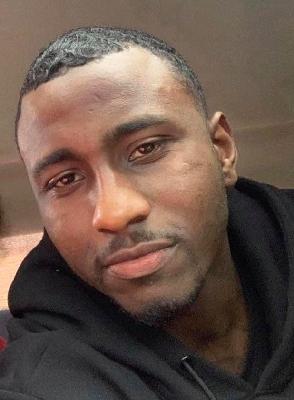
James T. Woods, a 65-year-old man, was a patient at Daniel Drake Memorial Hospital in Cincinnati, Ohio, when his life became part of a much larger pattern of killings that went undetected inside the medical system. On July 25, 1986, Woods died after cyanide was administered through his gastric tube. At the time, his death did not immediately expose the crime occurring around him. Woods was one of a succession of seriously ill or vulnerable patients who died while Donald Harvey, a hospital orderly and nurse's aide, worked at Drake. Harvey had access to patients, their food, feeding tubes and other medical equipment, giving him opportunities to poison people without immediately attracting suspicion.
Woods's death was later identified as an intentional poisoning committed by Harvey. The method was particularly difficult to detect in a hospital environment because the cyanide was introduced directly through Woods's gastric tube, and many of Harvey's victims were already suffering from significant medical problems. Deaths among such patients could initially appear to be the consequence of illness rather than deliberate homicide. Harvey exploited that vulnerability repeatedly, using cyanide, arsenic, rat poison, cleaning chemicals and other methods against patients under his care. Woods's killing occurred during an extended series of deaths at Drake in 1986 and 1987.
The case did not begin to unravel until March 1987, months after Woods was killed. Another Drake patient, John Powell, died after having spent months severely disabled following a motorcycle accident. During Powell's autopsy, forensic pathologist Dr. Lee Lehman detected the distinctive odor associated with cyanide. Testing confirmed that Powell had received a lethal dose. Investigators began focusing on Harvey, who had been working around the patients whose deaths were coming under scrutiny. Cincinnati police charged Harvey on April 6, 1987, with Powell's murder after questioning him and obtaining an admission that he had poisoned Powell.
What initially appeared to investigators to be a single poisoning quickly expanded into a much broader investigation. Employees at Drake had already been troubled by the number of deaths in the area where Harvey worked, including deaths involving patients who did not necessarily appear to be on the verge of dying. Investigators and journalists began examining earlier cases, and Woods's July 1986 death was eventually included among the murders attributed to Harvey. Authorities determined that Woods had been killed with cyanide placed into his gastric tube rather than dying solely from the medical problems that had brought him to the hospital.
Harvey ultimately acknowledged an extraordinary number of killings. His attorney negotiated with Hamilton County prosecutors while authorities investigated numerous suspicious deaths and prosecutors considered charges that could expose Harvey to the death penalty. Under a plea agreement, Harvey admitted responsibility for a large group of murders in exchange for avoiding execution. On August 18, 1987, he appeared before Hamilton County Common Pleas Judge William Mathews and pleaded guilty to 24 aggravated murder counts, along with additional counts involving attempted killings and an assault. Woods was specifically listed among the Drake Hospital patients whose murders were covered by Harvey's guilty pleas.
During the court proceeding, the murder charges were read individually, and Harvey repeatedly entered guilty pleas. Prosecutors described him as mentally competent but driven by a compulsion to kill. The agreement produced prison sentences designed to keep him incarcerated for the remainder of his practical life; the judge said Harvey would be approximately 95 before he could even become eligible for parole under the sentencing arrangement then imposed. The Ohio convictions were not the end of the case. Investigators also examined deaths from Harvey's earlier employment at Marymount Hospital in Kentucky, where he had worked years before the Drake killings.
Later in 1987, Harvey pleaded guilty in Kentucky to additional murders and a manslaughter charge involving hospital patients there. His acknowledged victim total eventually reached at least 37 killings through guilty pleas, while Harvey himself made varying claims that the true number of people he killed was substantially higher. His methods varied, but poisoning was central to many of the cases. He sometimes portrayed his actions as mercy killings intended to end suffering, although investigators found that his motives were not consistently compassionate and that anger, resentment and his own desire to exercise control also figured into his behavior.
There was therefore no unresolved suspect in Woods's killing once Harvey confessed and entered his guilty pleas. Harvey was the identified killer, was arrested during the investigation that began with John Powell's cyanide death, was formally prosecuted for the wider series of murders, and admitted criminal responsibility for Woods's death as part of the Ohio case. Woods's killing ultimately became one documented episode in one of the most extensive hospital serial-murder investigations in American history, a case in which patients who appeared to be dying naturally were later discovered to have been deliberately poisoned by a person entrusted with helping care for them.