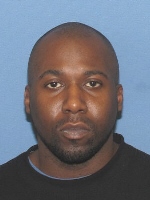
Claborn Laughlin Kendrick, identified in crime reporting as Clayborn Kendrick, was a 69-year-old Black man from Cincinnati, Ohio, whose death on September 20, 1986, became part of one of the most notorious hospital serial-murder cases in American history. Kendrick had been a patient at Drake Memorial Hospital in Cincinnati, where he was recovering from a serious head injury. At the time, his death did not immediately reveal what had happened to him. Donald Harvey, an orderly working at Drake, was secretly killing patients while moving through the hospital in the ordinary course of his duties, allowing deaths that might otherwise have appeared suspicious to blend into a setting where many patients were already gravely ill.
According to later accounts of Harvey's crimes, he deliberately killed Kendrick with cyanide. Harvey introduced the poison through Kendrick's gastric feeding tube; detailed compilations of Harvey's confessed killings also report that he administered cyanide by injection. Kendrick died on September 20, 1986. There was no immediate arrest in connection with his death, and the killing remained hidden along with numerous other deaths attributed to Harvey. Kendrick was buried at Maple Grove Cemetery in Cleves, Hamilton County, Ohio.
The circumstances were made still more disturbing by what Harvey later recorded about Kendrick in his personal journal. Kendrick's daughter, Kathy Young, said Harvey wrote that he killed her father because he believed he was helping Kendrick's wife. According to Young's account, Harvey had actually postponed his intended killing because Kendrick's wife had traveled to Hawaii to visit a relative and Harvey wanted her to be able to take that vacation first. He then carried out the killing after her trip. The explanation illustrated the extraordinary degree of control Harvey assumed over his patients' lives, deciding not only who should die but when their deaths should occur based on his own reasoning.
Kendrick's murder was not what initially exposed Harvey. The investigation that finally broke the case began months later after the March 1987 death of another Drake Hospital patient, John W. Powell. Powell had been receiving treatment after a serious motorcycle accident when he unexpectedly died. During the autopsy, investigators discovered evidence of cyanide poisoning. That finding transformed what appeared to be another hospital death into a homicide investigation and focused attention on people who had access to Powell and his treatment.
Donald Harvey soon emerged as the central suspect. Investigators learned about troubling episodes in his employment history and began examining deaths that had occurred around him. Harvey was taken into custody in April 1987 in connection with Powell's cyanide death and was held in Hamilton County on a substantial bond. As police, prosecutors and journalists looked further into his work at Drake Hospital, the investigation rapidly expanded beyond a single victim. Numerous deaths that had previously been considered natural or medically explainable were reconsidered, and Harvey began admitting that Powell was only one of many people he had killed.
Kendrick's death was eventually incorporated into the much larger prosecution of Harvey. Investigators concluded that Harvey had exploited his access to vulnerable patients and used several methods of killing, including cyanide, arsenic, suffocation and deliberate interference with medical treatment. His ability to work around severely ill patients helped conceal the crimes because a death often did not initially appear inconsistent with a patient's medical condition. The discovery of cyanide in Powell's body finally provided investigators with evidence that could not reasonably be attributed to illness.
By August 1987, prosecutors were preparing multiple murder charges against Harvey. His bond, which had originally been set when authorities were dealing with a single murder accusation, was revoked as the scale of the investigation became apparent. Rather than face separate capital prosecutions that could have resulted in a death sentence, Harvey reached a plea agreement with Hamilton County authorities. On August 18, 1987, he pleaded guilty to 24 counts of aggravated murder, along with attempted aggravated murder charges and a felonious-assault charge. The admitted killings included patients and other victims whom Harvey had poisoned or otherwise intentionally killed during his years in the Cincinnati area.
The plea agreement spared Harvey from execution but ensured that he would remain imprisoned for decades. He received multiple life sentences, structured so that he would not become eligible for parole for at least 60 years. The Cincinnati prosecution was only part of the case. Investigators in Kentucky subsequently examined deaths from Harvey's earlier employment at Marymount Hospital, and he later pleaded guilty to additional killings there. Ultimately, he was held legally responsible for dozens of murders in Ohio and Kentucky, although he claimed responsibility for substantially more deaths than prosecutors were able to prove.
Harvey's confessions and later interviews showed that there was no second suspect identified in Kendrick's killing. Harvey described himself as the person who administered the poison, and Kendrick became one of the recognized victims in the series of murders to which Harvey confessed. While Harvey sometimes portrayed his patient killings as acts intended to end suffering, investigators and prosecutors rejected any suggestion that he had the authority to make such decisions. His methods, the deliberate planning behind many of the deaths, and his killings of people outside the hospital setting demonstrated a pattern that went well beyond any consistent claim of mercy.
For Kendrick's family, the eventual discovery meant that a death which had occurred quietly inside a hospital was revealed months later to have been an intentional poisoning. His daughter learned not only who had killed her father but that Harvey had contemplated the timing of the murder and documented his reasoning. Kendrick's death consequently became part of the evidence showing how freely Harvey had operated inside Drake Hospital before the cyanide discovered in another victim finally brought investigators to him. Harvey remained incarcerated for the crimes until 2017, when he died from injuries sustained in an assault in an Ohio prison.