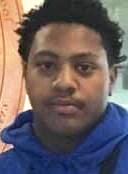
Edward Wilson, a 32-year-old man, was living in the Cincinnati, Ohio, area when he became one of the non-hospital victims of Donald Harvey, the serial killer later known as the “Angel of Death.” Online accounts identify Wilson as a neighbor within the circle surrounding Harvey and Harvey’s longtime companion, Carl Hoeweler. Unlike many of Harvey’s victims, Wilson was not a critically ill patient under Harvey’s care. His death instead grew out of Harvey’s increasingly possessive and violent efforts to control the people around Hoeweler.
According to accounts of the case, tension developed because Wilson believed Hoeweler was cheating him in connection with utility bills. Harvey reportedly interpreted the dispute as a threat to Hoeweler and decided to intervene in a lethal way. On or about March 18, 1985, Harvey secretly put arsenic into Wilson’s Pepto-Bismol. The poisoning did not kill Wilson immediately. He became fatally ill and died approximately five days later, on March 23, 1985. At the time, nothing about the death publicly exposed Harvey as a serial murderer, and the killing remained hidden while Harvey continued working in medical facilities and attacking other people.
Wilson’s poisoning was part of a broader pattern in which Harvey used arsenic against people outside the hospital system as well as patients. Harvey had also poisoned people connected to his relationship with Hoeweler, including Hoeweler himself, and he fatally poisoned other acquaintances and neighbors. His methods made detection difficult because symptoms produced by arsenic or other poisons could be mistaken for natural illness, particularly when the victim was already sick. In Wilson’s case, Harvey’s use of an ordinary stomach medicine as the delivery method gave the poisoning an especially concealed character.
There was no immediate arrest for Wilson’s death. Harvey’s crimes began unraveling two years later after the March 1987 death of 44-year-old John Powell at Cincinnati’s Daniel Drake Memorial Hospital. Powell had been hospitalized after a motorcycle accident, but an autopsy revealed a lethal amount of cyanide. Investigators focused on Harvey, who had worked around Powell and had already attracted attention because of earlier problems during his employment at the Cincinnati Veterans Administration hospital. Harvey was arrested in April 1987 and initially faced an aggravated-murder charge in Powell’s death. He at first entered a plea of not guilty by reason of insanity.
As detectives and prosecutors investigated further, the Powell case expanded into an examination of numerous suspicious deaths connected to Harvey. Harvey eventually began confessing to killings committed over many years in Ohio and Kentucky. His admissions included murders that had occurred outside hospitals, and Wilson was identified as one of the people Harvey acknowledged poisoning with arsenic. Investigators therefore did not develop a competing suspect in Wilson’s death; the case became part of the much larger prosecution of Harvey.
Harvey’s attorney, Bill Whalen, negotiated with Hamilton County prosecutors as the potential number of murders grew. Ohio prosecutors could have pursued the death penalty if they established multiple aggravated murders, while Harvey possessed information about deaths that investigators might otherwise have had difficulty proving, particularly because many victims had already been buried or embalmed. A plea arrangement was reached under which Harvey would disclose his killings and plead guilty while avoiding execution. In August 1987, he pleaded guilty to numerous murder counts arising from deaths in the Cincinnati area. Contemporary reporting described him standing before a Hamilton County Common Pleas judge and answering guilty as the charges were read.
The Ohio proceedings resulted in multiple life sentences, with Harvey required to serve decades before he could even become eligible for parole. Additional prosecutions followed as investigators continued sorting through his confessions. In Kentucky, he later pleaded guilty to murders and a manslaughter charge connected to patients who had died while he worked at Marymount Hospital earlier in his career. Further Cincinnati-area cases were also pursued after the initial plea agreement. Across the Ohio and Kentucky investigations, Harvey ultimately pleaded guilty to 37 killings, although he claimed responsibility for substantially more deaths than authorities were able to confirm.
Wilson’s death thus emerged not as an isolated poisoning but as one episode in a murder series that remained concealed for years. The evidence made public after Harvey’s arrest placed responsibility for Wilson’s death on Harvey and described the motive as Harvey’s desire to protect or defend Hoeweler during the dispute involving Wilson. Harvey’s admission that he put arsenic into Wilson’s Pepto-Bismol supplied investigators with an explanation for a death that had occurred quietly in Cincinnati in March 1985, approximately two years before the cyanide death of John Powell finally exposed the killer responsible.