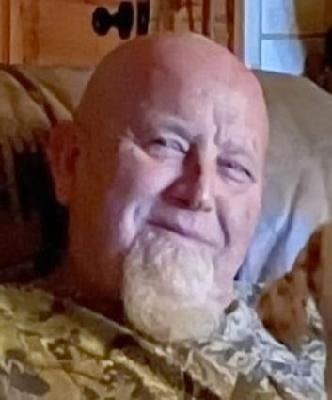
John V. Combs, a 68-year-old man from the London, Kentucky, area, died at Marymount Hospital on January 26, 1971, in what initially passed without recognition as a homicide. More than sixteen years later, his death was tied to hospital orderly Donald Harvey, whose admissions exposed a series of killings at Marymount during 1970 and 1971. Combs was the last known patient Harvey killed at the London hospital before leaving his job there.
According to accounts of Harvey’s later confession, Harvey first attempted to kill Combs by suffocating him with a plastic bag. When that effort failed, Harvey used defective oxygen equipment that appeared to be functioning but did not properly supply oxygen. Harvey had learned earlier at Marymount that faulty oxygen valves could make a hissing sound and give the appearance that oxygen was flowing even when it was not. He reportedly kept defective equipment and used it against several patients. In Combs’s case, the faulty oxygen setup deprived him of the oxygen he needed and caused his death.
At the time, Combs’s death did not lead authorities to arrest anyone for murder. The deaths of severely ill hospital patients were not necessarily viewed as suspicious, and Harvey continued to avoid detection. The Kentucky Supreme Court later described Combs and several other Marymount patients as apparent victims of Harvey and noted that the truth did not emerge until Harvey confessed in 1987. After those confessions became public, members of the families of several Marymount victims, including relatives of Combs, pursued negligence, wrongful-death and survival claims against the hospital organization, arguing that the circumstances of the deaths had not been revealed when they occurred.
Harvey’s criminal behavior did produce an arrest shortly after the Marymount period, but not for the hospital killings. In March 1971, only weeks after Combs died, Harvey was arrested after breaking into a neighbor’s apartment and stealing property. He had also started a small fire there, although he was not charged with arson. Harvey pleaded guilty to petty theft, was fined $50 and was referred for mental-health counseling. Nothing in that case exposed his responsibility for Combs’s death, and Harvey subsequently left the London area and continued working in health-care settings.
Harvey remained unidentified as a serial murderer until 1987, when a suspicious patient death in Cincinnati led investigators to him. An autopsy of John Powell, a patient who died after being given cyanide, revealed the poison and helped bring Harvey under scrutiny. Harvey was arrested in April 1987 and eventually began admitting that Powell was only one of many people he had killed. His confessions expanded the investigation from Ohio back to Kentucky and prompted authorities in Laurel County to examine the old Marymount deaths, including Combs’s.
By August 1987, Harvey had entered guilty pleas in Ohio to numerous aggravated murders and other violent offenses. He was sentenced there to three consecutive life terms, with a minimum of sixty years before parole eligibility under the terms reported at the time. His admissions then led directly to separate Kentucky proceedings involving the Marymount patients.
In Laurel County, Harvey was indicted on eight counts of murder and one count of manslaughter arising from nine Marymount deaths. John Combs was among the patients named in the Kentucky prosecution. In early November 1987, Harvey pleaded guilty in Laurel County Circuit Court to killing the nine patients while he had been employed at Marymount. Judge Lewis Hopper sentenced him to eight life terms plus an additional twenty years. The Kentucky sentence was arranged to run concurrently with the punishment Harvey was already serving for the Ohio murders.
There was therefore no conventional murder trial over Combs’s death in which a jury heard evidence and decided Harvey’s guilt. Harvey’s confession and guilty plea resolved the criminal case. He ultimately accumulated convictions for dozens of killings in Kentucky and Ohio and admitted responsibility for even more deaths than prosecutors were able to formally charge. In the Kentucky portion alone, he acknowledged killing more patients at Marymount than were included in the nine charged cases, leaving uncertainty about the full scale of his crimes there.
Combs’s death also became part of later civil litigation concerning whether Marymount’s operators could be held responsible for failing to prevent or disclose Harvey’s conduct. In 1990, the Kentucky Supreme Court considered lawsuits involving five Marymount patients who had died between July 1970 and January 26, 1971, specifically noting that the deaths were apparently caused by Harvey and that his 1987 confession had prompted the families to take legal action. The court reversed earlier dismissals of the cases and allowed the families an opportunity to argue that the normal filing deadline should be extended because the true circumstances surrounding the deaths may have been concealed or the families may have been misled.
What appeared in January 1971 to be another hospital death was thus reclassified years later as one episode in Donald Harvey’s prolonged series of killings. Combs died without his family or authorities knowing that an employee entrusted with access to vulnerable patients had deliberately interfered with his oxygen supply. Harvey escaped accountability for that death for more than sixteen years, but his eventual confessions brought Combs’s case into the Laurel County prosecution and ended with Harvey admitting guilt and receiving a life sentence as part of the Kentucky judgment.