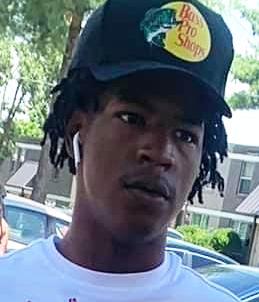
Leo Parker, a 47-year-old Black man, was a patient at Daniel Drake Memorial Hospital in Cincinnati, Ohio, when he became one of the victims of hospital orderly Donald Harvey, the serial killer later known as the “Angel of Death.” Contemporary reporting identifies Parker’s death date as January 10, 1987, rather than January 1. Parker was receiving nutrition through a feeding system when Harvey deliberately introduced cyanide into his feeding bag. The poison entered Parker’s system through the equipment that was supposed to sustain him, and he died at the hospital. At the time, however, his death did not immediately expose what had happened. An autopsy failed to identify cyanide poisoning, allowing the killing to pass without a homicide investigation focused on Harvey.
Parker’s death occurred during a period when Harvey was working as a nurse’s aide or orderly at Drake, a long-term-care hospital where many patients were seriously ill or medically vulnerable. Because deaths among such patients were not necessarily unexpected, Harvey was able to conceal repeated killings by making them appear consistent with the victims’ underlying illnesses. He used several methods against different patients, including cyanide, arsenic, rat poison, cleaning chemicals, suffocation and interference with medical care. Parker’s killing was later characterized as intentional and premeditated, with cyanide being placed directly into his feeding apparatus.
The investigation that eventually uncovered Parker’s murder began with another Drake patient, John Powell. Powell died in March 1987 after Harvey administered cyanide through a gastric feeding tube. Unlike Parker’s case, Powell’s autopsy revealed unmistakable evidence of cyanide. The discovery transformed what initially appeared to be another hospital death into a murder investigation. Cincinnati police began examining Harvey, who had access to Powell and other patients on the ward, and investigators increasingly suspected that Powell’s death might not have been an isolated crime.
On April 6, 1987, Cincinnati police arrested Harvey and charged him with Powell’s aggravated murder. He was initially held on a $200,000 bond and entered a plea of not guilty by reason of insanity. As police, prosecutors and a Hamilton County grand jury continued examining deaths at Drake, the investigation expanded dramatically. Attention turned to numerous former patients who had died while Harvey was working around them, including Parker. Investigators conducted extensive interviews with Harvey, and during the summer of 1987 he began making a series of confessions describing killings that had previously been attributed to natural medical causes.
Harvey confessed to Parker’s murder during this widening investigation. Authorities learned that Parker had not simply died from his medical condition: Harvey admitted giving him cyanide through his feeding bag. Parker was subsequently included among the victims for whom Harvey faced criminal prosecution. By August 1987, prosecutors were preparing multiple additional homicide charges, and Harvey’s bond was revoked as the enormous scale of the case became clear.
On August 18, 1987, Harvey appeared in court and pleaded guilty as part of a negotiated resolution intended to spare him the death penalty while ensuring that he would spend decades in prison. He admitted guilt to 24 counts of aggravated murder, four counts of attempted aggravated murder and one count of felonious assault in the Ohio prosecution. Parker was specifically listed among the Drake Hospital patients Harvey acknowledged murdering. Because Harvey pleaded guilty, there was no trial in which prosecutors had to present Parker’s case to a jury; the plea itself established Harvey’s criminal responsibility for the killing.
Harvey was sentenced to three consecutive life terms in connection with the Ohio case, leaving him ineligible for parole for at least 60 years under the sentencing arrangement reported at the time. The prosecution of Parker’s murder was therefore resolved as part of the much larger case against Harvey rather than through a separate trial devoted solely to Parker’s death. Additional investigations in Ohio and Kentucky produced still more murder admissions and convictions involving Harvey’s years of hospital work.
Parker’s death ultimately became part of the evidence showing how Harvey exploited both his access to vulnerable patients and the expectation that seriously ill people might die without suspicious circumstances. The cyanide in Parker’s feeding bag initially escaped detection, and his death remained unsuspected until the investigation of Powell exposed Harvey and led authorities to reexamine other deaths. Harvey was the identified suspect, was arrested during the broader investigation, confessed to Parker’s killing, was formally prosecuted for it, and pleaded guilty rather than contesting the charge at trial.