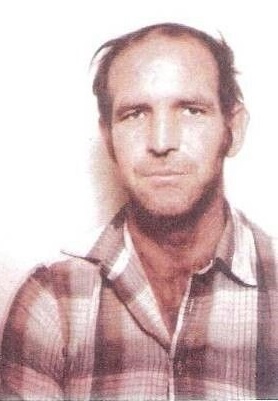
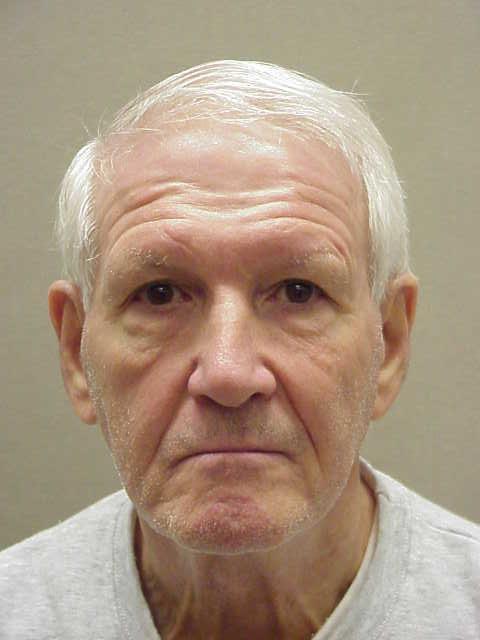
Billy Edwin Reid: Convicted Murderer and Suspected Serial Killer
Background
Billy Edwin Reid, born in 1959, is an American convicted murderer who has been described by prosecutors and investigators as a suspected serial killer. He was convicted of murdering two women whose bodies were discovered in the foothills west of Denver, Colorado, in 1989. Both cases remained unsolved for many years before advances in DNA analysis allowed investigators to connect biological evidence from the crime scenes to Reid.
Reid was known to live a transient lifestyle and reportedly traveled between Colorado and California. His movements, his contact with women involved in Denver’s street-level sex trade, and similarities between his confirmed crimes and numerous unsolved killings caused investigators to examine whether he had committed additional murders. Although he has been publicly discussed as a possible suspect in a much larger series of Colorado homicides, he has been convicted of only two murders.
The Murder of Lisa Kay Kelly
Lisa Kay Kelly was a 33-year-old Denver woman who disappeared during the late 1980s. She had reportedly lost contact with members of her family by 1987 and was believed to have vanished sometime in 1988. Because her disappearance was not immediately connected to remains later found in Jefferson County, her identity and the circumstances of her death remained unknown for nearly two decades.
On March 24, 1989, badly decomposed human remains were discovered on a mountainside in the foothills west of Denver. The woman could not initially be identified, and investigators preserved information and evidence from the scene while the case remained open as an unidentified-victim homicide. The condition of the remains made it difficult to determine the exact date on which the woman had been killed. Investigators believed she had died before her body was discovered, most likely during 1988 or early 1989.
Years later, detectives returned to the physical evidence using improved forensic techniques. A partial fingerprint was ultimately used to identify the victim as Lisa Kay Kelly. Biological evidence associated with the homicide was then compared with Billy Edwin Reid’s DNA. Investigators reported that the DNA evidence connected Reid to Kelly and provided the foundation for a murder charge.
The Murder of Lannell Williams
Lannell Williams, whose first name has also appeared in records as Lanell, was a 28-year-old Denver woman. On October 14, 1989, two students discovered her body near Clear Creek in Jefferson County, west of Denver. Her body had been left in an exposed and degrading position, indicating that the killer had attempted to discard her while showing little concern for whether she would quickly be found.
Investigators collected biological evidence from Williams’s body and the surrounding scene, but forensic DNA technology was still developing in 1989. The evidence did not initially identify a suspect, and the murder remained unresolved for years. When the material was tested again with more advanced DNA methods, it was linked to Reid.
The precise time of Williams’s death was not publicly established with certainty. October 14, 1989, is the verified date on which her body was discovered near Clear Creek. Her death was determined to be a homicide, and the forensic evidence recovered from her body became the most important part of the case against Reid.
Confirmed and Suspected Victims
- Lisa Kay Kelly, 33: Believed to have disappeared from Denver, Colorado, during 1988. Her remains were discovered on March 24, 1989, on a mountainside in Jefferson County, Colorado. Because of decomposition, an exact date of death was not established. She remained unidentified for approximately 17 years before fingerprint evidence confirmed her identity. Reid was convicted of her murder.
- Lannell “Lanell” Williams, 28: Her body was discovered on October 14, 1989, near Clear Creek in Jefferson County, Colorado. The exact date and time of her death were not publicly established, but investigators determined that she had been murdered shortly before her discovery. DNA evidence connected Reid to the crime, and he was convicted of her murder.
- Queena Sanders: Her body was reportedly found in Denver, Colorado, on February 14, 1988. Investigators examined Reid as a possible suspect after a witness statement and a letter attributed to Reid reportedly raised questions about his connection to the case. He was never convicted or formally proven responsible for Sanders’s death.
The Cold-Case Investigation
The investigations into Kelly’s and Williams’s murders demonstrated the importance of preserving evidence from unsolved cases. At the time the women were killed, investigators could collect blood, semen, hair, fingerprints, and other trace materials, but early DNA testing was less powerful than the techniques developed during the following decades. Evidence that had once failed to identify a suspect could later be processed and compared through modern forensic databases.
During the mid-2000s, investigators obtained a DNA match linking Reid to evidence from the Williams homicide. He was arrested in Denver in 2006 and charged with her murder. As detectives continued examining other cold cases, forensic evidence also connected him to Kelly. The identification of Kelly’s remains was particularly significant because she had been listed as an unidentified homicide victim for approximately 17 years.
Prosecutors argued that the two killings were not unrelated encounters. Both victims were women associated with Denver’s street-level sex trade, both were found in the foothills of Jefferson County, and both cases contained forensic evidence connected to Reid. The long period between the crimes and Reid’s arrest meant that investigators had to reconstruct events through preserved physical evidence, old reports, witness accounts, and Reid’s known activities during the late 1980s.
Trial and Convictions
Reid was tried in Jefferson County, Colorado. Prosecutors presented the DNA findings as central evidence proving that he had been with both victims under circumstances directly connected to their murders. The state also presented evidence intended to show that Reid had sexually assaulted at least one of the women and that the condition and placement of the bodies reflected deliberate acts rather than accidental deaths.
On September 18, 2008, a Jefferson County jury found Reid guilty of murdering Lisa Kay Kelly and Lannell Williams. He was convicted of two counts of first-degree murder and an additional aggravated sexual-assault offense. The verdicts brought legal closure to two cases that had remained unresolved for almost 20 years.
Reid received two consecutive life sentences for the murders. The court also imposed an additional 48-year sentence for aggravated sexual assault, ordered to run consecutively to the life terms. The sentence ensured that Reid would remain imprisoned for life.
Possible Connection to the Denver Prostitute Killer Cases
Following Reid’s identification and conviction, investigators considered whether he might be connected to a series of unsolved killings sometimes attributed to the “Denver Prostitute Killer.” Between approximately 1975 and 1995, numerous women and teenage girls were murdered in Denver and surrounding counties. Many of the victims had been involved in prostitution, were using drugs, were hitchhiking, or were otherwise living in vulnerable circumstances.
Several victims were beaten or strangled before their bodies were abandoned in rural areas, ravines, foothills, or locations near major highways such as Interstate 70. Some bodies were left in degrading positions. Similarities in the victims’ backgrounds, causes of death, and disposal locations led investigators to consider whether a single offender, or possibly several offenders operating during the same period, had been responsible.
Reid became a person of interest because his confirmed murders occurred during the larger series and involved victims who fit parts of the same general profile. His transient lifestyle and reported travel between California and Colorado also made it difficult for investigators to reconstruct all of his movements. Authorities examined old files to determine whether DNA, fingerprints, witness statements, or other evidence could connect him to additional deaths.
However, the evidence has not established that Reid committed the entire Denver-area series. Some witnesses in unrelated cases described a white male suspect, while Reid is Black. Another convicted murderer, Vincent Groves, was posthumously linked through DNA to several Denver killings and was also investigated as a possible serial offender. These facts suggest that more than one predator may have been targeting vulnerable women in the Denver area during the same decades.
Limits of the Serial-Killer Classification
Reid is frequently called a suspected serial killer because he was convicted of two separate murders and investigated in connection with additional killings. Under definitions requiring at least two victims killed in separate events, his convictions may qualify him as a serial murderer. Under definitions requiring three or more confirmed victims, he remains a convicted double murderer and suspected serial killer.
Claims that Reid killed 17, 21, or more women remain allegations rather than proven facts. He has not been convicted of the broader Denver Prostitute Killer series, and many of those cases remain officially unsolved. The known evidence supports his responsibility for the murders of Kelly and Williams, while his possible involvement in other deaths continues to be treated as a matter of suspicion and investigation.
Appeals and Imprisonment
Reid has continued to challenge aspects of his prosecution and convictions through the Colorado court system. His convictions and sentence have remained in effect, and later appellate proceedings did not overturn the judgment against him. He continues to serve the consecutive life sentences and additional sexual-assault sentence imposed for the 1989 crimes.
The cases of Lisa Kay Kelly and Lannell Williams illustrate how forensic evidence can survive long after an investigation has gone cold. DNA testing gave detectives a way to identify a man who had avoided prosecution for nearly two decades. At the same time, the unresolved murders surrounding Reid’s confirmed crimes remain a reminder that his complete criminal history may never be fully known. His proven victims received justice through the 2008 convictions, but many families connected to the wider series of Denver-area killings are still waiting for definitive answers.