Frank Spisak: The Cleveland Campus Killer
Overview
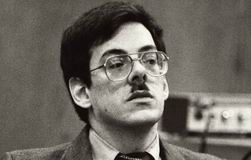
Frank G. Spisak Jr. was a neo-Nazi who committed a series of racially and ethnically motivated shootings on and around the campus of Cleveland State University in 1982. Driven by a desire to incite a "race war," he engaged in what he termed "hunting parties" to kill Black and Jewish people. Over a seven-month period, Spisak murdered three men and wounded two other individuals. His crimes were characterized by a cold-blooded and hateful ideology. During his trial, he embraced his Nazi beliefs, growing a Hitler-style mustache and giving the "Sieg Heil" salute in court. Convicted and sentenced to death in 1983, Spisak spent over 27 years on death row, a record for Ohio at the time, before his execution in 2011.
Early Life and Background
Frank G. Spisak Jr. was born in Cleveland, Ohio, on June 6, 1951. His father, a factory worker, moved the family to the suburb of Middleburg Heights to avoid the city's growing Black population. In high school, Spisak was described as awkward and was known to draw swastikas. He enrolled at Cleveland State University but dropped out after a year, unable to afford tuition.
Spisak's adult life was marked by profound confusion and instability. He married but also pursued a gender transition, taking female hormones with the goal of sex-reassignment surgery. This led to the end of his marriage. He later abandoned the transition and descended deeper into his obsession with Nazism, collecting memorabilia, weapons, and ammunition. His attorneys would later argue that he suffered from a severe personality disorder and bipolar disorder, which they claimed was connected to his struggles with gender identity. Despite these claims, he was consistently found competent to stand trial.
The Murders
Spisak began his self-proclaimed "seek and destroy mission" on February 1, 1982. After reading a book about Hitler in the Cleveland State University library, he went to a campus restroom where he encountered Reverend Horace Rickerson, a 57-year-old Black minister. Spisak shot and killed him.
The violence escalated over the summer. In June, Spisak shot 55-year-old John Hardaway, a Black factory worker, multiple times at a transit platform. Hardaway miraculously survived the attack.
On August 9, 1982, Spisak returned to the Cleveland State campus and targeted Coletta Dartt, a university employee. He confronted her with a gun as she exited a restroom, but she managed to push past him and escape as he fired a shot and missed.
On August 27, Spisak murdered 50-year-old Timothy Sheehan, a white assistant superintendent for buildings and grounds at the university. Sheehan's body was found in a campus restroom; he had been shot four times. Spisak later claimed he killed Sheehan because he suspected he might be Jewish, though prosecutors argued Sheehan may have been killed because he was a potential witness to Rickerson's murder.
Just three days later, on August 30, Spisak committed his final murder. He shot and killed 17-year-old Brian Worford, a Black student, as he waited for a bus near the campus.
The Victims
Spisak’s rampage cut short the lives of three men and forever altered the lives of two survivors.
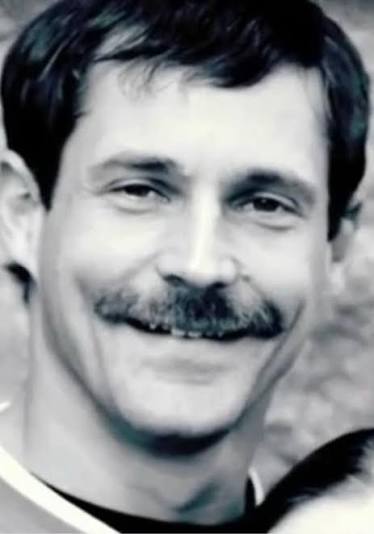
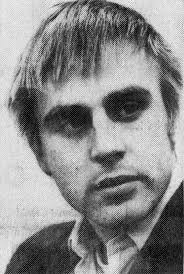
- Reverend Horace Rickerson, 57 — February 1, 1982, Cleveland, Ohio. A minister who was the first victim in Spisak's deadly spree, killed in a restroom at Cleveland State University.
- Timothy Sheehan, 50 — August 27, 1982, Cleveland, Ohio. An assistant superintendent at the university, he was a husband and father who was murdered in a campus restroom. His son, Brendan Sheehan, later became a Cuyahoga County judge.
- Brian Worford, 17 — August 30, 1982, Cleveland, Ohio. A student taking classes at Cleveland State to earn his high school degree, he was waiting for a bus when he was senselessly gunned down.
Two other individuals, John Hardaway and Coletta Dartt, survived Spisak's attempts to murder them and later provided crucial testimony.
Investigation and Capture
The series of shootings on and around a major university campus created a climate of fear in Cleveland. The attacks appeared random, but a pattern of hate began to emerge. A break in the case came in early September 1982, when Spisak was arrested for an unrelated incident—firing a .22-caliber pistol out of his apartment window. He was initially released on bond.
Soon after, police received an anonymous tip, reportedly from someone Spisak had bragged to about the killings, urging them to examine the gun they had confiscated. Ballistics tests quickly linked the pistol to the murders of Sheehan and Worford. When police went to arrest Spisak, they found he had fled. He was captured later that day hiding in a friend's basement with a suitcase packed. Inside the suitcase, police found Timothy Sheehan's stolen beeper. Spisak subsequently admitted to all the shootings.
Trial and Sentence
Frank Spisak's trial in 1983 was a spectacle of unrepentant hatred. He grew a toothbrush mustache in the style of Adolf Hitler, carried a copy of "Mein Kampf," and frequently gave the Nazi "Sieg Heil" salute to the jury and courtroom. He testified proudly about his neo-Nazi beliefs, declaring himself an agent of God in a war against Black people and Jews.
His defense team argued that he was not guilty by reason of insanity, putting him on the stand where he delivered rambling diatribes about God and Hitler. While a doctor testified that Spisak had a personality disorder, he was ultimately deemed sane and competent. The jury convicted him on three counts of aggravated murder, as well as charges of attempted murder and aggravated robbery.
During the sentencing phase, Spisak's own lawyer offered a closing argument that was later heavily criticized, stating, "Don't look for good deeds, because he has done none." The jury recommended the death penalty, and the judge imposed the sentence. As he was led from the courtroom, Spisak shouted "Heil Hitler."
Appeals and Execution
Spisak spent the next 27 years on death row, exhausting a lengthy and complex appeals process. His attorneys argued that he was too mentally ill to be executed, citing his bipolar disorder and gender identity issues. They also contended that his trial lawyer had been ineffective and that the jury had received improper instructions during sentencing.
The case went through numerous state and federal courts, and his death sentence was even overturned by a federal appeals court at one point before being reinstated. The case eventually reached the U.S. Supreme Court as *Smith v. Spisak*, which ruled against him in 2010, clearing the way for his execution.
On February 17, 2011, Frank Spisak was executed by lethal injection at the Southern Ohio Correctional Facility in Lucasville. He was 59 years old. For his last words, he read Bible verses in German and concluded with "Heil herr." At the time of his execution, he was the longest-serving death row inmate in Ohio's history.
Aftermath and Legacy
The execution brought a final, somber resolution for the families of Spisak's victims. In a statement, the family of Timothy Sheehan said, "Today we chose to celebrate the life of husband and father, Timothy Sheehan, not the death of Frank Spisak."
Frank Spisak's case remains a chilling example of lone-wolf terrorism fueled by racial and antisemitic hatred. His bizarre courtroom behavior and the ideological poison that drove him to murder serve as a stark reminder of the real-world violence that can erupt from extremist beliefs. His crimes left an indelible scar on the Cleveland State University community and the city as a whole.