Crime Solvers Central
298 Cases Solved. Advancing justice for missing persons, unsolved homicides, unidentified and unclaimed remains.
⚠️ Warning: Viewer Discretion Advised ⚠️ The following section contains detailed information about serial killers, their crimes, and case details. Some content may be disturbing or graphic.

Description

See any errors? Let us know!
Summary based on 7 sources

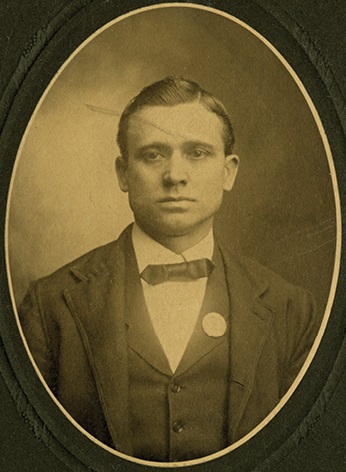
Alfred Andrew Knapp: The Hamilton Strangler


Overview

Alfred Andrew Knapp was an American serial killer who murdered at least five women and girls in Ohio and Indiana between 1894 and 1902. Frequently called the Hamilton Strangler, the Ohio Strangler, and the Indianapolis Wife Strangler, Knapp preyed upon both strangers and women within his own family. His preferred method was strangulation, often carried out suddenly and with little warning before he concealed or abandoned the victim’s body. Knapp’s crimes remained unconnected for years. Several of the deaths occurred in crowded urban neighborhoods where investigators had little physical evidence and no clear suspect. Knapp eventually exposed the extent of his violence after he was arrested in connection with the disappearance of his third wife. During questioning, he confessed not only to killing her but also to four earlier murders that had puzzled authorities for years.

Early Life and Criminal Behavior

Alfred Andrew Knapp was born in 1863 in Terre Haute, Indiana, to Cyrus and Susannah Knapp. Details about his childhood are limited, but his adult life was repeatedly interrupted by arrests and imprisonment. Long before he was publicly identified as a murderer, he had developed a record of violent behavior toward women and girls. He spent substantial periods in prisons in Ohio and Indiana for assaults and other offenses. Knapp was often described as quiet, pleasant, or ordinary in appearance. This outwardly unthreatening manner allowed him to move through working-class neighborhoods without attracting immediate suspicion. He held temporary jobs, traveled between cities, and married several times. He also briefly presented himself as religious and respectable, joining a church and participating in a Christian social organization. Beneath that carefully maintained appearance, however, he was capable of impulsive and deadly violence.

The 1894 Cincinnati Murders

Knapp’s known murder series began in Cincinnati during the summer of 1894. Three women were killed within a period of approximately two months. The first known victim was Emma Littleman, who was attacked in a lumberyard on Gest Street. Knapp strangled her and left her body partially hidden beneath a pile of boards. The location provided him with temporary concealment, but her remains were eventually discovered. On August 1, 1894, Mary Eckert was killed in a building on Walnut Street near Seventh Street in Cincinnati. Knapp later admitted strangling her with a towel. The attack demonstrated the pattern that would define his murders: he used whatever was available to cut off the victim’s breathing and then left the scene before authorities could identify him. Only sixteen days later, Knapp murdered Jennie Connors Knapp, his second wife. He strangled Jennie at or near their residence on Liberty Street and disposed of her body in a canal. Her remains were later recovered, but Knapp escaped responsibility at the time. He continued living openly while investigators remained unaware that Jennie’s husband was also connected to the murders of Emma Littleman and Mary Eckert.

The Murder of Ada Gebhart

In July 1896, Knapp killed a young girl in Indianapolis, Indiana. Contemporary newspaper accounts generally identified the child as Ada Gebhart, although later retellings sometimes used the spellings Ida Gebhard or Ida Gebhart. Knapp confessed that he had strangled the child, but surviving accounts contain fewer details about the exact day and location of the attack than they do for his Cincinnati crimes. The murder was especially disturbing because Knapp admitted that he had attacked other children without necessarily killing them. He described approaching girls, overpowering them, and choking them. These admissions caused authorities to suspect that the five murders in his confession might not represent the full extent of his crimes. However, no additional killings were conclusively proven against him.

The Murder of Hannah Goddard Knapp

Knapp’s final confirmed victim was his third wife, Hannah Goddard Knapp. On December 21, 1902, he strangled Hannah in Hamilton, Ohio. According to Knapp’s later confession, he awoke that morning with a sudden urge to kill her. After tightening his hands around her throat and ending her life, he began planning how to dispose of her body. Knapp forced Hannah’s remains into a large dry-goods box and nailed it shut. He then transported the box to the Great Miami River and pushed it into the water, apparently believing the river would carry the evidence away. He subsequently told relatives and acquaintances that Hannah had left him. At times, he pretended to be searching for her, creating the appearance of a concerned husband while knowing that her body was drifting downstream. Knapp did not remain alone for long. After leaving Hamilton and moving to Indianapolis, he met Anna May Gamble on January 2, 1903. The two married on February 4, only weeks after Hannah’s murder. His willingness to begin another marriage so soon after killing his previous wife increased the suspicions of Hannah’s family and local authorities.

Known Victims

  • Emma Littleman — June 21, 1894, Cincinnati, Ohio: Knapp strangled Littleman in a lumberyard on Gest Street. He attempted to conceal her body beneath or beside stacks of lumber, where it was later discovered.
  • Mary Eckert — August 1, 1894, Cincinnati, Ohio: Eckert was strangled with a towel in a building on Walnut Street near Seventh Street. Some historical newspaper reports spelled her surname Eckhart.
  • Jennie Connors Knapp — August 17, 1894, Cincinnati, Ohio: Knapp strangled his second wife near their Liberty Street residence and threw her body into a canal. Her surname was sometimes recorded as Conners in contemporary reports.
  • Ada Gebhart — July 1896, Indianapolis, Indiana: Knapp confessed to murdering this young girl by strangulation. Her name has also appeared in later accounts as Ida Gebhard or Ida Gebhart. The exact date in July was not consistently preserved in surviving reports.
  • Hannah Goddard Knapp — December 21, 1902, Hamilton, Ohio: Knapp strangled his third wife, placed her body inside a dry-goods box, and dumped the container into the Great Miami River.


Arrest and Confession

Knapp was arrested on February 25, 1903, after investigators focused on him in connection with Hannah’s disappearance. He was returned to Hamilton and questioned about what had happened to his wife. Faced with growing suspicion, Knapp admitted that he had strangled Hannah and thrown her boxed body into the Great Miami River. The confession quickly became far more extensive than investigators expected. Knapp claimed responsibility for the murders of Emma Littleman, Mary Eckert, Jennie Connors Knapp, and Ada Gebhart. Crimes that had appeared unrelated were suddenly connected by the same man and the same method of killing. His admissions attracted widespread newspaper attention, and reporters traveled to Hamilton to interview the self-confessed strangler. Knapp also admitted committing violent assaults against women and children. He spoke about choking victims and described urges to attack with little provocation. These statements led police departments in several cities to examine unresolved cases for possible connections to him. Although suspicions remained, investigators could not establish enough evidence to add further confirmed victims to the five named in his confession.

Recovery of Hannah’s Body

The prosecution initially faced a major problem because Hannah’s body had not been found. Knapp had confessed, but officials still needed physical evidence that a murder had occurred. On March 3, 1903, the body of a woman was recovered from the Ohio River near New Albany, Indiana, far downstream from Hamilton. Jewelry and other identifying features connected the remains to Hannah Knapp. The recovery supported Knapp’s account of placing Hannah in the river. The box had apparently broken apart or opened during its journey downstream. The discovery gave prosecutors the evidence they needed to proceed with a murder charge and strengthened the case against Knapp despite later attempts by the defense to question his mental responsibility and the admissibility of his confession.

Trial and Conviction

Knapp was tried in Butler County, Ohio, for the first-degree murder of Hannah Goddard Knapp. His case became a public spectacle. Crowds gathered around the courthouse, and newspapers described his appearance, behavior, and statements in great detail. Knapp sometimes appeared calm or indifferent, speaking casually with guards even as prosecutors described the murder of his wife. His relatives and attorneys argued that he was mentally unstable and unable to control violent impulses. His sister maintained that he should be placed in an institution rather than executed. Prosecutors responded that Knapp had concealed Hannah’s body, lied about her disappearance, fled the area, and married another woman, demonstrating that he understood the nature and consequences of what he had done. Knapp was convicted of first-degree murder on July 16, 1903, and sentenced to death. Legal challenges temporarily delayed the execution. An appellate court granted him a new trial after finding errors involving the presentation of his confession, but the Ohio Supreme Court later reversed that decision and restored the original conviction. Appeals to state officials and requests for clemency were unsuccessful.

Execution

Alfred Andrew Knapp was executed in the electric chair at the Ohio State Penitentiary in Columbus on August 19, 1904. He was approximately forty-one years old. In the period before his death, authorities continued to question whether he had killed additional victims, but Knapp gave no final confession that definitively expanded the known list. His execution ended one of the most sensational criminal cases in early twentieth-century Ohio. Knapp had spent years passing unnoticed between Cincinnati, Hamilton, and Indianapolis while leaving behind a series of strangled victims. His crimes revealed how easily murders committed in different cities could remain disconnected before modern systems of communication and forensic investigation existed.

Legacy

Knapp became one of the earliest American murderers to receive intense national publicity as a serial offender. Newspapers emphasized his ordinary appearance, his repeated marriages, and the calm manner in which he described killing women. The contrast between his mild public behavior and his private violence helped make the case particularly frightening to contemporary readers. The five murders attributed to Alfred Andrew Knapp were linked primarily through his own confession, supported in Hannah Knapp’s case by the recovery of her body and additional evidence. Variations in the spelling of several victims’ names reflect inconsistent nineteenth-century recordkeeping and newspaper reporting. Despite those discrepancies, the established record shows a repeated pattern of strangulation, concealment, deception, and violence against women and girls over a period of at least eight years.

Victims

See any mistakes? Let us know!
Confirmed Victims: (5)
  • Hannah Knapp , Date of Death: December 21, 1903
  • Emma Littleman , Date of Death: June 21, 1894
  • Mary Eckert , Date of Death: August 1, 1894
  • Jennie Connors Knapp , Date of Death: August 17, 1894
  • Ida Gebhard , Date of Death: July 1896