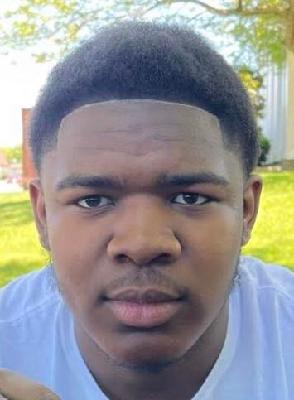
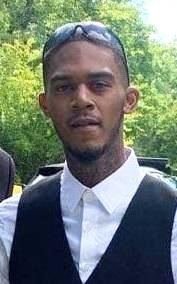
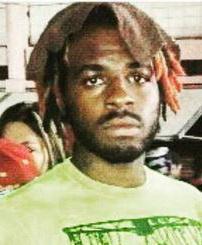
On the evening of August 30, 1982, Brian Worford, a 17-year-old Male, was doing what countless other ambitious teenagers do: working toward his future. He was a student in an alternative education program, taking classes at Cleveland State University in Ohio to earn his high school degree. That night, as he waited for a bus near the campus on Euclid Avenue, his life was abruptly and senselessly ended by a single gunshot to the head.
Brian was found sprawled on the pavement, the victim of a man who was on a self-proclaimed "hunting party."
Brian was the final victim in a months-long reign of terror orchestrated by Frank G. Spisak Jr., a local neo-Nazi aiming to incite a race war in Cleveland. Beginning in February 1982, Spisak embarked on a series of violent, racially motivated attacks across the Cleveland State University campus. His spree of violence also claimed the lives of Reverend Horace Rickerson, 57, and Timothy Sheehan, 50, a university maintenance worker whom Spisak believed was Jewish. Spisak also shot and seriously wounded another man, John Hardaway, and shot at a university employee, Coletta Dartt, who managed to escape.
The city was gripped by fear for months as the shootings continued without an arrest. The break in the case came on September 4, 1982, when police responded to a call about a man firing a gun out of his apartment window. The man was Frank Spisak. Though initially released on bail, an anonymous tip led investigators to examine his.22-caliber pistol. Ballistics testing linked the weapon to Brian Worford's murder, and Spisak soon confessed to the entire series of shootings.
The 1983 trial of Frank Spisak was a spectacle of hatred. He grew a Hitler-style mustache, carried a copy of "Mein Kampf," and gave the Nazi salute to the jury. He claimed his one-man war was an attempt to "clean up the city" and that he was targeting Black and Jewish people. His defense attorneys argued he was suffering from a severe bipolar disorder and was insane, but a doctor testified that while Spisak had a personality disorder, he was legally sane. The jury convicted him of three counts of aggravated murder, one count of attempted murder, and two counts of aggravated robbery. He was sentenced to death.
For nearly three decades, Spisak remained on death row, filing numerous appeals that were repeatedly denied. During this time, he identified as a woman, using the name Frances Spisak. His attorneys continued to argue that he was too mentally ill to be executed. For the families of his victims, the long legal battle was a prolonged agony. Brian's mother, Cora Warford, who was opposed to capital punishment, made an exception in Spisak's case after speaking with her pastor.
On February 17, 2011, more than 27 years after he murdered Brian Worford, Frank Spisak was executed by lethal injection at the Southern Ohio Correctional Facility. At 59 years old, he was the longest-serving death row inmate in Ohio's history at the time. Brian's brothers, Jeffery Duke and Eric Barnes, were there to witness the execution. Before his death, Spisak read Bible verses in German but offered no words of remorse. The execution brought a final, legal end to the case, closing a dark chapter in Cleveland's history that began with the senseless murder of a young man waiting for a bus.