Alvin Taylor: The Wisconsin Serial Killer
Background and Mental Deterioration
Alvin Taylor was born in 1947 in Milwaukee, Wisconsin. He later described an unstable childhood marked by neglect and physical punishment. As a young man, Taylor became interested in music, songwriting, meditation and psychology. During the late 1960s, he attempted to establish himself as a professional singer and performed with several little-known musical groups in the northeastern United States.
Taylor reportedly experienced a serious psychotic episode around 1969, when he became convinced that strangers were plotting to kill him. His paranoia continued after he left the location where the supposed threat began, and he believed that people on a bus and an employee at a motel were also involved in the imagined conspiracy. By the mid-1970s, his psychiatric problems had become severe enough to require hospitalization. He was diagnosed with schizophrenia and spent substantial periods in hospitals and psychiatric facilities during the following decade.
Despite his mental illness, Taylor continued performing as a singer and nightclub entertainer in Wisconsin and Minnesota. People who knew him described him as intensely religious and increasingly detached from reality. By the mid-1980s, he believed that unseen forces were communicating with him and assigning him a role in a struggle between good and evil. These delusions became central to the explanations he later gave for a series of killings committed against friends, neighbors and acquaintances.
The Murder of Robert L. Williams
Taylor's first known victim was Robert L. Williams, a 38-year-old computer-company employee whom Taylor had met in 1984. Although the two men were friends, Taylor eventually developed the delusional belief that Williams had killed someone and needed to be punished.
On July 15, 1985, Taylor shot Williams with a .357 Magnum at a rented residence in the Spring Brook area of Dunn County, Wisconsin. He buried Williams in the backyard and reportedly placed quicklime over the body in an apparent effort to conceal the remains and accelerate decomposition. Williams' disappearance remained unresolved until 1987, when a later occupant of the property discovered evidence of the burial and contacted authorities.
The recovery of Williams' remains provided investigators with evidence that would eventually connect Taylor to other shootings. The gun used in the killing also became important when cartridge cases and witness statements were compared during the investigation of Taylor's final known murder.
The Murder of James A. Severson
On May 21, 1986, Taylor killed his next-door neighbor, 42-year-old James A. Severson, inside Severson's apartment in Eau Claire, Wisconsin. Taylor later described a prolonged and violent attack. He initially stabbed Severson in the neck, but the blade reportedly broke during the assault.
A struggle followed. Taylor overpowered and choked Severson before obtaining a larger butcher knife from the kitchen. He then stabbed Severson additional times, inflicting fatal wounds. Unlike the carefully concealed burial of Williams, Severson's body was left at the scene, but Taylor was not immediately held responsible for the homicide.
The Murder of Daniel Lundgren
Daniel Lundgren, 33, managed the Paradise Inn Village Motel and Chinese Restaurant in the West Bend area. Taylor had stayed at the establishment, and the two men became acquainted. Their relationship deteriorated when Lundgren reportedly wanted Taylor to leave the property.
On or shortly before November 30, 1986, Taylor shot Lundgren three times in the head with a .38-caliber handgun. Lundgren was subsequently found after his vehicle crashed into a culvert near Jackson, Wisconsin. Because of the damaged vehicle and the circumstances in which he was discovered, his condition was initially attributed to an automobile accident.
Lundgren was transported to a hospital and died approximately 30 hours after being found. His death was initially treated as the result of crash-related injuries. The truth did not emerge until after Taylor's 1987 arrest, when he unexpectedly confessed to shooting Lundgren. Authorities exhumed Lundgren's remains on June 23, 1987, and a forensic examination revealed the gunshot wounds to his head. Taylor was formally charged with Lundgren's murder in July 1987.
The Attempted Murder of Paul Zwick
On December 23, 1986, Taylor attacked Paul Zwick at the same West Bend-area motel associated with Lundgren. Taylor struck Zwick with a hammer and stabbed him with a screwdriver, but Zwick survived the assault.
Zwick did not immediately report the attack. He was preparing to enter the United States Navy and left Wisconsin only a few days later. After Taylor confessed, investigators located Zwick, who corroborated Taylor's description of the assault. Taylor was eventually convicted of attempted murder in connection with the attack and received a 20-year sentence.
The Murder of Timothy Hayden
During the fall of 1986, Taylor participated in an Eau Claire production of the musical Peace Child, a project intended to encourage improved relations between the United States and the Soviet Union. Through the production, Taylor met 27-year-old Timothy Hayden, a custodian employed by the University of Wisconsin-Stout.
Hayden eventually allowed Taylor to stay with him at his residence in Menomonie, Wisconsin. On March 28, 1987, Taylor shot and killed Hayden inside the home. Taylor later offered a delusional explanation for the murder. He claimed that a woman pictured on a calendar reminded him of Hayden's estranged girlfriend and that he became convinced Hayden intended to harm her with a recently purchased gun.
The investigation into Hayden's death quickly focused on Taylor. Firearms evidence was compared with evidence connected to the Williams killing, and investigators learned that Taylor had previously possessed and later sold a weapon of the type used in the shootings. His conduct before and after Hayden's death also increased suspicion.
Arrest and Confessions
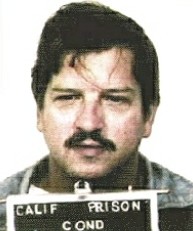
Taylor was arrested on April 3, 1987, while attending Timothy Hayden's funeral in Portage, Wisconsin. Authorities placed him in the Dunn County Jail under a $750,000 bond. As investigators questioned him, Taylor admitted responsibility for the murders of Williams, Severson and Hayden. He also confessed to the previously unrecognized murder of Daniel Lundgren and described the attempted killing of Paul Zwick.
During his statements, Taylor displayed unmistakable signs of severe mental illness. He claimed that voices associated with what he called “The Force” communicated with him. He portrayed himself as a “soldier of God” and suggested that he had acted as an undercover officer assigned to eliminate people he considered evil. Although he expressed some regret and appeared to understand that he could be imprisoned, his explanations showed that his perception of reality was profoundly distorted.
Police also questioned Taylor about the June 1986 stabbing death of 59-year-old Sheldon Kliman, the owner of the Palace Theater in Spooner, Wisconsin. Taylor was never charged in Kliman's death, and the case is not included among his four confirmed murders.
Victims and Confirmed Dates
- Robert L. Williams, 38 — Killed on July 15, 1985, in the Spring Brook area of Dunn County, Wisconsin. Taylor shot Williams with a .357 Magnum and buried him behind a rented residence.
- James A. Severson, 42 — Killed on May 21, 1986, in his apartment in Eau Claire, Wisconsin. Taylor choked and repeatedly stabbed his next-door neighbor after an initial knife broke during the attack.
- Daniel Lundgren, 33 — Died on November 30, 1986, after being found near Jackson and hospitalized following what initially appeared to be a vehicle accident. A later examination established that Taylor had shot him three times in the head.
- Timothy Hayden, 27 — Killed on March 28, 1987, inside his home in Menomonie, Wisconsin. Taylor shot Hayden while experiencing paranoid delusions concerning Hayden's estranged girlfriend.
Surviving Victim
- Paul Zwick, 23 — Attacked on December 23, 1986, at a motel in the West Bend area. Taylor struck him with a hammer and stabbed him with a screwdriver, but Zwick survived.
Legal Proceedings and Psychiatric Commitment
Taylor faced first-degree murder charges in multiple Wisconsin counties. His attorneys entered pleas of not guilty and not guilty by reason of mental disease or defect. Court-appointed psychiatric specialists examined him, while judges considered whether he was capable of understanding the proceedings and assisting in his defense.
Although Taylor was at one point considered competent enough for proceedings to continue, additional examinations found that he suffered from paranoid schizophrenia and could not meaningfully cooperate with his attorneys. His severe delusions prevented an ordinary murder trial from proceeding to a conventional criminal conviction.
Taylor was found not criminally responsible for the killings because of mental disease and was committed to the Mendota Mental Health Institute in Madison. In the separate attempted-murder case involving Paul Zwick, he was convicted and sentenced to 20 years of imprisonment. On June 2, 1989, a court ordered his placement at Mendota for continued confinement and psychiatric treatment.
Efforts to Obtain Release
After many years in psychiatric custody, Taylor repeatedly petitioned the courts for release. His requests generated opposition from prosecutors, mental-health professionals and people connected to the victims. Although some evaluations noted periods of improvement, other specialists concluded that his condition remained unstable and that he continued to present a risk if released without strict supervision.
Staff members expressed concern about Taylor's behavior inside the institution, including reports that he repeatedly checked secured doors and possible exit routes. Courts rejected several petitions after concluding that he had not demonstrated that he could be safely managed outside a secure psychiatric setting.
By 2022, Taylor was in his mid-70s and again considering a request for release. That effort was withdrawn after a medical review reportedly found that his mental condition had deteriorated with age. He remained confined in a psychiatric institution, decades after the killings that began with the disappearance of Robert Williams in 1985.
Legacy of the Crimes
Alvin Taylor's crimes were unusual because each confirmed victim was someone he knew. He did not appear to hunt strangers according to a consistent physical preference. Instead, friendships and everyday associations became distorted by his paranoid thinking until he viewed people around him as dangerous, corrupt or deserving of death.
The case also exposed failures that delayed recognition of the full series. Robert Williams remained buried for nearly two years, James Severson's killer was not immediately identified, and Daniel Lundgren's gunshot wounds were initially overlooked because his death appeared to have resulted from a vehicle crash. Only after Timothy Hayden's murder brought investigators directly to Taylor did the four cases become connected.
Taylor's documented schizophrenia provides important context for his delusional motives, but it does not diminish the consequences of his actions. Four men were killed, another narrowly survived, and several families spent years confronting deaths that were initially unexplained or misunderstood. His continued institutional confinement reflects both the gravity of the violence and the persistent concern that his psychiatric condition could again make him dangerous.