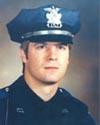
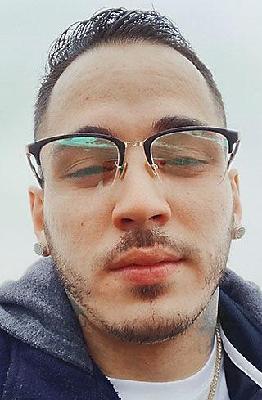
James A. Severson was a 42-year-old White/Caucasian man living in Eau Claire, Wisconsin, when he was killed on May 21, 1986. Severson was attacked inside his apartment near downtown Eau Claire in a violent assault that investigators described as involving both a beating and repeated stabbing. The homicide initially remained unsolved, leaving authorities without an identified killer during the months immediately following his death.
The man eventually linked to Severson’s death was Alvin Taylor, a traveling nightclub singer who lived next door to Severson. According to accounts of Taylor’s later statements, he attacked Severson by stabbing him in the neck. The blade reportedly broke during the attack, and the two men struggled. Taylor later described overpowering and choking Severson before obtaining a butcher knife from a kitchen drawer and stabbing him repeatedly. Severson died in the apartment.
The investigation took on new importance the following year after another killing in western Wisconsin. On March 28, 1987, Timothy Hayden was killed in Menomonie, and investigators developed evidence pointing toward Taylor. Taylor was arrested on April 3 while attending Hayden’s funeral. As authorities examined Taylor’s activities, they connected him not only to Hayden’s death but to a series of killings that included Severson, Robert Williams of Eau Claire, and Daniel Lundgren. Taylor ultimately admitted responsibility for all four deaths.
During questioning on April 4, 1987, investigators asked Taylor about Severson’s killing. Taylor eventually made a confession, but the admissibility of that statement became an important issue in the criminal case. Eau Claire County Circuit Judge Gregory Peterson ruled in August 1987 that prosecutors could not use the confession at Taylor’s trial. The judge concluded that Taylor had made statements during questioning that could reasonably have been interpreted as invoking his constitutional right to remain silent, yet investigators continued questioning him until he confessed. Despite suppression of the confession, Taylor still faced a first-degree murder charge for Severson’s killing.
The case then became dominated by questions surrounding Taylor’s mental competency and criminal responsibility. Proceedings were repeatedly delayed while his ability to stand trial was examined. By early 1988, Taylor withdrew his ordinary not-guilty plea in the Severson case, leaving his plea of not guilty by reason of mental disease or defect. The court determined that Taylor had committed the acts underlying the first-degree murder charge, but the remaining legal question centered on whether he was criminally responsible because of his mental condition.
Ultimately, Taylor was found not guilty by reason of mental disease or defect in Severson’s murder. Eau Claire County Circuit Judge Gregory Peterson ordered him committed to the Wisconsin Department of Health and Social Services for treatment at Mendota Mental Health Institute in Madison until he could be determined no longer dangerous. A psychiatrist who had examined Taylor testified at the time that, given the psychiatric treatment available, he believed there was virtually no possibility Taylor could then be safely released. The ruling brought the Eau Claire County prosecution for Severson’s killing to a close after roughly 16 months of competency hearings, delays, and other court proceedings following Taylor’s arrest.
Taylor was separately sentenced to 20 years in prison for the attempted murder of Paul Zwick, whom he attacked with a screwdriver in a West Bend hotel room in December 1986. That sentence was ordered to run concurrently with his psychiatric commitment, but it was not a conviction for Severson’s murder. In the Severson case, Taylor was judicially determined to have committed the killing but was not criminally convicted because of the finding of mental disease or defect.
Taylor has remained confined at Mendota Mental Health Institute for decades and has repeatedly sought conditional release. As recently as 2026, he was again pursuing release through Eau Claire County courts. Contemporary reporting continued to identify James Severson as one of the four people Taylor admitted killing and described Severson’s death as the stabbing homicide for which Taylor was found not criminally responsible because of mental disease or defect.