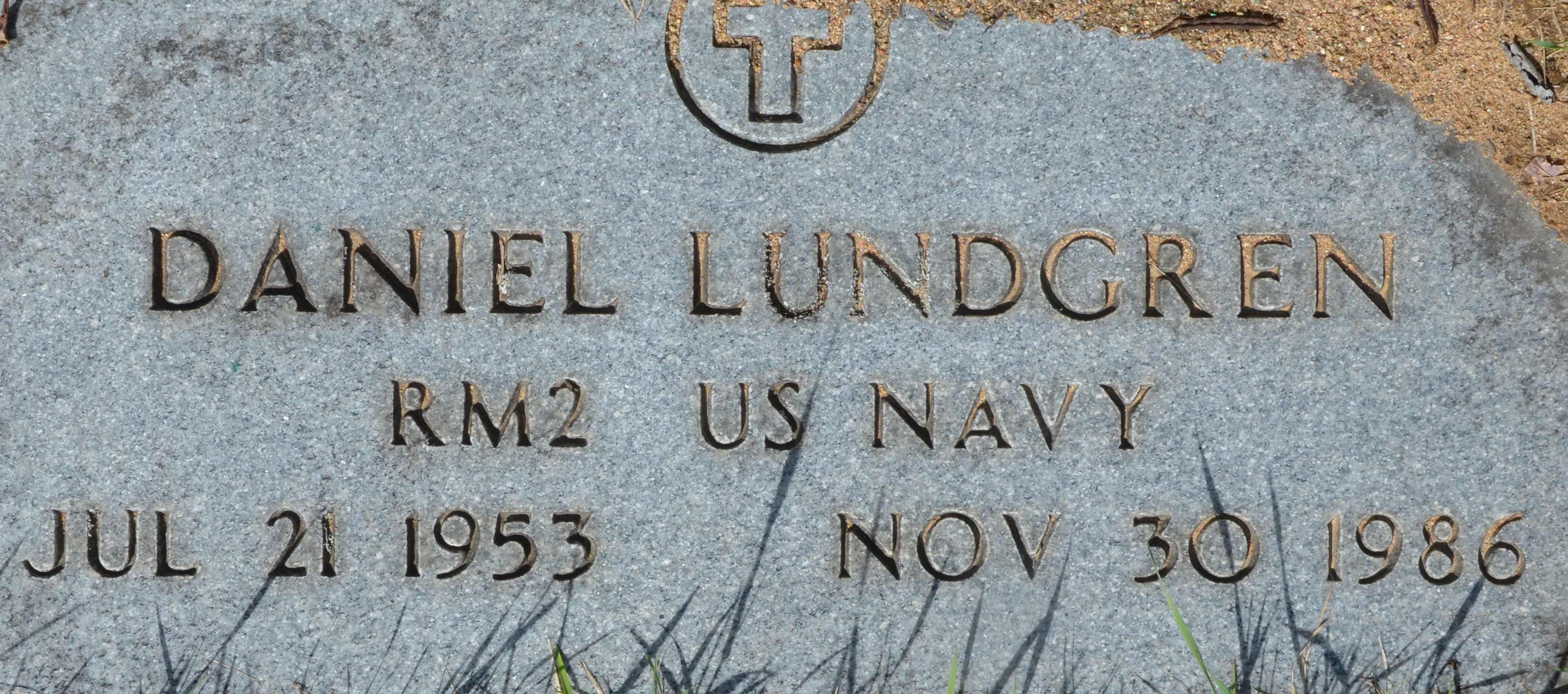
Daniel Lundgren, a 33-year-old White/Caucasian man, died on November 30, 1986, after what authorities initially believed was a traffic accident near West Bend, Wisconsin. Lundgren was originally from Esko, Minnesota, and was working as the manager of the Paradise Inn Village Motel and Chinese Restaurant in the West Bend area. At the time, Alvin Taylor, a traveling nightclub singer who would later be identified as a serial killer, had been staying at the establishment and had become acquainted with Lundgren.
The circumstances surrounding Lundgren's death at first gave investigators little reason to suspect murder. His automobile had crashed into a culvert in the Jackson area, and the serious injuries he suffered were attributed to the collision. Lundgren was found alive and taken for medical treatment, but he died approximately 30 hours later. His death was consequently treated as the result of the crash rather than a deliberate act of violence.
Months later, the case changed dramatically because of the investigation into Alvin Taylor. Taylor was arrested on April 3, 1987, while attending the funeral of another victim, Timothy Hayden. As authorities investigated Taylor, he began admitting responsibility for several killings, including the deaths of Robert Williams, James Severson, Hayden, and Lundgren. Taylor unexpectedly told investigators that Lundgren had not died simply because of the automobile crash—he said that he had shot him.
According to accounts of Taylor's confession, he and Lundgren had known one another through the Paradise Inn. Taylor had been living there for a period of time, and tension developed when Lundgren wanted him to leave. Taylor identified that dispute as the circumstance leading to the killing. Investigators came to believe that Lundgren had been shot before the vehicle crashed, meaning the collision had concealed the true nature of what had happened.
Taylor's confession prompted authorities to reopen a death that had effectively been considered accidental. On June 23, 1987, Lundgren's remains were exhumed so that another examination could be conducted. The examination uncovered evidence that had not been recognized when he was initially hospitalized and treated: Lundgren had suffered three gunshot wounds to the head. Reports concerning the subsequent forensic examination identified the weapon as a. 38-caliber firearm. The discovery transformed what had been viewed as a fatal car accident into a homicide investigation.
The fact that the gunshot wounds were not discovered during Lundgren's original treatment became one of the most unusual aspects of the case. He had survived long enough to receive hospital care before dying, yet the shooting apparently went undetected because attention was focused on injuries associated with the automobile crash. Only after Taylor supplied information months later did authorities have reason to exhume the remains and establish that Lundgren had actually been shot.
Taylor was subsequently charged with first-degree murder in Washington County in connection with Lundgren's killing. The Lundgren case became part of a much larger series of prosecutions involving Taylor, who admitted killing four acquaintances in Wisconsin during the mid-1980s. In addition to Lundgren, Taylor admitted killing Robert Williams, James Severson and Timothy Hayden. Investigators also learned of an attack on Paul Zwick at the same motel in December 1986, after Lundgren's death; Taylor admitted attacking Zwick with a hammer and screwdriver, and Zwick survived.
Taylor's mental condition became central to the criminal proceedings. He entered pleas involving mental disease or defect in the murder cases, and Washington County ultimately agreed not to contest that defense in the first-degree murder charge involving Lundgren. Taylor was found not criminally responsible for the killings because of mental disease or defect and was committed to the Mendota Mental Health Institute in Madison. His confinement therefore came through Wisconsin's mental-health commitment system rather than an ordinary prison sentence for Lundgren's murder.
Taylor has remained confined for decades and has repeatedly sought conditional release. Courts have considered those requests in the counties connected to his killings, including Washington County because of Lundgren's case. As recently as 2026, Taylor remained at Mendota Mental Health Institute while continuing legal efforts related to conditional release. Lundgren's death, once recorded in circumstances resembling a tragic roadside accident, ultimately became one of the four killings Taylor admitted committing and one of the cases that has kept Taylor under institutional confinement for decades.