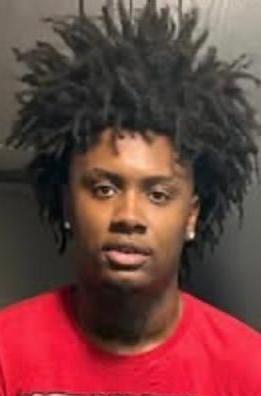
Mose Thompson was a 65-year-old man from Cincinnati, Ohio, whose death on November 22, 1986, was eventually identified as one of the killings committed by hospital orderly Donald Harvey. Thompson was a patient at Cincinnati’s Drake Memorial Hospital when Harvey poisoned him with cyanide, introducing the poison through Thompson’s gastric feeding tube. Contemporary reporting later placed Thompson among a long series of patients who died while Harvey was working at Drake, where many victims were seriously ill and their deaths initially appeared capable of being explained by their medical conditions. Thompson was born on September 1, 1921, in Logan, West Virginia, and was later buried at Vine Street Hill Cemetery in Cincinnati.
At the time Thompson died, no public murder investigation immediately exposed what had happened to him. Harvey continued working around vulnerable patients, and the larger pattern remained hidden until the death of another Drake patient, John Powell, in March 1987. Powell had suffered severe brain injuries in a motorcycle crash, so his death was not initially extraordinary, but an autopsy revealed cyanide. That discovery led investigators toward Harvey, who was questioned and admitted poisoning Powell. Cincinnati police charged Harvey with Powell’s murder on April 6, 1987. The Powell case became the opening that allowed investigators, prosecutors, hospital employees and journalists to begin examining other suspicious deaths connected to Harvey.
As the investigation widened, Harvey emerged not merely as a suspect in one hospital death but as a serial killer who had been operating for years. Employees at Drake had noticed that he seemed to be present around an unusual number of deaths, and later reporting described staff members becoming suspicious of the pattern. Investigators ultimately tied numerous Drake deaths to deliberate poisonings with substances including cyanide, arsenic, rat poison and cleaning chemicals. Thompson’s death was specifically attributed to cyanide administered through his feeding tube, making his case part of the group of killings that prosecutors were able to resolve through Harvey’s admissions and guilty pleas rather than through a separate jury trial for each victim.
Harvey was held in custody after his April arrest, initially in lieu of a $200,000 bond. By August 1987, prosecutors were preparing a much broader case against him. His bond was revoked after his defense attorney made inquiries about the procedure for posting it, while prosecutors and Harvey’s lawyers were negotiating the disposition of the rapidly expanding murder investigation. The case carried the possibility of the death penalty, giving Harvey a powerful incentive to resolve the charges through a plea agreement.
On August 18, 1987, Harvey pleaded guilty in Hamilton County to 24 counts of aggravated murder, four counts of attempted aggravated murder and one count of felonious assault. Thompson was expressly listed among those 24 murder victims. Prosecutors stated that Thompson had been a Drake Hospital patient and that he died after cyanide was introduced into his gastric tube. There was therefore no unresolved mystery about the identity of the person responsible for Thompson’s death once the case reached court: Donald Harvey admitted responsibility and was convicted through his guilty plea. No credible online source reviewed for this synopsis identifies a second suspect, accomplice or separately arrested person in Thompson’s killing.
The guilty pleas spared prosecutors the need to conduct a long series of individual murder trials and spared Harvey the immediate risk of a death sentence under the negotiated arrangement. He received three consecutive life sentences for the initial group of murders, leaving him ineligible for parole for decades. Harvey’s legal problems did not end with the August 18 proceeding. Additional admissions and charges followed as investigators examined other suspicious deaths in Ohio and Kentucky, and his acknowledged victim count continued to grow. He ultimately became associated with dozens of killings committed while working in hospitals and health-care facilities, although his own claims about the total number of people he killed exceeded the number of murders that authorities could conclusively establish.
Harvey later attempted to portray many of the hospital killings as acts intended to end suffering, saying that he believed he was putting gravely ill patients out of their misery. That explanation did not alter their legal classification as murders, and there is no reliable source establishing that Thompson asked Harvey to end his life or consented to being poisoned. Thompson’s death instead became one example of how Harvey was able to exploit access to severely ill patients, whose underlying conditions could make an unexpected death appear natural. The use of cyanide through a feeding tube allowed the killing to take place in a clinical setting without immediately creating the appearance of an ordinary violent homicide.
Thompson’s case was thus solved as part of the much larger Drake Hospital investigation. Months after his death had initially passed without a murder charge, the cyanide discovery in another patient exposed Harvey and triggered the investigation that reached backward into Thompson’s medical care. Harvey was arrested, confessed to killings beyond the one that initially brought police to him, pleaded guilty to Thompson’s murder along with numerous others, and received life imprisonment. The available online record does not indicate that Thompson’s killing produced a separate trial, nor does it identify any other person as having been arrested, charged or convicted in connection with his death.