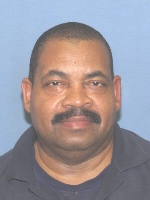
Henry Hoeweler, an 82-year-old man from Cincinnati, Ohio, became one of the non-hospital victims of Donald Harvey, the former hospital orderly who was later exposed as one of the most prolific serial killers in American history. Although the supplied information gives Hoeweler’s death date as August 7, 1983, contemporary reporting identifies his death as May 1, 1983. Hoeweler was the father of Carl Hoeweler, who was Harvey’s longtime roommate and romantic partner.
The killing grew out of the increasingly volatile relationship between Harvey and Carl rather than Harvey’s better-known pattern of killing seriously ill patients under his care.
In the spring of 1983, Harvey’s jealousy and anger toward Carl began spilling over onto people close to him. According to later accounts of Harvey’s confessions, he poisoned Carl himself with arsenic in an effort to make him ill and exert control over him. Harvey also turned his attention to Carl’s parents. Henry Hoeweler suffered a stroke on May 1 and was admitted to Providence Hospital in Cincinnati. Harvey visited him there and secretly put arsenic into pudding that was given to Hoeweler. Hoeweler died later that night. Contemporary reporting from 1987, when Harvey’s crimes finally came to light, specifically listed Hoeweler as having died on May 1, 1983, after arsenic was placed in his pudding.
Hoeweler’s death did not initially result in an arrest or an immediate murder investigation. Harvey continued killing for several more years, particularly at Cincinnati’s Daniel Drake Memorial Hospital. His crimes began unraveling in March 1987 after the death of 44-year-old John Powell, a comatose motorcycle-crash patient. During Powell’s autopsy, evidence of cyanide poisoning was discovered, creating the first firm forensic link to a deliberate killing and focusing investigators on Harvey, who had access to Powell while working at Drake. Harvey was arrested in April 1987 and initially faced an aggravated-murder charge in Powell’s death. Investigators soon began examining other suspicious deaths connected with him.
As detectives questioned Harvey and information from hospital employees emerged, the investigation expanded dramatically. Harvey confessed to scores of killings committed over many years in Ohio and Kentucky. Authorities corroborated portions of his statements through medical records, interviews and, in some cases, exhumations. During those confessions, Harvey admitted responsibility for killing people outside the hospitals as well, including Henry Hoeweler. Harvey’s attorney later explained that the poisonings of Carl Hoeweler’s parents were motivated by Harvey’s anger toward Carl, showing that Henry’s death was not presented as one of Harvey’s claimed acts of mercy toward a terminally ill patient but as a deliberate attack connected to a personal relationship.
By August 1987, prosecutors had assembled a sweeping case against Harvey. A Hamilton County grand jury returned an indictment containing numerous aggravated-murder and attempted-murder counts, and Harvey entered a plea agreement designed to spare him the death penalty. On August 18, 1987, he pleaded guilty to 24 aggravated murders, four attempted aggravated murders and one felonious assault. The list of murder victims released in connection with the pleas included Henry Hoeweler and described his killing as an arsenic poisoning involving pudding. Harvey received three consecutive life sentences at that stage, requiring him to serve at least 60 years before parole eligibility. Additional cases and admissions followed, ultimately establishing Harvey as responsible for dozens of killings in Ohio and Kentucky.
No separate accomplice or additional suspect has been identified in the available reporting concerning Henry Hoeweler’s murder. Donald Harvey was the person who admitted administering the arsenic, and his confession became part of the much larger prosecution that resolved the Cincinnati killings through guilty pleas rather than individual murder trials. Hoeweler’s death, which had passed without Harvey being arrested in 1983, was therefore recognized as a homicide only after the broader investigation exposed Harvey’s years-long pattern of poisoning and suffocating victims and brought the circumstances of Hoeweler’s final hospitalization to light.