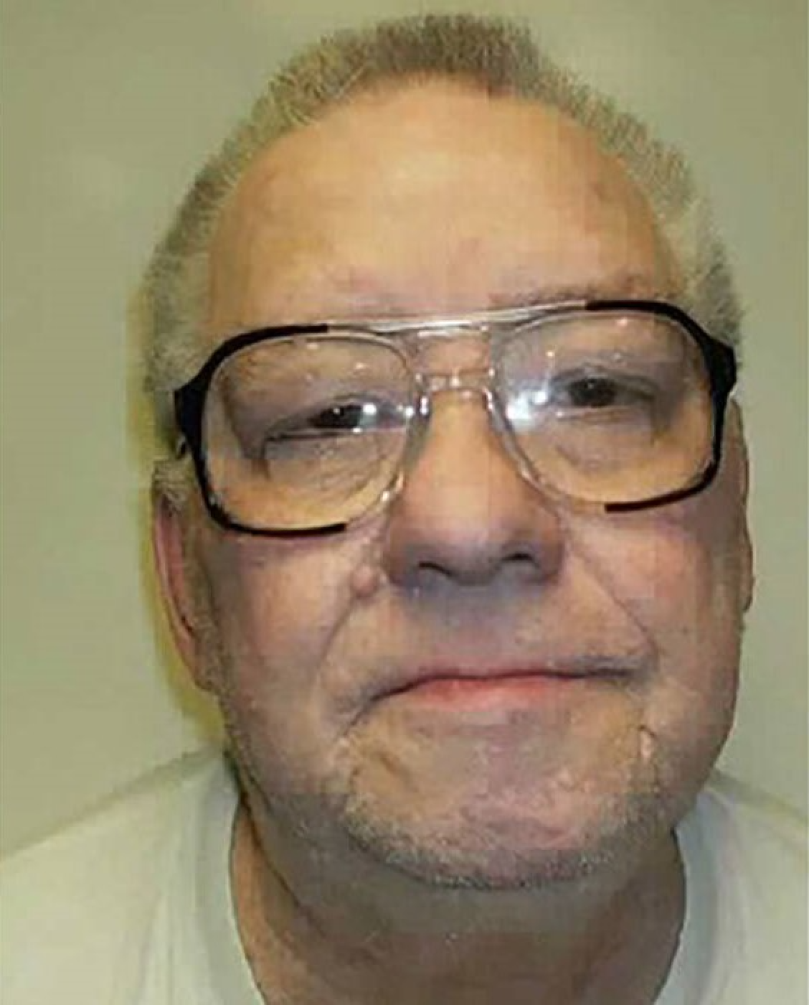
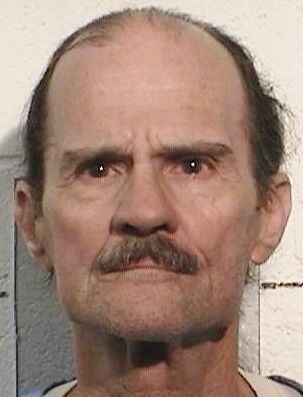
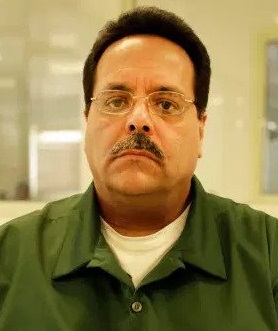
Thomas Wayne Crump: A Violent Criminal Career Across New Mexico and Nevada
Early Criminal History
Thomas Wayne Crump was an American murderer and serial killer whose long record of violent crime stretched across several states and eventually included multiple murders, attempted murders, robberies, assaults and an escape from custody. Long before the killings for which he became notorious, Crump had already demonstrated a willingness to use extreme violence. His criminal history included robbery and attempted murder, and by the late 1960s he was moving between states while committing serious offenses.
On July 13, 1967, Crump committed a robbery and attempted murder in New Mexico. He fled the state afterward and was apprehended in Michigan on August 2, 1967 in connection with another crime. The New Mexico prosecution eventually resulted in convictions for robbery and attempted murder. Although a kidnapping conviction from the same case was later reversed on appeal, the case established an early pattern that would continue throughout Crump's life: robbery accompanied by potentially lethal violence, flight from authorities and repeated attacks after earlier periods of incarceration.
Marriage to Rhonda Higdon Crump
By the 1970s, Crump was living in Albuquerque, New Mexico. He became involved with Rhonda Higdon, whom he had met when she was a teenager. The two eventually married and had a child. By the summer of 1980, however, their relationship had deteriorated, and Rhonda sought a divorce.
According to accounts of the case, Rhonda filed for divorce on July 13, 1980. Crump subsequently arranged to meet with her. During that encounter, he drove her to an area near the Rio Grande and shot her repeatedly with a 9mm firearm before abandoning her body. The homicide immediately placed Crump under suspicion. At his later murder trial, ballistics evidence became especially important: an expert compared bullets recovered from Rhonda's body with bullets test-fired from a firearm in Crump's possession when he was apprehended. The evidence supported the prosecution's case that Crump had murdered his wife.
There is a one-day discrepancy in surviving records concerning Rhonda's death. Accounts of the crime generally place the shooting on July 13, 1980, while cemetery records for Rhonda Lynn Crump record her death as July 14, 1980. She was 20 years old. Because of that discrepancy, her death is most accurately described as occurring on July 13-14, 1980 rather than assigning a false certainty to one of the two dates.
A Violent Flight From New Mexico
After Rhonda's murder, Crump's violence continued. On September 9, 1980, while traveling as a hitchhiker, he accepted a ride from a 58-year-old motorist. Crump attacked the man with a knife, cutting his throat, then robbed him of approximately $600 and stole his truck. Despite the severity of the attack, the victim survived. Crump continued traveling and eventually reached Nevada.
The attack was characteristic of crimes repeatedly associated with Crump: he took advantage of a stranger who allowed him into a vehicle, suddenly turned on the victim, used potentially deadly force and then stole money or transportation. His willingness to kill or attempt to kill people for comparatively small financial gains made his movements particularly dangerous.
The Murder of Jodie Jameson
On October 4, 1980, the body of Jodie Jameson was discovered in the bathtub of a motel room in Las Vegas, Nevada. Jameson, who was 26 years old and worked for a Las Vegas escort service, had been bound. Her arms and legs were restrained with pantyhose, and a ligature fashioned from material torn from a pillowcase had been placed around her neck. An autopsy determined that she had died from ligature strangulation.
Crump later admitted killing and robbing Jameson. He claimed that he believed she had robbed him and said that he decided to kill her in response. His own statements became particularly damaging because he acknowledged that the killing was deliberate rather than the accidental result of a struggle. During later court proceedings, evidence concerning his confession was used to demonstrate the calculated nature of the murder.
The violence in Las Vegas did not end with Jameson's death. The following day, October 5, Crump was involved in another episode in which he shot at two men with whom he had been staying. Both survived. He then made his way back toward New Mexico, leaving investigators in more than one jurisdiction with violent crimes connected to him.
The Murder of Irving Plaisted
After returning to Albuquerque in October 1980, Crump encountered 78-year-old Irving Plaisted. According to accounts of the homicide, Plaisted was approached in circumstances involving directions and allowed Crump into his automobile. Crump then robbed the older man and shot him in the chest and head, killing him.
Crump was eventually convicted of Plaisted's murder and received another life sentence. The precise calendar day of Plaisted's death is inconsistent in surviving secondary accounts, although the homicide is consistently placed in Albuquerque during October 1980. For that reason, an exact day should not be presented as verified when the surviving public record does not support one with sufficient certainty.
Arrest and Murder Convictions
Crump's 1980 crime spree came to an end when he was arrested on November 16, 1980 following a disturbance at a motel. Investigators were then able to connect him with the violent trail he had left behind in New Mexico and Nevada.
In New Mexico, Crump was prosecuted for the murder of his wife. He was convicted of first-degree murder and sentenced to life imprisonment. The physical evidence presented against him included the ballistic comparison between the bullets recovered from Rhonda's body and Crump's firearm. He was also convicted of killing Irving Plaisted and received another life sentence.
Those convictions did not end Crump's violent activity. Even while in custody, he continued to demonstrate a willingness to escape and to use deadly force against anyone who stood between him and freedom.
The June 1982 Escape
On June 17, 1982, Crump escaped from New Mexico custody after obtaining a firearm supplied to him by another prisoner. Court records concerning the escape identify June 17 as the date on which Crump got away from the Torrance County Jail. Once outside, he again began attacking people as he attempted to evade capture.
One of those victims was Albuquerque taxi driver Steve Hewitt. Crump took control of Hewitt and shot him twice in the head. Remarkably, Hewitt survived the attack. Crump then encountered another taxi driver, 44-year-old Ian Smith. A confrontation followed, and Crump shot Smith, killing him. During the same sequence of events, Crump suffered a gunshot wound to his own shoulder.
The escape lasted only a short time. Authorities located and recaptured Crump, bringing to an end another episode in which his effort to avoid imprisonment had resulted in a murder and another near-fatal shooting.
The Murder of Ian Smith
Ian Smith's killing added another murder to Crump's record despite the fact that Crump was already serving life sentences. Smith was a 44-year-old Albuquerque taxi driver who encountered Crump on June 17, 1982, the same day Crump escaped from custody. Crump shot Smith during their encounter, and Smith died from his injuries.
Crump later pleaded guilty in connection with the murder and attempted murder committed during his escape. In April 1983, he received an additional prison term totaling decades. The case demonstrated that incarceration had done little to diminish the threat he posed when given an opportunity to escape.
Return to Nevada and the Jameson Trial
After the New Mexico cases, Crump was returned to Nevada to face prosecution for the murder of Jodie Jameson. On April 25, 1984, a Nevada jury convicted him of first-degree murder and robbery with the use of a deadly weapon. The circumstances of the Jameson homicide, Crump's confession and his extensive violent history were then considered during the penalty phase.
The Nevada proceedings revealed an even broader picture of Crump's claimed criminal activity. In a recorded statement, Crump asserted that he had committed seven murders and seven attempted murders, in addition to numerous robberies, assaults and kidnappings. The claims greatly exceeded the number of killings that prosecutors had been able to establish through convictions.
Crump was sentenced to death for Jameson's murder. The Nevada Supreme Court affirmed his conviction and sentence in 1986. He consequently spent decades on Nevada's death row, although the execution was never carried out.
Known and Confirmed Murder Victims
- Rhonda Lynn Higdon Crump - July 13-14, 1980 - Albuquerque/Rio Grande area, New Mexico. Rhonda was Crump's 20-year-old wife and was in the process of ending their marriage. Crump shot her multiple times and left her body near the Rio Grande. Crime accounts generally place the shooting on July 13, while cemetery records list July 14 as her date of death. Ballistics evidence later connected bullets recovered from her body with Crump's firearm.
- Jodie Jameson - October 4, 1980 - Las Vegas, Nevada. Jameson, age 26, was found dead in the bathtub of a Las Vegas motel room. Her limbs had been bound with pantyhose, and she had been strangled with a ligature made from torn pillowcase material. Crump confessed to deliberately killing and robbing her. He was convicted of first-degree murder in Nevada and sentenced to death.
- Irving Plaisted - October 1980 - Albuquerque, New Mexico. Plaisted was 78 years old when Crump robbed and shot him after gaining access to his automobile. Crump was convicted of Plaisted's murder and received a life sentence. Surviving public accounts do not consistently establish the exact day of Plaisted's death, so a specific October date cannot be stated with confidence.
- Ian Smith - June 17, 1982 - Albuquerque, New Mexico. Smith was a 44-year-old taxi driver killed while Crump was at large following his escape from custody. Crump shot Smith during the brief escape and was recaptured shortly afterward.
Other Alleged Killings and Crump's Claims
The four victims above represent the killings most firmly connected to Crump through convictions and documented criminal proceedings. Crump himself claimed that his actual number of murder victims was higher. During the Nevada penalty phase, he said that he had committed seven murders as well as seven attempted murders. Some of these assertions could not be independently established, and his statements should therefore not be treated as proof that every claimed killing actually occurred.
Another homicide allegation emerged through the testimony of Jerome Strickland, who told the Nevada court that he had witnessed Crump kill Strickland's roommate, Ernie Ritchie. Crump was not convicted of Ritchie's killing, and a reliably verified date and location for that alleged homicide are not established in the available court record. Ritchie therefore remains an alleged victim rather than one of Crump's confirmed murder convictions.
Crump also made claims about violent acts dating much farther back in his life, including an assertion that he had killed a priest while still a teenager. Those statements have not been established through a known conviction and should be regarded as unverified claims rather than confirmed additions to his victim count.
Violence While Incarcerated
Crump's record also included serious violence inside correctional institutions. During the penalty phase of his Nevada case, prosecutors presented evidence concerning his involvement in a prison uprising in which a correctional officer was taken hostage and killed. Crump acknowledged participating in the uprising. The available record, however, does not establish that Crump personally committed the guard's murder, making it inappropriate to count that death as one of his confirmed individual victims.
The distinction is important when examining Crump's history. His criminal record was unquestionably extensive, but later summaries sometimes blend convictions, allegations, participation in group violence and Crump's own boasts into a single total. The strongest documented record supports multiple murders and attempted murders while leaving several additional claimed crimes unresolved.
A Pattern of Predatory Violence
Crump's murders did not follow one narrowly defined method. Rhonda Crump was shot in a domestic context. Jodie Jameson was bound and strangled in a motel room. Irving Plaisted was shot during a robbery involving his automobile. Ian Smith was killed while Crump was escaping from custody. Other victims survived shootings, knife attacks and robberies.
What connected the crimes was Crump's repeated willingness to escalate encounters to potentially lethal violence. Strangers who offered transportation, taxi drivers, acquaintances and even his own wife became victims. Robbery was frequently present, but some of the crimes also reflected anger, retaliation or an effort to eliminate obstacles to Crump's escape.
His criminal career is particularly notable because serious punishment repeatedly failed to stop the violence. He committed grave offenses in the 1960s, returned to violent crime after later release, murdered several people in 1980, and then killed again during an escape in 1982 while already imprisoned for murder.
Death Row and Final Years
Following his Nevada conviction, Crump remained under a death sentence for Jodie Jameson's murder. His case went through appellate review, with the Nevada Supreme Court upholding the conviction and sentence. Despite spending decades on death row, Crump was never executed.
Thomas Wayne Crump died in a Nevada prison in June 2018. His death closed the life of a man whose documented criminal history stretched for more than half a century and included murder convictions in both New Mexico and Nevada.
Legacy of the Cases
Crump's case illustrates the difficulty of separating a serial offender's proven crimes from later confessions and allegations. He openly claimed a larger murder total than authorities were able to establish in court, and witnesses connected him to additional violence. Nevertheless, the documented murders of Rhonda Crump, Jodie Jameson, Irving Plaisted and Ian Smith provide a clear record of repeated lethal violence across several years and jurisdictions.
His history also included victims who narrowly survived. The motorist attacked in September 1980 survived having his throat cut, two men survived a shooting episode in Las Vegas, and taxi driver Steve Hewitt survived being shot during Crump's 1982 escape. Those attempted killings demonstrate that the known murder total alone does not fully represent the extent of Crump's violence.
From the murder of his estranged wife in New Mexico to the strangulation of Jodie Jameson in Las Vegas and the killing of Ian Smith during an escape from custody, Thomas Wayne Crump left behind a succession of victims, survivors and criminal prosecutions. Although some of his claims about additional murders remain unverified, the crimes established in court were sufficient to place him among the more persistent violent offenders to operate in the American Southwest during the period.