Francisco Acevedo: The Yonkers Serial Killer
Overview
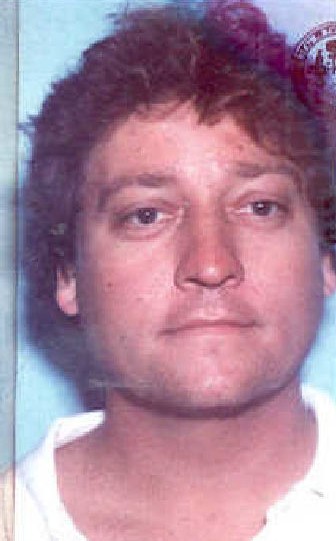
Francisco Acevedo is an American serial killer who was convicted of murdering three women in and around Yonkers, New York, between 1989 and 1996. The murders remained unsolved for many years and became some of the region's most troubling cold cases. Investigators eventually linked the crimes through forensic evidence and DNA recovered from the crime scenes. Acevedo was not identified as a suspect until decades later, when a DNA sample he voluntarily provided while incarcerated for an unrelated offense matched evidence collected from the victims.
Born on September 2, 1968, in Meriden, Connecticut, Acevedo had a lengthy criminal history that included violent offenses and sexual assault prior to the murders. In 2011, a jury found him guilty of three counts of second-degree murder. In January 2012, he was sentenced to a total of 75 years to life in prison.
Background and Criminal History
Before the murders for which he was convicted, Acevedo had already demonstrated a pattern of violent criminal behavior. In 1986, he kidnapped and sexually assaulted a woman in Connecticut. According to court records, he bound and blindfolded the victim before attacking her. He was arrested, convicted, and served a prison sentence before being released in 1988.
Throughout the 1990s, Acevedo accumulated additional arrests, including domestic violence incidents involving his wife. Despite these offenses, he was never considered a suspect in the Yonkers murders until forensic technology eventually connected him to the crimes.
The Murders
The three victims were all women who were found strangled. Investigators determined that the crimes shared significant similarities. The victims were discovered naked, their hands had been bound, and their bodies had been positioned in a similar manner after death. DNA evidence recovered from the crime scenes linked the murders together, but investigators were unable to identify the offender for many years.
In 2009, while serving time for a drunk-driving conviction, Acevedo provided a DNA sample as part of a parole-related process. The sample was entered into a database and matched evidence collected from the three homicide investigations. The breakthrough solved murders that had remained unsolved for between thirteen and twenty-one years.
Known Victims
- Maria Ramos (Age 26)
- Date of murder: February 5, 1989
- Residence: Bronx, New York
- Location connected to crime: Yonkers, New York
- Cause of death: Strangulation
- Ramos was the earliest known victim linked to Acevedo. Her murder remained unsolved for more than two decades before DNA evidence identified the killer.
- Tawanda Hodges (Age 28)
- Date of murder: March 28, 1991
- Residence: Bronx, New York
- Location connected to crime: Yonkers, New York
- Cause of death: Strangulation
- Like the other victims, Hodges was found naked with her hands bound. The similarities between her murder and the others helped investigators conclude that a serial offender was responsible.
- Kimberly Moore (Age 30)
- Date of murder: May 24, 1996
- Residence: Greenburgh, New York
- Location connected to crime: Yonkers, New York
- Cause of death: Strangulation
- Moore was the last known victim. Trial testimony included evidence that a motel employee had seen Acevedo with Moore shortly before her body was discovered.
Investigation and DNA Breakthrough
For years, detectives knew the three murders were connected because the same unidentified male DNA profile appeared in the investigations. Despite examining more than one hundred potential suspects, authorities were unable to identify the offender.
The case changed dramatically in 2009 when Acevedo submitted a DNA sample while incarcerated on an unrelated conviction. Laboratory testing produced a match with biological evidence recovered from all three homicide investigations. Detectives subsequently arrested Acevedo on April 21, 2010, ending a search that had lasted more than two decades.
Trial and Conviction
During his trial, prosecutors presented DNA evidence linking Acevedo to each victim. Forensic experts testified that the DNA profile recovered from the victims matched Acevedo. The defense argued that Acevedo had engaged in consensual sexual activity with the women and denied that he committed the murders.
The jury ultimately rejected the defense's explanation and convicted Acevedo of three counts of second-degree murder in November 2011. Although prosecutors had also charged him with rape-related offenses, he was acquitted on those counts.
Sentencing
On January 17, 2012, Francisco Acevedo was sentenced in Westchester County, New York. The court imposed three consecutive sentences of 25 years to life imprisonment, resulting in a total sentence of 75 years to life. The judge described the murders as particularly cruel and emphasized the suffering inflicted on the victims and their families.
Acevedo remains incarcerated in the New York state prison system. His conviction closed three long-unsolved homicide investigations and provided answers to families who had waited decades for justice.
Summary
Francisco Acevedo was convicted of murdering Maria Ramos, Tawanda Hodges, and Kimberly Moore between 1989 and 1996 in the Yonkers, New York area. The victims were strangled, bound, and left in similar circumstances, allowing investigators to connect the crimes as the work of a serial killer. The case remained unsolved until DNA evidence obtained from Acevedo in 2009 matched biological evidence preserved from the crime scenes. His arrest, conviction, and 75-years-to-life sentence stand as a notable example of cold cases being solved through advances in forensic DNA technology.