Alfredo Rolando Prieto: Serial Killer in Virginia and California
Background
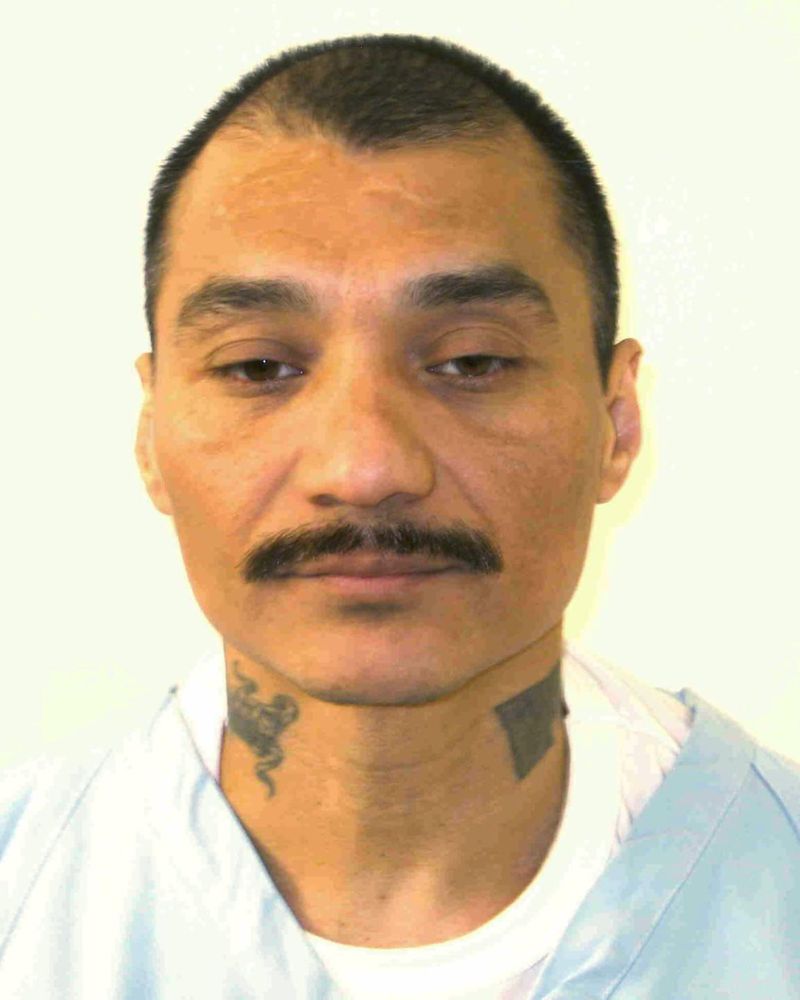
Alfredo Rolando Prieto was a Salvadoran-born serial killer and sexual predator whose crimes were committed in Virginia and Southern California between 1988 and 1990. He was born on November 18, 1965, in San Martín, El Salvador, and later moved with members of his family to the United States. Prieto eventually lived in both California and Northern Virginia, placing him near the locations where investigators later connected him to a succession of rapes, kidnappings, robberies and murders.
Prieto was ultimately associated with nine homicide victims. He was convicted of murdering three of them: college students Rachael Raver and Warren Fulton III in Virginia, and 15-year-old Yvette Woodruff in California. DNA evidence, firearm examinations and other investigative findings linked him to six additional killings. Several of those cases were not prosecuted before his execution, but authorities publicly identified Prieto as the person responsible or the principal suspect.
Early Violence and Criminal History
Prieto displayed violent behavior years before the murders for which he became notorious. In August 1984, while living in California, he shot and wounded three people during an eruption of jealousy and anger. He was convicted and imprisoned, but he was released in 1987. After leaving prison, he spent time in Northern Virginia, where several of his earliest known murders occurred.
Prieto's later crimes followed a recognizable pattern. He targeted vulnerable individuals and couples in isolated locations, frequently using a firearm to control or kill his victims. Women in several cases were sexually assaulted. Some victims were abducted or forced into vehicles before being taken to secluded areas. His movements between Virginia and California initially prevented investigators from recognizing that crimes separated by thousands of miles were connected to the same offender.
Known and Suspected Victims
- Veronica "Tina" Lynn Jefferson — May 10, 1988 — Arlington, Virginia: Jefferson was 24 years old when she was sexually assaulted and murdered. Her body was discovered in Arlington. The killing remained unsolved for years until biological evidence from the crime scene was matched to Prieto's DNA. Prieto was publicly linked to her rape and murder, although he was not tried for the crime before his execution.
- Rachael Angelica Raver — December 4, 1988 — Reston, Virginia: Raver was a 22-year-old George Washington University student. She disappeared with her boyfriend, Warren Fulton III, after the couple left a Washington, D.C., establishment shortly after midnight. Prieto took them to a wooded area near Hunter Mill Road in Reston. Raver was sexually assaulted and shot. Her body was found on December 6, 1988.
- Warren Hudson Fulton III — December 4, 1988 — Reston, Virginia: Fulton, also 22, was murdered alongside Rachael Raver. He was shot in the back and killed before or during Prieto's assault on Raver. The bodies of both victims were left in the secluded area and discovered two days later. Prieto was eventually convicted of both murders after DNA evidence connected him to the scene.
- Manuel F. Sermeno — September 2, 1989 — Prince William County, Virginia: Sermeno was 27 years old when he was shot and left inside a burning automobile near Interstate 95. Investigators later used ballistic evidence to associate the firearm used in his killing with Prieto. Authorities identified Prieto as the killer, but the case did not proceed to trial before Prieto's execution.
- Stacey Lynn Siegrist — May 5, 1990 — Rubidoux, California: Siegrist, 19, was found with her boyfriend, Anthony Gianuzzi, along a dirt access road near Canal and Alta streets. She had been sexually assaulted and shot twice, including in the head and neck area. DNA recovered from the crime scene was later matched to Prieto.
- Anthony Michael "Tony" Gianuzzi — May 5, 1990 — Rubidoux, California: Gianuzzi was 21 years old and was murdered with Stacey Siegrist. He had been restrained and shot twice. The couple had been missing for nearly two days before a jogger discovered their bodies in the isolated area. Investigators announced the DNA connection to Prieto in 2010.
- Lula Mae Farley — June 2, 1990 — Ontario, California: Farley, 71, was collecting recyclable cans with her husband behind an Ontario supermarket when they were attacked. She was shot and killed in the alley. Ballistic testing later connected the weapon used in the Farley murders to other killings attributed to Prieto.
- Herbert Farley — June 2, 1990 — Ontario and Rubidoux, California: Herbert Farley, 65, witnessed the attack on his wife. He was abducted from the area and transported away from the supermarket. His body was later found in Rubidoux, where he had been shot to death. Authorities eventually linked Prieto to both Farley murders through investigative and firearm evidence.
- Yvette Michelle Woodruff — September 2, 1990 — Ontario, California: Woodruff was 15 years old when Prieto and several accomplices participated in the kidnapping of three females from an Ontario residence. The captives were taken to an abandoned industrial building, where they were sexually assaulted. Prieto fatally shot Woodruff. The other two victims were stabbed and left for dead but survived and obtained help. Prieto was convicted of Woodruff's murder, rape and kidnapping.
The Murders of Rachael Raver and Warren Fulton III
On the night of December 3 and the early morning of December 4, 1988, Rachael Raver and Warren Fulton III spent time with friends in Washington, D.C. After leaving, they vanished. Their families became concerned when the couple failed to arrive for plans later that morning.
On December 6, their bodies were found in a wooded area near Reston. Fulton had been shot, while Raver had been partially undressed, sexually assaulted and shot. Evidence at the scene indicated that Raver had been moved or dragged and that she remained alive for at least part of the assault. Investigators preserved biological material recovered from her body, but forensic technology at the time could not identify the attacker.
The case remained unresolved for approximately 17 years. When Prieto's genetic profile was entered into a national database, it matched the evidence collected from Raver. Prosecutors argued that the DNA association was extraordinarily strong and placed Prieto at the crime scene. He was extradited from California to Virginia and convicted of the two capital murders, Raver's rape, grand larceny and firearm offenses.
The Murder of Yvette Woodruff
Prieto's final known murder occurred in Ontario, California, on September 2, 1990. Prieto and other men initially confronted and robbed a man, forced him into a vehicle and went to a residence occupied by several females. The group abducted a 33-year-old woman, her 17-year-old daughter and the daughter's 15-year-old friend, Yvette Woodruff.
The captives were transported to an abandoned building in an industrial area on the eastern side of Ontario. The three were repeatedly sexually assaulted. Prieto shot Woodruff, killing her. Two accomplices stabbed the adult woman and the 17-year-old girl and abandoned them, apparently believing that they would die. Both survived despite severe injuries and extensive blood loss. They were able to reach assistance and provide investigators with information about the attackers.
Prieto was arrested on September 6, 1990. Investigators recovered a handgun connected to the attack, and surviving witnesses provided critical testimony. Prieto was convicted of first-degree murder with special circumstances, three counts of kidnapping, three counts of forcible rape, robbery, attempted robbery and firearm-related offenses. A California jury sentenced him to death in 1992.
DNA and the Expansion of the Investigation
For many years, Prieto was officially known primarily as the condemned murderer of Yvette Woodruff. That changed when authorities obtained and entered his DNA profile into law-enforcement databases. The profile produced matches to biological evidence preserved from unsolved crime scenes in Virginia and California.
The most consequential match involved the rape and murder of Rachael Raver. Additional forensic comparisons linked Prieto to Veronica Jefferson and the killings of Stacey Siegrist and Anthony Gianuzzi. Ballistic evidence associated him with the murders of Manuel Sermeno and Herbert and Lula Farley. As investigators compared the cases, they concluded that Prieto had committed a geographically dispersed series of predatory killings before his September 1990 arrest.
The surviving evidence demonstrated how Prieto exploited the limitations of law enforcement before modern DNA databases became widely used. His victims lived in different jurisdictions, and the crimes initially appeared to be unrelated local cases. The later forensic matches revealed that the same man had left a trail of violence across two states.
Trials and Death Sentences
Prieto received his first death sentence in California for the murder of Yvette Woodruff. He remained on San Quentin's death row for years while his appeals proceeded. After the Virginia DNA match, he was transferred to Fairfax County to face prosecution for the Raver and Fulton murders.
His first Virginia proceeding in 2007 ended in complications during the sentencing phase. He was tried again and convicted in 2008, but errors involving the penalty verdict forms resulted in the death sentences being overturned while the convictions remained intact. A new sentencing proceeding was held in 2010. Jurors again imposed death sentences for both murders after finding aggravating factors involving the vileness of the crimes and Prieto's continuing danger to others.
Prieto's attorneys challenged his eligibility for execution on several grounds. They argued that he had an intellectual disability and that his life experiences in war-torn El Salvador had caused serious psychological trauma. Prosecutors responded with evidence concerning his school performance, language skills, employment, social functioning and ability to plan and conceal crimes. Courts ultimately rejected the claim that he was constitutionally ineligible for execution.
Execution
After Prieto's remaining appeals and requests for clemency failed, Virginia scheduled his execution for October 1, 2015. His lawyers attempted to delay the execution by challenging the drugs selected for the lethal-injection procedure, but the courts allowed it to proceed.
Alfredo Rolando Prieto was executed by lethal injection at Greensville Correctional Center in Jarratt, Virginia. He was pronounced dead at 9:17 p.m. on October 1, 2015. He was 49 years old. Prieto did not apologize to the victims' relatives or acknowledge responsibility for the broader series of murders before his death.
Legacy of the Cases
Prieto's crimes illustrate the importance of preserving biological and ballistic evidence in unsolved homicide investigations. Material collected from crime scenes in the 1980s and 1990s remained available until improved forensic methods and national databases could connect it to a known offender.
Although Prieto was convicted of three murders, investigators linked him to nine victims in total. The cases also demonstrated the difficulties created when a mobile offender commits crimes across several cities and states. Without the later DNA comparisons, Prieto's involvement in many of the killings might never have been discovered.
The identification of Prieto gave several families an answer after years of uncertainty, although not every case reached a courtroom. His confirmed convictions, forensic associations and repeated pattern of sexual and firearm violence established him as one of the most dangerous serial offenders connected to both Virginia and California during the late 1980s and early 1990s.