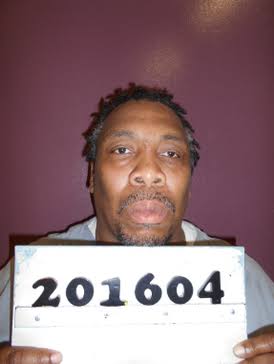
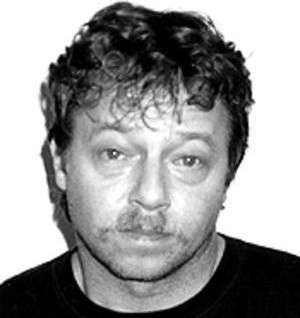
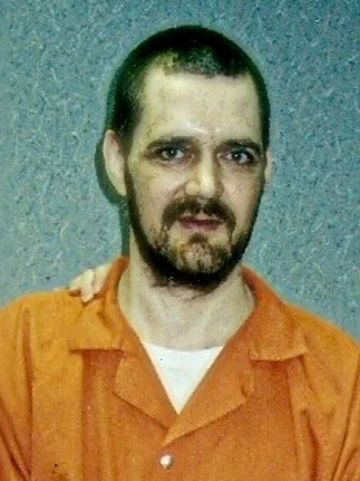
Robert Franklin Smallwood Jr.: The Lexington Serial Killer
Overview
Between 1999 and 2006, the city of Lexington, Kentucky, was the hunting ground for a serial killer who preyed on vulnerable women. The murders of three different women, years apart, were initially investigated as separate and unrelated tragedies, leaving a trail of cold cases that frustrated law enforcement. The perpetrator, Robert Franklin Smallwood Jr., was a local man who lived a seemingly ordinary life as a husband and father, a facade that concealed a history of escalating sexual violence. For years, he moved through the community undetected, his crimes a dark secret in a city unaccustomed to such a predator. The cases were finally connected in 2006 through a DNA breakthrough, revealing that a single man was responsible. Smallwood's capture, which occurred while he was already in prison on an unrelated charge, was a testament to the power of forensic science and brought an end to a seven-year reign of terror. His subsequent confession and life sentence provided a measure of justice for his victims and their families, but the community was left to grapple with the knowledge that a killer had walked among them for so long.
Early Life and Background
Robert Franklin Smallwood Jr. was born in Lexington, Kentucky, in December 1973. He grew up in the city with his sister, Elizabeth. In a tragic and bizarre parallel, Elizabeth would later move to North Carolina and become the victim of a serial killer herself in the Edgecombe County area.
Smallwood's own violent criminal history began long before his first known murder. In 1993, he committed a brutal home invasion assault against Viola Green, an 83-year-old retired schoolteacher living alone in west Lexington. He kicked in her back door, bound her, raped her, and forced her to bathe before stealing her jewelry and fleeing. Green survived the terrifying ordeal but passed away from natural causes in 1998, never learning the identity of her attacker. A sexual assault kit was collected at the time, but due to backlogs, it was not analyzed for over a decade.
In 1997, Smallwood married a woman named Neisha, and they would go on to have several children. This veneer of domesticity sharply contrasted with his criminal behavior. In October 1998, he was arrested for the sexual assault of another woman. The victim reported that Smallwood had taken her to a park, forced her to perform sex acts, and threatened to kill her. When he was arrested, Smallwood admitted to having sex with the woman but claimed she was a prostitute and had consented. Despite his DNA being found on her purse, a jury acquitted him of the charges a year later, a verdict that may have dangerously emboldened him. The DNA from this 1998 case could have solved the 1993 attack on Viola Green had it been tested and compared at the time.
Smallwood's criminal record also included drug offenses. In May 2005, he was arrested for possession of a controlled substance and drug paraphernalia, pleading guilty in September of that year and receiving a sentence of one year of probation. It was during this period of probation that he would commit his final murder.
The Murders
The first woman known to have been murdered by Robert Smallwood was 48-year-old Doris Ann Roberts. In December 1999, neighbors grew concerned after not seeing Roberts for several days. When they entered her East Fourth Street apartment, they made a grim discovery: her body was on the floor. An investigation revealed that Smallwood had broken into her home, then gagged and strangled her to death with her own clothing. Roberts had been facing significant personal challenges; she had a history of alcohol abuse and had recently been left more vulnerable after her roommate died of a heart attack. DNA evidence was collected from the scene, but with no suspect, the case eventually went cold.
Nearly three years passed before Smallwood killed again. His second victim was Sonora Lynn Allen, a 29-year-old mother of six. Allen struggled with drug addiction and was known to engage in sex work to support her habit. She was last seen by her family on Fourth Street in Lexington in August 2002. On August 15, her body was found discarded in the parking lot of a Fortune Pizza. The medical examiner determined she had been killed hours before she was found, with the cause of death being strangulation or suffocation. Her shorts were pulled down and her shirt was disheveled, indicating a possible sexual assault. Semen was found during the autopsy, but like in the Roberts case, the DNA profile yielded no matches in the database, and the investigation stalled.
Smallwood's final murder occurred on April 6, 2006. His victim was 33-year-old Erica C. Butler. Smallwood broke into her home on Kenton Street, bound her wrists, and strangled her. Unlike his previous murders, there was a witness to this crime, a person who would later provide crucial information to investigators. At the time of Butler's murder, Smallwood was still on probation for his 2005 drug conviction. Just two months later, in June 2006, he was arrested for violating that probation and sentenced to one year in prison.
The Victims
- Doris Ann Roberts, 48 — Found on December 22, 1999, in her Lexington apartment. She was a woman who had experienced hardship, including struggles with alcohol and the recent loss of her roommate, which left her isolated.
- Sonora Lynn Allen, 29 — Her body was discovered on August 15, 2002, in a commercial parking lot in Lexington. A native of the city and a mother to four daughters and two sons, she had been battling a drug addiction.
- Erica C. Butler, 33 — Murdered in her Lexington home on April 6, 2006. Authorities noted that she, along with the other victims, had lived what they described as a "high-risk lifestyle," which sometimes included drug use or prostitution.
Investigation and Capture
For years, the murders of Doris Roberts, Sonora Allen, and Erica Butler were handled as separate, isolated homicides by the Lexington Police Department. DNA evidence was collected from each scene, but with no matches in state or national databases, the investigations grew cold. In the Allen case, detectives identified several potential suspects based on neighborhood tips, but DNA testing cleared them.
The major turning point came in August 2006. The Kentucky State Police Forensic Lab, re-examining evidence from the cold cases, confirmed that the DNA profile from all three murder scenes belonged to the same unidentified man. This forensic link transformed three separate unsolved killings into a hunt for a serial killer, a type of case Lexington's police chief said was unprecedented for the city.
In response, the Lexington Police Department immediately formed a 20-person task force and enlisted the assistance of the FBI. A composite sketch of the suspect was developed based on information from a witness in the Erica Butler murder and was distributed to the public in an effort to generate leads.
The final, crucial breakthrough came not from a new tip, but from Smallwood's own criminal activity. In June 2006, he was arrested for a probation violation stemming from his 2005 drug conviction and was sent to the Roederer Correctional Complex in La Grange, Kentucky. As part of his processing as an inmate, a routine DNA sample was taken.
In September 2006, while the task force was actively hunting for the unknown killer, the state crime lab alerted investigators to a new CODIS hit. The DNA from the recently incarcerated Robert Smallwood was a perfect match to the DNA found at the scenes of all three murders. Furthermore, his DNA also matched the sample from the 1993 rape of 83-year-old Viola Green, finally solving that 13-year-old cold case.
On September 28, 2006, detectives traveled to the prison where the 32-year-old Smallwood was serving his sentence. They served him with an arrest warrant charging him with three counts of murder, rape, sodomy, robbery, and burglary. The man they had been searching for was already behind bars.
Trial and Sentence
Following his indictment, Robert Smallwood Jr. initially pleaded not guilty to the array of charges against him, which included the murders of Doris Roberts, Sonora Allen, and Erica Butler, as well as the 1993 rape of Viola Green and the rape of Erica Butler. This set the stage for a potential capital trial, as prosecutors could seek the death penalty for the rape and murder of Erica Butler.
The prosecution's case was built on the powerful DNA evidence linking Smallwood to all four crime scenes. Prosecutors filed a motion to have the evidence from all the cases presented in a single trial, arguing that the striking similarities in modus operandi and victim profiles demonstrated a clear pattern of criminal behavior. A judge granted this motion, meaning a jury would hear the full scope of Smallwood's violent history at once.
Faced with the overwhelming evidence and the possibility of a death sentence, Smallwood's legal strategy shifted. In 2007, he chose to accept a plea agreement rather than proceed to trial. In Fayette County Circuit Court, he pleaded guilty to three counts of murder, first-degree rape in the case of Erica Butler, and first-degree rape for the 1993 assault on Viola Green.
In exchange for his guilty plea, prosecutors agreed not to seek the death penalty. On November 15, 2007, Robert Smallwood Jr. was sentenced to life in prison without the possibility of parole for each of the three murders. He also received concurrent 20-year sentences for the rapes. The plea deal ensured that he would spend the remainder of his life incarcerated.
Aftermath and Legacy
The capture and conviction of Robert Smallwood Jr. closed a dark chapter for Lexington, Kentucky. The resolution of the case brought a sense of relief to a community that had been unnerved by the realization that a serial killer had been active in their midst for seven years. For the families of Doris Ann Roberts, Sonora Lynn Allen, and Erica C. Butler, the guilty plea and life sentence offered a form of justice, though it could never undo their profound loss.
The investigation stands as a significant example of the power of DNA databases in solving violent crime. It demonstrated how forensic science can connect seemingly unrelated cold cases and identify a perpetrator years after the crimes were committed. The case also highlighted systemic issues, as the failure to test the 1998 rape kit in a timely manner meant a serial killer was acquitted and allowed to remain free to murder three more women.
Smallwood's crimes drew attention to the vulnerability of women living with addiction or involved in sex work, who are often targeted by predators. His ability to maintain a family life while secretly committing horrific acts of violence serves as a chilling reminder that monsters can wear a mask of normalcy. Robert Franklin Smallwood Jr. is currently serving his life sentence at the Southeast State Correctional Complex in Kentucky.