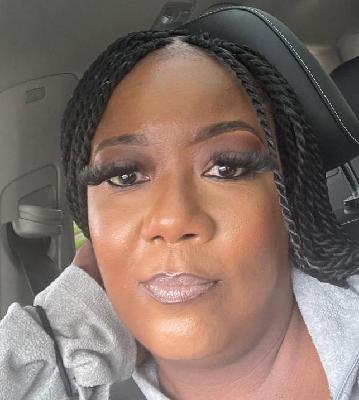
A mother to four daughters and two sons, Sonora Lynn Allen was a native of Lexington, Kentucky, who was navigating a difficult period in her life. The 29-year-old woman was battling a drug addiction, a struggle that made her vulnerable. In early August 2002, she met with family on Fourth Street in her hometown. Just days later, in the pre-dawn hours of August 15, 2002, a discovery in a commercial parking lot on Fortune Drive brought her story to a tragic end.
Sonora’s body was found, left in the lot hours after she was killed.
An autopsy revealed that Sonora had been either strangled or suffocated, though her body showed no obvious external wounds. Investigators noted that her clothing was in disarray, suggesting a possible sexual assault. The initial cause of death was uncertain, with toxic levels of cocaine in her system complicating the determination. However, detectives treated it as a suspicious death from the outset, and the medical examiner ultimately ruled it a homicide by strangulation. A sexual assault kit performed during the autopsy yielded a DNA sample from an unknown male, a critical piece of evidence in a case that would soon grow cold.
For years, Sonora’s case remained unsolved. Investigators in Lexington pursued various leads, even identifying a person of interest, but the DNA evidence cleared him. The crucial break came when the DNA sample from Sonora's case was entered into the Combined DNA Index System (CODIS). The database revealed a match, not to a known individual, but to DNA found at the scene of another unsolved Lexington homicide from December 1999. The victim in that case was 48-year-old Dorris Ann Roberts, who had also been strangled. This link transformed the separate investigations into a hunt for a potential serial killer.
The search intensified in April 2006, when a third woman, 33-year-old Erica Butler, was found bound and strangled in her home. DNA from that scene matched the samples from both the Allen and Roberts cases. With the work of a dedicated task force and assistance from the FBI, Lexington police now knew they were looking for a single man responsible for three deaths. The killer was dubbed "The Lexington Serial Killer." Investigators released a composite sketch based on a witness description from the Butler murder, and the city was on high alert.
The perpetrator was finally unmasked through a methodical expansion of DNA testing. While the killer’s DNA was not in the national database of offenders, a grant allowed police to process a backlog of old, untested sexual assault kits. One of these kits was from the 1993 rape of an 83-year-old retired schoolteacher. The DNA from that cold case matched the profile of the serial killer. The 1993 case file contained the name of a suspect who had been arrested for a different sexual assault in 1998 but was acquitted at trial: Robert Franklin Smallwood Jr.
At the time of this breakthrough in August 2006, Smallwood was already in prison for violating probation on a drug charge. His DNA was taken, and it matched the samples from all three murder scenes and the 1993 rape. In September 2006, Robert Franklin Smallwood Jr., a married father, was charged with the murders of Sonora Lynn Allen, Dorris Ann Roberts, and Erica Butler. Police described the victims as leading "a high-risk lifestyle," which had made them susceptible to Smallwood's predation.
Faced with overwhelming evidence and the possibility of a death sentence, Robert Smallwood Jr. pleaded guilty in 2007. He was convicted on three counts of murder, as well as charges of first-degree rape, sodomy, robbery, and burglary. He was sentenced to life in prison without the possibility of parole, ensuring he would never harm another person. The resolution brought an end to a years-long reign of terror and delivered justice for Sonora and the other women whose lives he had stolen.