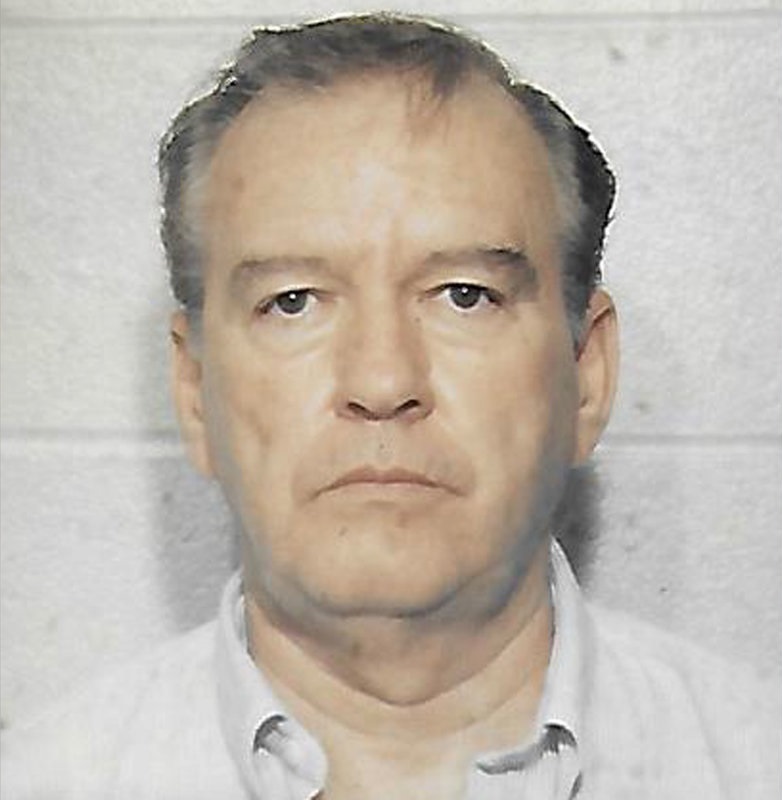
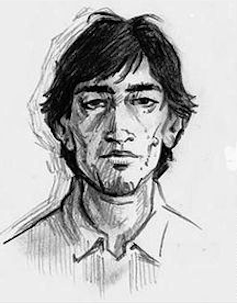
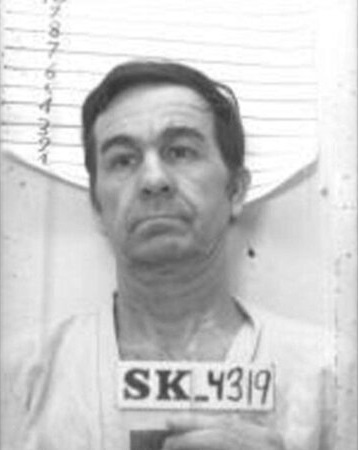
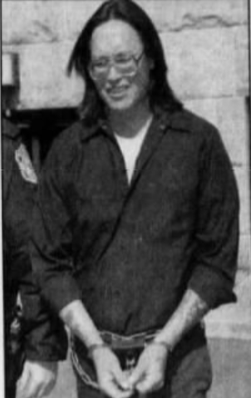
Jack Wayne Reeves: The Murderer Whose Wives Died or Disappeared
Background and Military Career
Jack Wayne Reeves was born on June 20, 1940, in Wichita Falls, Texas. He spent much of his adult life in the United States Army, eventually attaining the rank of master sergeant before retiring in 1985. Outwardly, Reeves appeared to be a disciplined career serviceman and family provider. Behind that public image, however, was a history of violence and a succession of marriages that repeatedly ended in death, disappearance, or suspicion.
Reeves married several times, including marriages to women he met while stationed overseas or contacted through an international matchmaking service. Two of his wives were ultimately proven to have been murdered by him. A third wife drowned under circumstances that members of her family considered highly suspicious. Reeves had also previously been convicted of manslaughter after killing a man while serving in Italy.
The 1967 Killing in Italy
In 1967, while Reeves was stationed in Italy with the Army, he killed a man during an altercation. Reeves was convicted of manslaughter and served approximately four months in confinement. Publicly available accounts provide limited identifying information about the victim, but the case established that Reeves had committed a fatal act of violence years before the deaths of his wives attracted the attention of Texas investigators.
After his release, Reeves returned to the United States with his second wife, Sharon DeLane Vaughn Reeves. The couple eventually lived in Copperas Cove, Texas, and had two sons. Their marriage deteriorated, and Sharon began taking steps to end it while Reeves was stationed outside the country.
Victims and Suspected Victims
- Unidentified male victim — 1967, Italy: Reeves killed a man while stationed in Italy and was convicted of manslaughter. He served approximately four months before returning to the United States.
- Sharon DeLane Vaughn Reeves — July 20, 1978, Copperas Cove, Texas: Reeves’ 34-year-old second wife was found dead from a single shotgun wound to her chest. Her death was initially classified as a suicide, but the case was reopened many years later. Investigators and forensic specialists concluded that the physical evidence was inconsistent with suicide, and Reeves was convicted of murdering her.
- Myong Hui Chong Reeves — July 28, 1986, Lake Whitney, Texas: Reeves’ third wife, a 29-year-old woman from South Korea, drowned at Lake Whitney. Her death was officially treated as accidental, but her family said she could not swim, feared water, and would not willingly have entered the lake. Bruising reportedly observed on her face caused further concern. Reeves was suspected but was never charged with her death.
- Emelita Villa Reeves — believed killed on or shortly after October 11, 1994, Arlington and Lake Whitney area, Texas: Reeves’ 26-year-old fourth wife was last seen alive in Arlington on October 11, 1994. Her skeletal remains were discovered in October 1995 in a shallow grave near Lake Whitney. Reeves was convicted of murdering her and received a 99-year prison sentence.
The Death of Sharon Reeves
Sharon Reeves had been married to Jack Reeves since 1961. By the late 1970s, the relationship was collapsing. While Reeves was stationed in South Korea, Sharon filed for divorce and began preparing for a life without him. On July 20, 1978, shortly after the marriage legally ended, Sharon was found dead inside her home in Copperas Cove.
She had suffered a single shotgun wound to the chest. At the time, investigators accepted the possibility that Sharon had positioned the weapon against herself and fired it. Her death was ruled a suicide, and the case remained closed for more than a decade. No complete homicide investigation was conducted at the scene, allowing evidence that might have exposed the killing earlier to be lost.
Suspicion returned to Sharon’s death after Emelita Reeves disappeared in 1994. Investigators exhumed Sharon’s remains and reconstructed the shooting. Prosecutors demonstrated that it would have been extremely difficult for Sharon to have held and fired the shotgun in the manner required by the original suicide theory. Forensic testimony also indicated that the condition and positioning of her body had been altered after the shooting.
A blood-pattern specialist concluded that Sharon had probably been wearing undergarments when she was shot, although her body was found unclothed. That evidence supported the prosecution’s argument that Reeves had staged the scene to make the death appear self-inflicted. The timing was also significant: Sharon had ended the marriage and was attempting to move forward independently when she was killed.
Reeves was indicted in March 1995 for Sharon’s murder. On January 3, 1996, a jury convicted him, rejecting the defense’s attempts to preserve the original suicide ruling. He received a 35-year prison sentence for the killing.
The Suspicious Drowning of Myong Hui Reeves
Reeves married Myong Hui Chong in South Korea on December 31, 1980. She later moved with him to Texas. On July 28, 1986, Myong died in a reported drowning at Lake Whitney. Reeves described the death as an accident, and authorities did not charge him.
Members of Myong’s family immediately found the circumstances troubling. They said she did not know how to swim and had a powerful fear of water. According to her relatives, she would not have voluntarily placed herself in a situation where she might fall or swim in a lake. Her sister also reported seeing bruises on Myong’s face and wanted a more complete investigation.
Despite those concerns, Reeves arranged for Myong’s body to be cremated. The cremation eliminated the possibility of later exhuming her remains for a modern forensic examination, as investigators had done with Sharon. When authorities began examining Reeves’ history after Emelita disappeared, Myong’s drowning became an important part of the pattern surrounding him. Nevertheless, the destruction of potential physical evidence and the original accidental-death ruling prevented prosecutors from building a murder case.
Marriage to Emelita Villa
After Myong’s death, Reeves sought another wife through Cherry Blossoms, an international matchmaking publication. He began corresponding with Emelita Villa, a young woman living in the Philippines. Reeves was approximately 28 years older than Emelita. They married in 1987, and she moved to Texas.
The relationship was marked by a major imbalance in age, money, and power. Reeves sent financial assistance to Emelita’s family, creating a sense of obligation that reportedly influenced her decision to marry him. When Emelita became pregnant, Reeves initially questioned whether the child was his and sent her back to the Philippines. After seeing a photograph of the baby, he accepted the child and brought Emelita back to Texas.
Friends later described Emelita as increasingly unhappy and fearful. She complained that Reeves was controlling and abusive. By October 1994, she was openly discussing leaving him. As had happened with Sharon, the possibility that a wife might end the relationship preceded her sudden death.
The Disappearance and Murder of Emelita Reeves
October 11, 1994, was the last day anyone other than Jack Reeves was known to have seen Emelita alive. She met friends for lunch at the Lotus Restaurant in Arlington and reportedly told them that she planned to divorce her husband. She discussed Reeves’ controlling behavior and indicated that she no longer intended to tolerate the marriage.
When Emelita disappeared, Reeves offered explanations suggesting that she had voluntarily left. He claimed that she might be staying with a female friend or had abandoned the family. Those who knew her were unconvinced. She had left behind personal possessions and had made no credible arrangements to disappear from the life of her young son.
A friend reported Emelita missing, and investigators began examining Reeves more closely. They soon learned that Sharon had died from a shotgun blast shortly after divorcing him and that Myong had drowned under questionable circumstances. The repeated pattern transformed Emelita’s disappearance from a missing-person investigation into a suspected homicide case.
In October 1995, approximately one year after Emelita vanished, a hunter discovered human skeletal remains in a shallow grave near Lake Whitney. The location was especially disturbing because it was in the same general area where Myong had drowned in 1986. The remains were identified as Emelita’s.
Because her body had been exposed to the elements for so long, medical examiners could not determine a precise cause of death. Prosecutors nevertheless assembled a circumstantial case showing that Reeves had motive, opportunity, and a history of violence toward wives who attempted to leave him. Evidence concerning his statements, his conduct after the disappearance, and the burial of Emelita’s body near Lake Whitney persuaded the jury that he was responsible.
Trials and Convictions
Reeves was first tried for Sharon’s murder. The prosecution relied heavily on forensic reconstruction of the shotgun wound and evidence that the death scene had been staged. His conviction on January 3, 1996, formally changed Sharon’s death from a supposed suicide into a proven murder.
Later that year, Reeves stood trial for killing Emelita. Although prosecutors could not tell the jury exactly how she died, they showed that she vanished immediately after announcing her intention to divorce Reeves and that her body had been secretly buried. On August 19, 1996, the jury found him guilty of murder. He received a 99-year prison sentence and a $10,000 fine.
Reeves appealed his convictions, challenging portions of the evidence and trial procedure. The murder judgments were upheld. His sentences were ordered to run concurrently, leaving the 99-year term as the controlling punishment.
A Pattern of Violence and Control
The crimes associated with Jack Wayne Reeves followed a recognizable pattern. His victims were closely connected to him, and the proven murders occurred when his wives were attempting to end their relationships with him. Sharon was killed after pursuing a divorce. Emelita disappeared after telling friends that she intended to leave. Myong’s unexplained drowning, while never prosecuted as murder, added another suspicious death to that pattern.
Reeves frequently presented himself as the unfortunate survivor of tragic events. For years, the original rulings of suicide and accidental drowning allowed that explanation to stand. It was only after Emelita vanished that investigators looked at the deaths collectively and recognized the repeated circumstances surrounding them.
The successful prosecution of Reeves demonstrated the importance of reopening older cases when new events reveal a pattern. Sharon’s exhumation and the forensic reexamination of her death corrected an erroneous suicide ruling nearly 18 years after she was killed. Emelita’s remains, though unable to reveal exactly how she died, connected Reeves to another concealed death and led to the sentence that kept him imprisoned.
Legacy of the Case
Jack Wayne Reeves is generally identified as a serial killer because he was convicted of murdering two wives in separate incidents many years apart and had previously killed a man in Italy. He was also suspected in the death of Myong Hui Reeves, although the evidence was insufficient to bring charges.
The case remains a grim example of intimate-partner violence concealed behind explanations of suicide, accident, and voluntary disappearance. Sharon, Myong, and Emelita were initially treated as separate tragedies. When investigators finally examined the entire history, the deaths revealed a continuing pattern involving control, threatened separation, violence, and attempts to avoid responsibility.