Lester Brockelhurst: The Crime Tourist
Overview
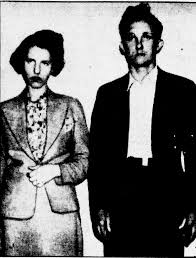
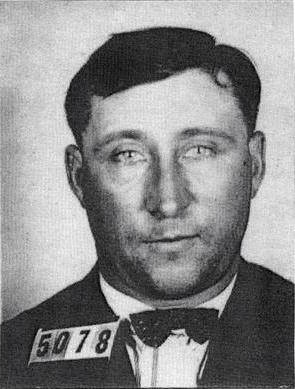
In the spring of 1937, as the Great Depression held the nation in its grip, a 23-year-old man from Illinois embarked on a brutal, six-week crime spree that shocked the American public. Lester Brockelhurst, a former Sunday school teacher with a seemingly devout background, transformed into a cold-blooded killer. Accompanied by his 18-year-old girlfriend, Bernice Felton, he cut a bloody path across three states, committing dozens of robberies to fund their travels. This violent journey earned him the press moniker "The Crime Tourist." The spree resulted in the murders of three men, each killed for their car or the contents of their pockets. The couple’s rampage came to an unceremonious end not in a dramatic shootout, but during a routine traffic stop in rural New York. Brockelhurst’s subsequent confession, trial, and execution unveiled a chilling narrative of a young man who traded piety for violence, claiming he did it all for the thrill of his companion.
Early Life and Background
Lester Warfel Brockelhurst Jr. was born on January 4, 1914, in Peoria, Illinois, into a respected family. His parents were devout members of the Reorganized Church of Jesus Christ of Latter Day Saints, and they raised their son within the strictures of their faith. Growing up in the small towns of Galesburg and Maquon, Illinois, Lester was seen as a model young man. He was active in his congregation, serving as a Sunday school teacher and president of the Young Men's Mutual Improvement Association. Those who knew him described him as quiet, intelligent, and deeply religious. After graduating from high school, he joined his father's painting and decorating business.
Beneath this placid surface, however, a capacity for crime was developing. In January 1935, following a dispute with his father over money, Brockelhurst left home, hitchhiked to Chicago, and committed an armed robbery at a candy shop. He was quickly apprehended, convicted, and sentenced to a term of one year to life in prison. During his incarceration, his girlfriend, Bernice Felton, wrote to him faithfully. Her father, a respected citizen, lobbied for Lester's release, and in March 1936, after serving just over a year at the Illinois State Penitentiary, Brockelhurst was granted parole. He returned home, but the quiet life no longer suited him. A year later, driven by what he would later describe as a desire for excitement and a need to impress Bernice, he chose to abandon his life and embark on a cross-country tour of robbery and murder.
The Murders
On March 29, 1937, Lester Brockelhurst and Bernice Felton left Maquon, telling their families they were eloping. Their "honeymoon" was, in fact, the beginning of a violent crime spree. Armed with a .32 caliber revolver, they set out with the goal of funding their travels through theft.
The first murder occurred just two days into their journey. On March 31, 1937, John Albin Theander, a 47-year-old tailor from Stillman Valley, Illinois, was driving to his job in Rockford. He was a married father of five and a respected member of his community. It is believed he picked up the young couple as they were hitchhiking. He was never seen alive again. Ten days later, on April 10, two boys riding their bicycles near Rockford discovered Theander’s body in a water-filled ditch. He had been shot once in the back of the head, execution-style. His wallet was empty, and his 1936 Chevrolet sedan was gone. Brockelhurst and Felton used Theander's car to drive southwest, continuing their string of robberies through Missouri and Oklahoma before arriving in Texas.
Their second murder took place in Fort Worth, Texas, on the night of April 28, 1937. The couple entered a tavern with the intent to rob it. During the hold-up, they accosted a female patron. The tavern's owner, 35-year-old Jack Griffith, attempted to intervene and protect his customer. Without hesitation, Brockelhurst shot Griffith, killing him instantly. The couple fled the scene, abandoning Theander’s blood-stained Chevrolet in Dallas and continuing their journey on foot.
Now hitchhiking again, they traveled east into Arkansas. On May 6, 1937, near the town of Lonoke, they were offered a ride by Victor A. Gates, a 50-year-old plantation owner and prominent citizen from Little Rock. Gates was driving his new Dodge sedan when he spotted the couple on the side of the road and generously stopped to help. It was a fatal mistake. Just as he had with his first victim, Brockelhurst forced Gates to pull over, marched him to a ditch, and shot him in the back of the head. After taking his money and valuables, the pair dumped his body and drove away in his car. This final murder would be the one that sent Brockelhurst to the electric chair.
The Victims
- John Albin Theander, 47 — March 31, 1937, near Rockford, Illinois. A hardworking tailor and devoted father of five children, he was abducted and murdered for his car and wallet while on his way to work.
- Jack Griffith, 35 — April 28, 1937, Fort Worth, Texas. A tavern owner, he was shot and killed while bravely trying to defend a patron during a robbery committed by Brockelhurst and Felton.
- Victor A. Gates, 50 — May 6, 1937, near Lonoke, Arkansas. A wealthy and well-regarded landowner from Little Rock, he was murdered after showing kindness to the hitchhiking couple by offering them a ride in his new car.
Investigation and Capture
The series of murders and robberies across state lines quickly became a federal case, drawing the attention of J. Edgar Hoover's FBI. After the murder of Jack Griffith in Fort Worth, police recovered John Theander's abandoned Chevrolet in Dallas. Inside the vehicle, investigators found items, including a photograph, that helped them identify Lester Brockelhurst and Bernice Felton as the primary suspects. A nationwide alert was issued for the couple, who were now driving Victor Gates' stolen Dodge.
The manhunt for "The Crime Tourist" and his "girl bandit" came to a surprisingly mundane end on May 13, 1937, in Dutchess County, New York, nearly 1,500 miles from their last murder. New York State Trooper Joseph Hunt was on patrol when he noticed a Dodge sedan with a missing rear license plate. He pulled the vehicle over. Behind the wheel was Lester Brockelhurst, with Bernice Felton in the passenger seat. As Trooper Hunt questioned them, he spotted a fully loaded .32 caliber revolver tucked between the front seats. He immediately took them into custody.
At the police station, the couple initially gave false names. However, under interrogation, Brockelhurst’s composure cracked. He not only confessed his real identity but also admitted to the entire six-week crime spree, including at least 40 armed robberies and the three murders in Illinois, Texas, and Arkansas. He calmly recounted the details of each killing, claiming he committed the crimes to get money and to provide "thrills" for Bernice. Ballistics tests would later confirm that the revolver found in the car was the weapon used to murder Victor Gates.
Trial and Sentence
With confessions and evidence linking Brockelhurst to murders in three states, authorities had to decide where to prosecute him first. They chose Arkansas, believing the case against him for the murder of Victor A. Gates was the strongest. Brockelhurst was extradited to Lonoke to stand trial.
The trial began on June 23, 1937, and became a media sensation. Brockelhurst’s defense attorneys argued that he was not guilty by reason of insanity, claiming that a head injury from a childhood fall had left him mentally unsound. However, a court-ordered evaluation at the Arkansas State Hospital for Nervous Diseases concluded that he was sane and fit to stand trial.
The prosecution’s case was sealed when Bernice Felton agreed to become the star witness against her former lover. She took the stand and provided a damning, detailed account of their journey and the cold-blooded murder of Victor Gates. After her testimony, the jury needed only 22 minutes of deliberation to find Lester Brockelhurst guilty of first-degree murder and sentence him to death by electrocution. Upon hearing the verdict, both Brockelhurst and his father, who had traveled from Illinois to support him, fainted in the courtroom and had to be carried out.
The very next day, Bernice Felton’s trial for the murder of Victor Gates began in the same courtroom. Her defense team portrayed her as a terrified teenager held captive by a monstrous killer, a victim who was forced to participate in the crimes under threat of her own life. Despite her active role in the robberies, the jury was swayed. After deliberating for only 80 minutes, they acquitted her of the murder charge. The verdict was met with public disbelief and outrage. Although she escaped the murder conviction, federal authorities later charged her with transporting a stolen vehicle across state lines. She was found guilty and sentenced to five years in a federal reformatory for women.
Execution
Lester Brockelhurst was sent to the Tucker Unit prison farm in Arkansas to await his execution. His legal team filed a series of appeals, which were all denied, with the Arkansas Supreme Court upholding his conviction and sentence. A final, last-ditch petition to the governor, claiming again that Brockelhurst was mentally ill, was also rejected.
In his final days, Brockelhurst expressed no remorse for his victims. Instead, he fixated on Bernice Felton, writing bitter letters in which he blamed her for his downfall. He claimed their "slight love affair" was the sole reason he was facing death.
On the evening of March 18, 1938, 24-year-old Lester Brockelhurst was led to the electric chair, nicknamed "Old Sparky." Before the switch was thrown, he delivered a rambling 12-minute final statement, not of apology, but of accusation. He once again blamed Felton, insisting she was as guilty as he was. His reported last words were: “The only thing that brought me down to this was a slight love affair with a girl. I don't want her to get the chair, but she is just as guilty as I.” He was pronounced dead moments later. His body was returned to Illinois and buried in Maquon Cemetery.
Aftermath and Legacy
The case of the "Crime Tourist" was a sensation in the late 1930s, a dark tale that stood out even in an era famous for its celebrity outlaws. The narrative of a clean-cut, religious young man turning into a remorseless serial killer captivated and horrified the public. It was a story that seemed to speak to the hidden desperation and moral decay of the Great Depression. The press followed every twist, from the cross-country manhunt to the dramatic courtroom scenes and the controversial acquittal of Bernice Felton.
Felton’s role in the crimes and her subsequent acquittal remained a subject of intense debate for years. Many were convinced that she was a willing participant, a modern-day "gun moll," and that her youth and gender had unfairly influenced the jury. After serving her federal sentence, she was released, changed her name, and disappeared from public view.
Lester Brockelhurst's short and brutal rampage left an indelible scar across the American landscape. For the families of John Theander, Jack Griffith, and Victor Gates, the spree brought unimaginable grief. For the nation, it was a chilling reminder of the potential for sudden, random violence on its open roads, turning a simple act of kindness—like offering a ride to a young couple—into a deadly gamble. The story of the Sunday school teacher turned killer serves as a disturbing chapter in the annals of American true crime.