Darrell Keith Rich: The Hilltop Rapist and Serial Killer
Overview
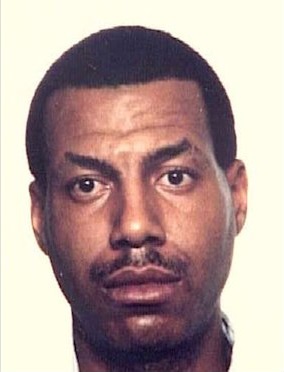
Darrell Keith Rich was an American serial killer and serial rapist whose violent crime spree terrorized communities in Northern California during the summer of 1978. Operating primarily in Shasta County, Rich abducted and sexually assaulted women and girls before releasing some and murdering others. His attacks were concentrated within approximately two months, demonstrating a rapid escalation from brutal assaults to calculated killings intended to prevent his victims from identifying him.
Rich was convicted of murdering four victims: Annette Fay Edwards, Patricia Ann Moore, Linda Diane Slavik, and 11-year-old Annette Lynn Selix. He also committed numerous sexual assaults against surviving victims whose identities were generally withheld to protect their privacy. The women and girls he targeted ranged in age from 11 to 26. Rich used isolation, physical strength, threats, blunt-force violence, strangulation, a firearm, and the remote landscape surrounding Redding and Cottonwood to control his victims and conceal his crimes.
Escalating Violence During the Summer of 1978
Rich's known series of attacks began on June 13, 1978, when he abducted a 25-year-old woman near a bridge in Redding. He forced her down a hillside and attempted to make her perform a sexual act. When she resisted, he repeatedly struck her in the head, fracturing her skull, and abandoned her in the belief that she would die. She survived after being discovered approximately twelve hours later.
On June 19, Rich abducted a 21-year-old woman, forced her into his vehicle, and drove her to an isolated location, where he raped her. She reportedly persuaded him to release her by telling him that she had an infant who needed her. On June 25, he kidnapped and raped a 14-year-old girl before allowing her to leave. These surviving victims later became important witnesses to the pattern of abduction and sexual violence that preceded the murders.
Rich's conduct became deadly in July. He attacked two women in separate incidents on July 4, 1978. One survived a sexual assault. The second, 19-year-old Annette Fay Edwards, was abducted while returning from an Independence Day fireworks event in Redding. Her body was found three days later, approximately two miles from her apartment, down an embankment beside a county road. She had suffered devastating injuries to her face and skull from blunt-force blows.
Approximately two weeks later, Rich abducted a 15-year-old girl who had been riding her bicycle in Redding. He raped her but released her. By this time, his attacks showed a recognizable method: he approached victims in public or semi-public places, transported or forced them into isolated terrain, sexually assaulted them, and then decided whether to release or kill them.
Known Murder Victims
- Annette Fay Edwards, 19 — July 4, 1978 — Redding, California: Edwards was abducted after attending an Independence Day fireworks display. Rich sexually assaulted her and inflicted fatal blunt-force injuries to her head and face. Her body was discovered on July 7, about 75 feet down an embankment along a county road approximately two miles from her apartment. An autopsy determined that she died from basal skull fractures caused by tremendous blunt force.
- Patricia Ann Moore, 17 — August 2, 1978 — Redding and the Igo area, Shasta County, California: Moore disappeared from a motel in Redding. Rich drove her to a remote location, raped her, strangled her, and repeatedly struck her head with a heavy object believed to have been a rock. Her nude body was found more than two weeks later at the Igo dump. Several of her teeth were broken, and part of her skull had been crushed. Her death was attributed to shock and blood loss caused by severe blunt-force head injuries.
- Linda Diane Slavik, 26 — August 6, 1978 — Chico, Cottonwood, and the Igo area, California: Slavik disappeared after visiting a bar in Chico. Rich transported her to his residence in Cottonwood and sexually assaulted her. He then drove her to the remote dumping area where Patricia Moore's body had been left. Rich showed Slavik Moore's body before killing her. Slavik was shot twice with a .22-caliber firearm, once in the neck and once through her open mouth. The second bullet severed her spinal column and caused her immediate death. Her body was later found approximately 20 feet from Moore's remains.
- Annette Lynn Selix, 11 — August 13, 1978 — Cottonwood and Johns Creek Bridge, Shasta County, California: Selix was a child whose family was acquainted with Rich. He abducted her while she was walking to a market to purchase groceries and took her to his Cottonwood residence. After sexually assaulting her, Rich drove her roughly 30 miles to Johns Creek Bridge and threw her approximately 105 feet onto the rocks below. Medical evidence established that she was alive during the fall and survived briefly after striking the ground.
Discovery of the Bodies and Investigation
The discovery of Patricia Moore and Linda Slavik near one another at the Igo dump connected two previously separate missing-person investigations. Their placement in the same remote area suggested that the same offender had selected the location as a place to commit or conceal violent crimes. The victims had suffered different fatal injuries, but both had been abducted, sexually assaulted, transported, and deliberately killed.
On August 20, 1978, three days before his arrest, Rich told a friend that he had discovered a body. The friend contacted law-enforcement officers, who began questioning Rich about how he knew where the remains were located. Rich agreed to take a polygraph examination and failed it, increasing investigators' suspicions that he possessed knowledge only the killer would be expected to have.
Rich then made additional statements to acquaintances. He claimed that he had been paid $7,000 to kill one of the women and described another victim as having been in the wrong place at the wrong time. Those statements were reported to authorities and contributed to his arrest on August 23, 1978. During the investigation, Rich provided officers with information about the crimes, surrendered the firearm associated with one of the killings, and confessed to multiple murders and sexual assaults.
Trial and Convictions
Rich was prosecuted for a large collection of offenses arising from his 1978 rampage. The charges included four murders, kidnappings, forcible rapes, forced oral copulation, sodomy, assault with intent to commit rape, attempted sexual assault, and assault with a deadly weapon. Because extensive publicity surrounded the case in Shasta County, the proceedings were eventually transferred to Yolo County.
In December 1980, a jury found Rich guilty of the four murders and 15 additional criminal counts. Three murder convictions were returned as first-degree murder, while one was classified as second-degree murder. The jury also found special circumstances connected to multiple murders and the sexual assault of a child younger than 14. Rich was found legally sane at the time he committed the offenses.
For one first-degree murder, Rich received life imprisonment without the possibility of parole. The jury imposed death sentences for two other first-degree murders. His formal sentencing took place on January 23, 1981. The California Supreme Court affirmed the judgment on June 30, 1988, although it corrected portions of the multiple-murder special-circumstance findings.
Background and Pattern of Criminal Behavior
Rich had displayed violent behavior before the 1978 crimes. He was first arrested at 17 for assault with a deadly weapon and was later committed to the California Youth Authority. Records described his conduct as progressively violent beginning in adolescence. He was also reported to have consumed alcohol heavily from his teenage years until his arrest.
The crimes committed during 1978 reflected more than spontaneous violence. Rich repeatedly searched for vulnerable victims, moved them to secluded locations, and used extreme force to overcome resistance. His decision to release some victims while murdering others appeared to depend on circumstance and his fear of identification. The short intervals between attacks showed that he was becoming increasingly confident and dangerous until his statements to friends drew police attention.
Appeals and Execution
Rich remained on California's death row for more than 19 years while his convictions and sentence were reviewed in state and federal courts. His attorneys raised claims involving publicity, jury selection, legal representation, courtroom procedures, and other aspects of the prosecution. The courts ultimately rejected the arguments that would have overturned his death sentence.
Relatives of the murdered victims and several surviving assault victims strongly opposed clemency. They described years of grief, fear, nightmares, and frustration caused both by Rich's crimes and by the long delay between sentencing and execution. California Governor Gray Davis denied Rich's request for clemency shortly before the scheduled execution.
Darrell Keith Rich was executed by lethal injection at San Quentin State Prison on March 15, 2000. The procedure began at 12:06 a.m., and he was pronounced dead at 12:13 a.m. He was 45 years old. His final recorded word was 'Peace'.