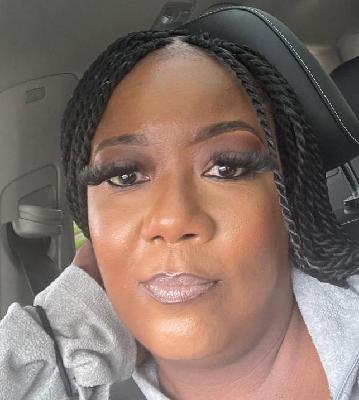
Erica C. Butler was a 33-year-old woman whose life was tragically cut short in her own home in Lexington, Kentucky. On April 6, 2006, she became the final victim of a man who had been preying on women in the city for years. Her death would be the key to finally bringing his violent spree to an end and securing justice for all his victims.
On that Thursday in April, Robert Franklin Smallwood Jr. broke into Erica’s residence on Kenton Street. Inside the home, he bound and strangled her.
Unlike his previous murders, there were witnesses to the events surrounding Erica's death, who were later able to provide investigators with a description of the man they saw. This information was crucial in developing a composite sketch of the suspect, which was circulated publicly as fear began to grip the community.
The investigation into Erica’s homicide soon connected with two other unsolved murders in Lexington. The first was the death of 48-year-old Dorris Ann Roberts in December 1999, and the second was 29-year-old Sonora Lynn Allen in August 2002. By August 2006, detectives received a major breakthrough when DNA evidence from all three crime scenes pointed to a single, unknown male suspect. Lexington police, with assistance from the FBI, intensified their search for what they then termed the city's first identified serial killer.
Authorities noted that the three women, including Erica, had lived what they described as a "high-risk lifestyle," which sometimes involved drug use or prostitution. According to court records, Erica had previous charges related to prostitution and drugs. Regardless of their circumstances, these women were victims of a predator who targeted the vulnerable.
The DNA profile eventually led investigators to Robert Franklin Smallwood Jr., who was already in jail for a probation violation related to a drug conviction. In September 2006, he was charged with the murders of Erica, Dorris, and Sonora. Smallwood’s violent history also included the 1993 rape of an 83-year-old retired schoolteacher, which was also linked to him through DNA. He had been acquitted of a different sexual assault in 1999 after his defense argued the victim, a prostitute, had consented.
The case against Smallwood for the murder of Erica Butler was particularly strong. In addition to the DNA evidence and witness testimony, the crime carried the legal weight of being a capital offense. Because he had committed both rape and murder, prosecutors could seek the death penalty. Faced with the possibility of execution, Smallwood chose to accept a plea deal in 2007. He pleaded guilty to three counts of murder, two counts of first-degree rape, and charges of sodomy, robbery, and burglary. Robert Franklin Smallwood Jr. was sentenced to life in prison without the possibility of parole, ensuring he would never harm another person.