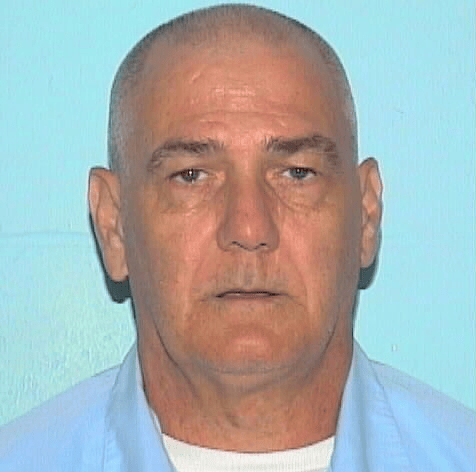
Wayne Adam Ford: The California Serial Killer Who Turned Himself In
Wayne Adam Ford is an American serial killer and former long-haul truck driver who murdered four women in California during 1997 and 1998. His case became especially notorious because the killings occurred across several counties, some victims were dismembered, and Ford ultimately walked into a sheriff's office and confessed. On November 3, 1998, he arrived at the Humboldt County Sheriff's Office accompanied by his brother and carrying a severed body part belonging to his most recent victim. Investigators soon connected his statements to several previously unsolved homicides scattered across California.
Background
Ford was born on December 3, 1961, in Petaluma, California. He later joined the United States Marine Corps and served for several years before leaving the service in 1985. In 1980, he had suffered a serious head injury after being struck by a vehicle and spent days in a coma. Relatives later described behavioral changes after the accident, and Ford experienced psychological difficulties during his adult life. These issues became part of the defense presentation at his murder trial, although they did not excuse or legally justify his crimes.
By the late 1990s, Ford was living in the Arcata area of Northern California and working as a long-haul truck driver. His occupation allowed him to travel enormous distances and spend long periods away from home. Prosecutors argued that he used this mobility to approach vulnerable women, particularly sex workers and hitchhikers, and that his truck sometimes became part of the crime scene.
The Pattern of the Murders
Ford's four confirmed murders occurred between the fall of 1997 and the fall of 1998. The victims were encountered in different parts of California and Nevada, but the cases contained striking similarities. Ford picked up women while traveling, engaged in sexual activity with them, and used strangulation or other violence. Several victims were subsequently mutilated or dismembered. He disposed of remains in waterways or isolated locations, including sloughs, irrigation canals and sections of the California Aqueduct.
Ford later claimed that some of the deaths happened accidentally during sexual activity involving choking. Prosecutors rejected that account. At his trial, they argued that the repeated violence, restraint, strangulation, mutilation and concealment of bodies showed deliberate killings rather than a series of accidents. Two victims were conclusively determined to have died from strangulation, while decomposition and dismemberment made an exact medical determination impossible in other cases.
Confirmed Victims
The exact date of death cannot be established with certainty for every victim. Where contemporary investigative records did not establish a precise death date, the confirmed date on which the remains were discovered is given rather than presenting an uncertain date as fact.
- Kerry Ann Cummings - born 1972, approximately 25 years old. Cummings was Ford's first confirmed victim. Her exact date of death is not known, but she was killed in 1997. In October 1997, a person discovered a dismembered female torso in Ryan Slough, north of Eureka in Humboldt County, California. Additional remains belonging to the same woman were recovered at Clam Beach in January 1998, and investigators later located further remains after Ford confessed. Ford admitted killing and dismembering the woman, but for more than 25 years authorities did not know her name. She was known as Humboldt County Jane Doe. In June 2023, investigators using forensic genetic genealogy finally identified her as Kerry Ann Cummings. Her family had last been in contact with her during 1997, when she had been staying in the Eugene, Oregon, area.
- Tina Renee Gibbs - 26 years old. Gibbs was from Las Vegas, Nevada. Ford told investigators that he picked her up on Tropicana Boulevard in Las Vegas. Contemporary investigators stated that Ford could not provide them with a reliable exact date or location of her death, so reports that assign a specific May 1998 death date should not be treated as certain. Her body was discovered on June 2, 1998, in the California Aqueduct near Buttonwillow in Kern County, California. An autopsy determined that Gibbs had been strangled. Ford told investigators that he had transported her body in his truck before disposing of it in the aqueduct.
- Lanett Deyon White - 25 years old. White was associated with Fontana, California, and was encountered by Ford near an Ontario-area truck stop. Her exact time of death could not be medically established. Her decomposed body was discovered on September 25, 1998, floating in an irrigation canal near Lodi in San Joaquin County. Because of the condition of her remains, the precise cause of death was officially undetermined, although authorities classified the death as a homicide. Ford admitted responsibility and told investigators that White had died in San Bernardino County before he transported her body over a considerable distance and eventually discarded it near Lodi.
- Patricia Ann Tamez - 29 years old. Tamez lived in the Hesperia area of San Bernardino County. Ford told investigators that he encountered her near a convenience store in the Victorville area. Her exact date of death was not firmly established in contemporary reporting, but her body was discovered on October 23, 1998, in the California Aqueduct near Hesperia. Investigators determined that she had been strangled, and her body had also been mutilated. Ford removed one of her breasts after her death. Eleven days after the discovery of Tamez's body, he carried that body part with him when he surrendered to authorities on November 3, 1998.
The Discovery of a Serial Murder Case
Before Ford confessed, the four cases appeared to investigators in different parts of California as separate and difficult homicides. Cummings's unidentified remains were in Humboldt County. Gibbs was found hundreds of miles south in Kern County. White was discovered in an irrigation canal in San Joaquin County, while Tamez was found in San Bernardino County. The widespread geography made a connection difficult to recognize.
The common pattern became clear only after Ford began describing the victims. He knew details about the locations and circumstances that investigators could compare with their unsolved cases. His confession caused law enforcement agencies in several counties to exchange information and review other unresolved murders along highways and trucking routes he had traveled.
Ford's Surrender
The killings ended in an unusual manner. In early November 1998, Ford contacted his older brother, Calvin Rodney Ford, and indicated that he had seriously hurt people. His brother eventually persuaded him to go to the police. On November 3, the two men entered the Humboldt County Sheriff's Office in Eureka.
Ford was carrying the severed breast of Patricia Tamez in a plastic bag inside his clothing. The physical evidence immediately demonstrated that his statements had to be taken seriously. During subsequent questioning, Ford provided information connecting himself with four homicides. His brother continued urging him to cooperate with investigators, and Ford eventually made extensive admissions concerning the murders.
Searches following the confession produced additional evidence. Investigators examined Ford's vehicles and living areas and found human remains connected with the previously unidentified Humboldt County victim. Ford also described transporting bodies in his truck and disposing of victims in waterways as he traveled through California.
Investigation and Trial
Because the murders occurred in several California counties, Ford's prosecution became unusually complicated. The cases were eventually consolidated so that he could be tried for all four killings in San Bernardino County. Years of legal proceedings followed, including disputes concerning the admissibility of some of Ford's statements to investigators.
The murder trial began in March 2006. Prosecutors presented Ford as a deliberate sexual killer who repeatedly selected vulnerable women, restrained or assaulted them, strangled them and then concealed or mutilated their bodies. The prosecution also introduced physical and DNA evidence linking Ford to the killings.
The defense did not argue that the women were alive or that someone else had committed all four killings. Instead, Ford's attorneys focused heavily on his psychological condition and challenged the prosecution's claim of deliberate premeditation. They argued for convictions less serious than first-degree murder and emphasized Ford's history of psychological problems as well as the fact that he had voluntarily surrendered.
Conviction and Death Penalty
On June 27, 2006, a San Bernardino County jury found Wayne Adam Ford guilty of four counts of first-degree murder. The jury also found the multiple-murder special circumstance to be true, making him eligible for California's death penalty.
During the penalty phase, relatives of the victims described the lasting effects of the murders on their families. Ford's defense emphasized that he had eventually stopped himself by contacting his brother and surrendering rather than continuing to kill. Prosecutors argued that the brutality and repetition of the crimes outweighed that decision. In August 2006, the jury recommended a death sentence. Ford subsequently received a formal sentence of death.
A Victim Finally Regains Her Name
One major part of the case remained unresolved long after Ford's conviction. Investigators knew that the dismembered woman found at Ryan Slough had been murdered by Ford, but they did not know who she was. Traditional fingerprint comparisons, missing-person searches and DNA databases failed to identify her.
That changed more than two decades later. Humboldt County investigators reopened the identification effort and used newer DNA techniques and forensic genetic genealogy. Investigators developed family connections from the unidentified woman's DNA and eventually located relatives who had been searching for a missing family member. A DNA sample from her sister confirmed the identification in 2023: the woman known for decades only as a Jane Doe was Kerry Ann Cummings.
The identification added an important human dimension to a case in which the condition of the victims' bodies had often overshadowed their identities. Ford's confirmed victims were Kerry Ann Cummings, Tina Renee Gibbs, Lanett Deyon White and Patricia Ann Tamez. They were four individual women whose deaths occurred across a large geographical area but were ultimately connected through Ford's confession, forensic evidence and years of investigative work.