Ronnie Dontell Drane: Four Murders, Witness Elimination and a Multistate Manhunt
Background
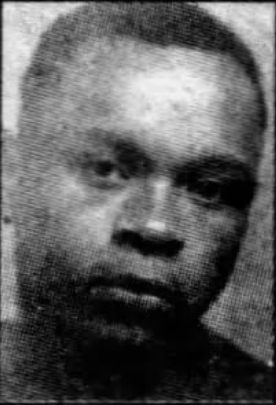
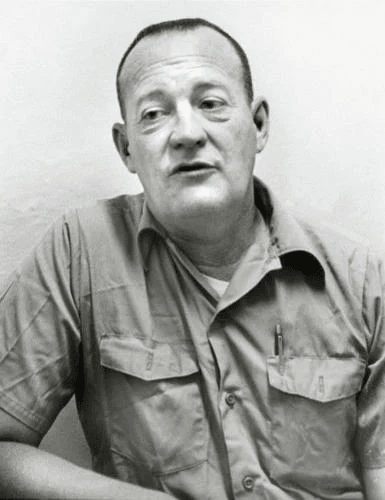
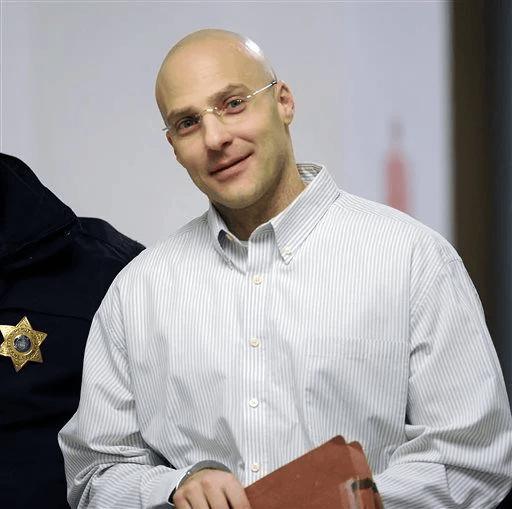
Ronnie Dontell Drane, also known as Ronnie Patterson, is an American murderer associated with a series of killings in Indiana and Kentucky between 2002 and 2003. Four homicides are supported by court records and subsequent convictions or criminal proceedings: Tomorra "Precious" Taylor, Larry Peaches Jr., Delores Buchanan and Herman Buchanan. The crimes were not identical in motive or method. Taylor was raped and strangled, while the later victims were shot. What connects the cases is Drane himself and an escalating pattern of violence that eventually included the deliberate targeting of a surviving witness to earlier murders.
Drane's crimes drew the attention of local police departments, state prosecutors and federal fugitive investigators. By the time he was captured in 2004, authorities in Indiana and Kentucky were seeking him in connection with multiple murders, attempted murder and other violent offenses. The U.S. Marshals Service eventually placed him on its 15 Most Wanted fugitives list, and his case received national exposure during the hunt for him.
The Murder of Tomorra "Precious" Taylor
Drane's first confirmed murder occurred during the night of May 27 into May 28, 2002, in Gary, Indiana. Twenty-five-year-old Tomorra "Precious" Taylor spent much of May 27 visiting friends and relatives with her cousin Adrian Ross. During the day, Taylor made telephone calls to Drane, and later that evening she arranged to meet him. Her final documented telephone conversation with Drane occurred at approximately 9:47 p.m., after which she left her foster mother's residence alone.
Later that night, an off-duty Gary police corporal noticed a gray or silver minivan parked near the barbecue shelters at M.C. Bennett Park. The vehicle attracted his attention because the park was closed after sunset. When he passed the area again two or three hours later, what appeared to be the same van was still there. At approximately 9:00 the following morning, May 28, a man collecting cans in the park discovered Taylor's body inside a shelter near the area where the minivan had been seen.
Taylor had suffered numerous injuries. Court records described injuries to her lip, ear, jaw and back, a fractured bone in her neck and substantial bruising. The coroner determined that she had died from strangulation. The condition in which Taylor was found also became important evidence in the prosecution's allegation that she had been sexually assaulted during the killing.
Investigators reconstructed Taylor's final hours through telephone records. Their investigation led them to a residence associated with Tiffany Copeland, with whom Drane was living. Drane was using a cellular telephone registered in Copeland's name, and a silver minivan connected to Copeland was also investigated because witnesses believed it resembled the vehicle seen shortly before Taylor disappeared and later at the park.
DNA testing provided another major element of the case. Biological material recovered from Taylor could not exclude Drane as a contributor. Drane ultimately admitted that he had engaged in sexual intercourse with Taylor during the night she was killed, although he maintained that the encounter was consensual and claimed she left afterward. Prosecutors rejected his explanation and argued that the physical evidence, telephone evidence, eyewitness testimony and circumstances surrounding Taylor's discovery demonstrated that Drane had raped and murdered her.
The October 12, 2002 Gary Shootings
Less than five months after Taylor's killing, Drane was involved in another deadly episode, this time at a residence in Gary on October 12, 2002. Simeon Bradley and Larry Peaches Jr. had traveled from Indianapolis to Gary to visit Herman Buchanan. They met Buchanan at the home of his mother, Delores Buchanan. Drane arrived at the house later that evening.
According to the evidence later summarized by the Indiana Court of Appeals, Drane spoke to Peaches about obtaining cocaine. He then went into a bathroom. Minutes later, he emerged armed with a handgun and began firing. Herman Buchanan was shot in the jaw. Drane then turned his weapon toward Larry Peaches Jr. and shot him, inflicting fatal wounds.
Herman Buchanan and Simeon Bradley escaped through the rear of the house. Additional gunfire was heard after they fled. When law enforcement officers arrived, Larry Peaches Jr. was found mortally wounded near the front of the residence. Delores Buchanan was located dead inside a bedroom closet. Autopsies determined that both Peaches and Delores Buchanan had died from multiple gunshot wounds.
The October attack left Herman Buchanan alive but wounded, and his survival became crucial. He was not simply another person who had been present at the scene; he could identify Drane as the shooter. That fact would place Buchanan in extraordinary danger during the months that followed.
The Attempt to Kill a Surviving Witness
About a week after the October shootings, Herman Buchanan left Gary and relocated to Kentucky. Simeon Bradley also eventually moved to Kentucky, and the two lived together in Frankfort. The move did not end the threat against Buchanan.
Evidence introduced in Drane's later Indiana prosecution described an organized attempt to kill Buchanan because he was a witness against Drane. In early 2003, Claude Fisher and Drane's father, Ricky Drane, traveled to Kentucky, where they met Ronnie Drane. The group obtained weapons and used a woman to arrange a meeting with Buchanan at a strip club.
Testimony indicated that the purpose of the encounter was to shoot Buchanan because of his status as a witness in the Indiana case. When Buchanan arrived, Fisher fired his weapon into the ground in Buchanan's direction. Ricky Drane drew and aimed his gun but did not fire. Buchanan managed to retreat into the club, and the attempted killing failed.
The incident demonstrated how far the effort to silence Buchanan had progressed. Instead of abandoning the plan after the failed attempt, Drane remained a threat to the witness. Within a short period of time, Buchanan would be dead.
The Murder of Herman Buchanan
On March 7, 2003, Herman Buchanan returned to the Frankfort apartment he shared with Simeon Bradley. Bradley heard Buchanan speaking to someone outside and heard words to the effect that the person did not have to do what he was about to do. When Bradley looked outside, he saw Drane.
Drane pointed his handgun toward Bradley and began firing. Bradley retreated into the apartment and locked the door. He then witnessed Drane turn his attack on Buchanan, shooting him repeatedly as Buchanan attempted to escape. After Drane fled, Bradley came back outside and found Buchanan bleeding from gunshot wounds. Police arrived within minutes, but Buchanan was already dead.
The killing had a particularly significant connection to the earlier murders. Buchanan had survived the October 12, 2002 attack in Gary and could testify about what had happened. Evidence of the unsuccessful earlier effort to kill him and his subsequent murder was later admitted during Drane's Indiana prosecution as evidence relevant to an attempt to eliminate a witness and suppress evidence.
Confirmed Victims
- Tomorra "Precious" Taylor, 25 - Killed during the night of May 27-28, 2002; her body was discovered on May 28, 2002, at M.C. Bennett Park in Gary, Indiana. She had suffered multiple injuries and died from strangulation. Drane was convicted of her rape and murder.
- Larry Peaches Jr., 27 - Died October 12, 2002, in Gary, Indiana. Drane opened fire inside Delores Buchanan's residence and fatally shot Peaches. An autopsy determined that Peaches died from multiple gunshot wounds.
- Delores Buchanan, 50 - Died October 12, 2002, in Gary, Indiana. She was found dead inside a bedroom closet following the same shooting that killed Larry Peaches Jr. She also died from multiple gunshot wounds.
- Herman Buchanan, 31 - Died March 7, 2003, in Frankfort, Kentucky. Buchanan had survived Drane's October 2002 shooting and was a witness in the Indiana case. After an earlier attempt to have him killed failed, Drane confronted Buchanan outside his Kentucky residence and shot him multiple times.
The Hunt for Ronnie Drane
Following the murders, Drane remained at large while authorities in more than one state sought him. His continued ability to evade capture, combined with the seriousness of the allegations and the killing of a witness, elevated him to the attention of federal fugitive investigators. On February 3, 2004, the U.S. Marshals Service placed Ronnie Dontell Drane on its 15 Most Wanted fugitives list.
Drane's case was subsequently publicized nationally, including through America's Most Wanted. Investigators received information that helped narrow the search to Tennessee. On March 16, 2004, federal authorities arrested Drane in Nashville, ending a lengthy interstate manhunt. His capture allowed prosecutors in Indiana and Kentucky to move forward with the separate cases that had accumulated against him.
Conviction for the Murder and Rape of Tomorra Taylor
Drane was tried in Indiana for the murder and rape of Tomorra Taylor. The prosecution's case depended on several pieces of circumstantial and forensic evidence rather than a single eyewitness to the killing. Taylor's numerous telephone contacts with Drane, their planned meeting, Drane's admission that he had sex with her that night, DNA evidence and testimony concerning the minivan seen near M.C. Bennett Park formed the core of the state's case.
The trial court found Drane guilty of murder, murder during the perpetration of rape and rape. The two murder counts were merged for sentencing purposes. Drane received 65 years for murder and another 20 years for rape, with the terms ordered to run consecutively, producing an aggregate sentence of 85 years.
The case then took an unusual appellate path. The Indiana Court of Appeals initially reversed the convictions, concluding that the evidence was insufficient. The State sought further review. In 2007, the Indiana Supreme Court rejected the appellate court's assessment, concluded that the evidence was sufficient and reinstated Drane's convictions. The state's highest court emphasized that appellate judges could not simply reweigh evidence that had already been considered by the trial judge.
Convictions for the October 2002 Killings
Drane was separately prosecuted for the October 12, 2002 shooting at the Buchanan residence. He faced two counts of murder, attempted murder and aggravated battery. At trial, prosecutors were permitted to introduce evidence relating to the later efforts against Herman Buchanan, including the unsuccessful Kentucky murder attempt and Buchanan's eventual killing.
The prosecution argued that the Kentucky events were highly relevant because Buchanan was a witness to the Gary murders. Evidence that Drane participated in efforts to have Buchanan killed could therefore demonstrate an effort to conceal his responsibility for the earlier crimes. On August 9, 2007, a jury convicted Drane of the two murders and attempted murder, while acquitting him of the separate aggravated-battery charge. The convictions were subsequently upheld on appeal.
The Kentucky Case
Kentucky authorities also pursued Drane for the March 7, 2003 killing of Herman Buchanan. The Kentucky allegations included Buchanan's murder, the attempted murder of Simeon Bradley and wanton or reckless endangerment offenses connected with the gunfire. Drane ultimately faced punishment in Kentucky in addition to the lengthy sentences imposed for his Indiana crimes, ensuring that the multiple prosecutions collectively left him facing imprisonment for the remainder of his life.
A Series Defined by Escalating Violence
Drane's known murders do not follow the stereotypical pattern of a killer repeatedly selecting strangers through one consistent method. Taylor's rape and strangulation was markedly different from the later shootings. The October 2002 murders arose from an encounter involving people Drane knew, while the subsequent pursuit and murder of Herman Buchanan developed around Buchanan's role as a surviving witness.
What makes the sequence especially disturbing is its escalation. By March 2003, the violence was no longer confined to the original crime scene. A man who survived one shooting was pursued across state lines, targeted in one failed murder attempt and eventually shot to death. Another witness, Simeon Bradley, was fired upon during the final attack. The later crimes therefore became intertwined with Drane's efforts to prevent witnesses from assisting authorities.
Four Confirmed Murders
The strongest publicly documented victim count for Ronnie Dontell Drane is four: Tomorra "Precious" Taylor, Larry Peaches Jr., Delores Buchanan and Herman Buchanan. Court decisions establish Drane's responsibility for Taylor's murder and the October 2002 Gary killings and describe extensive evidence tying him directly to Buchanan's March 2003 murder in Kentucky. Claims attaching additional victims to Drane should be treated cautiously unless supported by police records, court documents or similarly reliable evidence.
From Taylor's killing in Gary in May 2002 to the murder of Herman Buchanan in Frankfort in March 2003, Drane left four people dead and others facing lethal violence. His attempt to evade prosecution eventually brought local investigators, state prosecutors and the U.S. Marshals Service into the hunt. His arrest in Nashville on March 16, 2004 brought the fugitive period to an end, and the succession of prosecutions that followed resulted in convictions and sentences that effectively removed Ronnie Dontell Drane from society for life.