Frederick Mors: The Self-Styled Doctor Who Poisoned the Elderly
From Austrian Immigrant to Nursing-Home Attendant
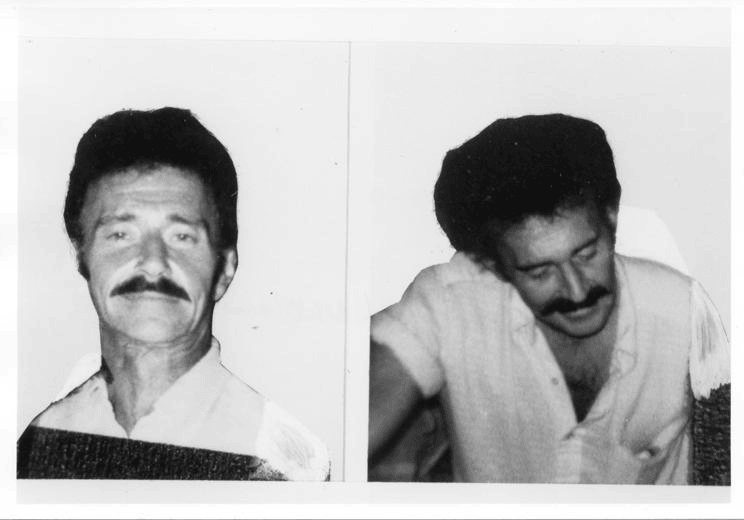
Frederick Mors was the name used by Carl Menarik, an Austrian immigrant who became one of New York City’s earliest known nursing-home serial killers. Born in Vienna, Austria-Hungary, on October 2, 1889, Menarik arrived in New York in June 1914 and began presenting himself under his new identity. Although he had no medical degree or legitimate professional training, he possessed some knowledge of hospitals, medicines and patient care. That limited knowledge would later allow him to approach vulnerable residents with an appearance of authority.
Through an immigrant employment agency, Mors obtained work at the German Odd Fellows’ Home in Unionport, an area that is now part of the Bronx. The institution cared for approximately 100 elderly men and women as well as hundreds of orphaned children. Mors was initially employed as a porter, but he soon began behaving as though he were a physician. He wore a white coat, carried or displayed a stethoscope and insisted that elderly residents address him as “Herr Doktor.”
Children and visitors reportedly found Mors pleasant and likable, but a different atmosphere surrounded him among the elderly residents. Some feared him, and his habit of assuming medical authority gave him unusual access to people who were frail, ill and often unable to defend themselves. Inside an institution where death was not unexpected, he found an environment in which deliberate killings could initially resemble natural losses.
The Unusual Increase in Deaths
Between September 1914 and January 1915, 17 elderly residents died at the German Odd Fellows’ Home. The number was unusually high even for a facility caring for older and seriously ill people. Because the victims were elderly and their deaths did not immediately display obvious signs of violence, the fatalities were originally recorded or accepted as natural.
Suspicion eventually grew within the institution. Residents and employees described their fear of Mors, while administrators could no longer ignore the concentration of deaths that had occurred during his employment. An investigation began, focusing attention on the self-styled doctor who had been moving freely among the residents.
Mors ultimately admitted responsibility for eight deaths. He claimed that he had killed the residents to end their suffering, describing the murders as acts of mercy. Other accounts of his confession indicated that he considered some residents burdensome and believed that their deaths would create room for other people. His explanations attempted to give the killings a humanitarian purpose, but his calculated selection of helpless victims and his efforts to conceal their causes of death demonstrated deliberate and repeated homicidal behavior.
Poisoning Methods
Mors experimented with several substances. He was reported to have used morphine against one victim and arsenic against others. Arsenic could produce vomiting, abdominal pain, weakness and organ failure, symptoms that might be mistaken for complications of illness in an elderly patient. Mors reportedly purchased arsenic from a local druggist, but he found the method troublesome and eventually turned to chloroform.
Chloroform became his primary weapon because it could render a person unconscious and suppress breathing. According to descriptions attributed to his confession, Mors soaked absorbent cotton with chloroform and held it over a victim’s nose until the person lost consciousness. He then obstructed the victim’s breathing passages with cotton and applied additional chloroform. The method allowed him to kill quietly in a private room without producing the kind of visible wounds that would immediately suggest homicide.
The victims’ advanced ages and existing medical problems helped conceal what he had done. A sudden death in the home could be attributed to age, heart failure or another natural cause. This disguise allowed Mors to continue killing over several months before the pattern became impossible to overlook.
Known Victims
The following eight residents were identified in historical accounts as the people Mors admitted killing. Surviving accounts consistently place the deaths at the German Odd Fellows’ Home in Unionport, New York, between September 1914 and January 1915. Reliable individual calendar dates for their deaths are not preserved in the commonly available historical record, so exact dates should not be assigned without original institutional or death-certificate documentation.
- Carl Hitzel, age 78 — Killed between September 1914 and January 1915 at the German Odd Fellows’ Home in Unionport, New York, now part of the Bronx. Historical victim lists state that Mors administered morphine to Hitzel.
- Henry Haensel, age 67 — Killed between September 1914 and January 1915 at the German Odd Fellows’ Home in Unionport. Mors reportedly used arsenic, exposing Haensel to a poison capable of producing symptoms resembling severe natural illness.
- Carl Garf, age 65 — Killed between September 1914 and January 1915 at the Unionport institution. Garf was also reportedly poisoned with arsenic.
- Katherine Piazza, age 75 — Killed between September 1914 and January 1915 at the German Odd Fellows’ Home. Mors identified Piazza as one of the residents he killed with chloroform.
- Mrs. Frederick Drey, age 75 — Killed between September 1914 and January 1915 at the Unionport home. Historical records commonly preserve her name through her husband’s name rather than identifying her given name. Mors reportedly killed her with chloroform.
- Elizabeth Hauser, age 70 — Killed between September 1914 and January 1915 at the German Odd Fellows’ Home. She was identified as another victim of chloroform poisoning.
- Henry Horn, age 68 — Killed between September 1914 and January 1915 at the Unionport institution. Mors reportedly used chloroform to cause unconsciousness and fatal respiratory failure.
- Ferdinand Scholtz, age 77 — Killed between September 1914 and January 1915 at the German Odd Fellows’ Home. Scholtz was also identified as having been killed with chloroform.
Confession and Arrest
In early February 1915, Mors appeared before authorities and confessed to eight killings. Accounts commonly date his surrender and formal confession to February 2, 1915. Rather than showing panic or remorse, he reportedly spoke calmly and described the deaths in clinical terms. His willingness to explain his methods shocked investigators, particularly because the victims’ deaths had previously been accepted as natural.
When questioned, Mors claimed that he had merely released suffering residents from pain. He also alleged that a superintendent at the home had encouraged him to dispose of the oldest or most seriously ill residents. Investigators did not establish evidence proving that the administration had ordered or authorized the murders, and Mors’s accusation was viewed with suspicion.
His behavior suggested that the killings were connected to his delusions of medical authority. By dressing as a doctor, demanding a professional title and determining who should live or die, Mors placed himself in a position of complete control. The residents were not his patients, and he had no legal or ethical authority to administer lethal substances. His language of mercy concealed the reality that he had independently selected vulnerable people and ended their lives without consent.
Declared Criminally Insane
Mors never faced a completed murder trial. Psychiatric examiners found him mentally ill and described him as suffering from severe megalomania. Authorities concluded that he was criminally insane, and the district attorney did not proceed with an ordinary prosecution. Instead, Mors was committed to the Hudson River State Hospital in Poughkeepsie, New York.
The decision meant that he received neither a conventional prison sentence nor a judicial verdict establishing guilt for each killing. The eight murders are attributed to him primarily because of his confession and his detailed knowledge of the methods used. His institutional confinement was also connected to plans to deport him to Austria, but those plans were never completed.
Escape and Disappearance
In May 1916, Mors escaped from the Hudson River State Hospital. Despite the seriousness of his admitted crimes, he disappeared and was not publicly recaptured. His ability to vanish created fears that a confessed killer with medical knowledge could establish another identity and gain access to new victims.
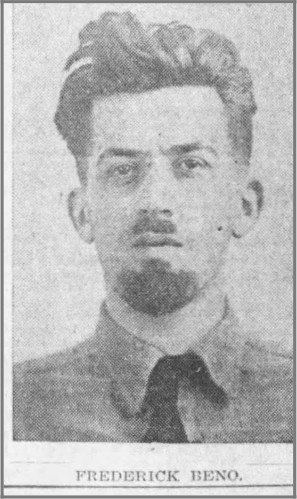
Evidence later suggested that Mors may have resurfaced in Torrington, Connecticut, under the name Frederick Maurice Beno. A man using that identity arrived in the area in 1917 and worked in the first-aid department of the Turner & Seymour Company. He reportedly displayed considerable medical knowledge and used the same birth date associated with Mors. Letters attributed to Beno also claimed that he was the man who had killed eight people in New York.
Beno disappeared in April 1918 after leaving writings that suggested suicidal intentions. In May 1923, a skeleton was discovered in a wooded area near Torrington. Bottles believed to have contained poison were found nearby, and officials concluded that the remains were probably those of Frederick Maurice Beno. Contemporary investigators also believed that Beno and Frederick Mors were the same man, although the identification was based on circumstantial evidence and could not be established with modern forensic certainty.
The Possibility of Additional Victims
Mors confessed to eight murders, but 17 residents died during the four-month period that drew investigators’ attention. It was never conclusively established whether the remaining deaths were natural or whether Mors had concealed additional killings. His access to medication, his ability to move through the home and the ease with which elderly deaths were initially accepted left open the possibility that his true victim count was higher.
Because he was declared insane rather than tried, much of the evidence was never tested in court. There was no complete public presentation of medical records, autopsy findings or witness testimony for each death. The lack of exact individual death dates in many surviving summaries further complicates attempts to reconstruct the precise order of the murders.
Legacy of the German Odd Fellows’ Home Murders
The case of Frederick Mors illustrates how a killer can exploit trust inside a care institution. His victims were elderly people who depended on employees for safety, medication and assistance. Mors transformed that dependence into vulnerability while hiding behind a white coat and an invented medical identity.
His murders also exposed the danger of assuming that every death among elderly or chronically ill patients is natural. The absence of obvious wounds did not mean that no crime had occurred. Arsenic, morphine and chloroform allowed Mors to imitate the appearance of medical decline while selecting people who were unlikely to resist or clearly report what was happening to them.
Frederick Mors remains remembered as a serial poisoner who confessed to killing eight residents between September 1914 and January 1915. His escape in May 1916 prevented authorities from maintaining control over him, and his probable death under another identity left the final chapter of his life uncertain. The names of Carl Hitzel, Henry Haensel, Carl Garf, Katherine Piazza, Mrs. Frederick Drey, Elizabeth Hauser, Henry Horn and Ferdinand Scholtz remain central to the case, representing the elderly residents whose deaths were hidden behind the appearance of ordinary mortality.