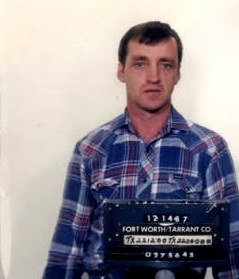
Samuel William Legg III: Suspected Serial Killer and Interstate Truck-Stop Murderer
Overview
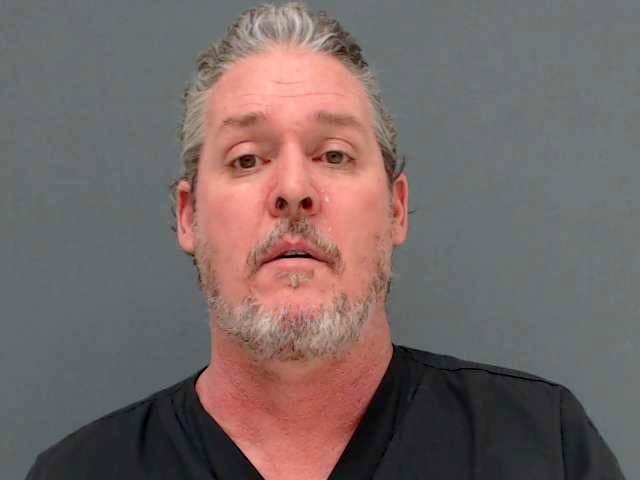
Samuel William Legg III is an American former long-haul truck driver who has been accused of murdering multiple women in Ohio and Illinois during the 1990s. DNA evidence connected the same unidentified male to three killings committed near interstate highways and truck stops, leading investigators to characterize Legg as a suspected serial killer. He was eventually indicted in connection with the deaths of Sharon Lynn Kedzierski, Victoria Jane Collins and Julie A. Konkol. Authorities also investigated him as a person of interest in the murder of his 14-year-old stepdaughter, Angela Hicks.
Legg has not been convicted of the murders attributed to him. His criminal cases were repeatedly delayed after courts determined that severe mental illness left him incompetent to stand trial. Nevertheless, prosecutors and investigators have stated that DNA recovered from several victims provided an extraordinarily strong genetic match to Legg. The evidence revealed a pattern spanning different jurisdictions, with victims abandoned near truck stops or major interstate routes after suffering violent deaths.
Background and Work as a Truck Driver
Legg was born in August 1969 and lived in Ohio during much of the period in which the murders occurred. He worked as an over-the-road truck driver, traveling throughout the Midwest and spending considerable time around interstate highways, truck stops and commercial transportation centers. His occupation gave him the ability to move between distant locations without attracting unusual attention and made it difficult for separate police departments to recognize connections between crimes committed hundreds of miles apart.
Investigators later said that Legg admitted picking up women while driving his truck and engaging in sexual activity with them. During a 2019 interview, he reportedly acknowledged picking up Victoria Collins shortly before her death. He was also reported to have made statements about choking women. These admissions, combined with the DNA evidence and the locations where several bodies were found, intensified suspicions that his trucking routes provided both access to victims and opportunities to dispose of their bodies in isolated areas.
Known and Suspected Victims
- Angela Hicks, 14 – Elyria, Ohio – disappeared July 21, 1990: Angela was Legg’s stepdaughter when she vanished from Elyria. Her body was discovered approximately one month later. Publicly available reports do not establish her precise date of death, and Legg has not been charged with killing her. He was considered a person of interest during the original investigation, and Elyria police reopened the case in February 2019 after DNA linked him to other homicides. Friends and relatives had reportedly suspected his possible involvement for years.
- Sharon Lynn Kedzierski, 43 – Austintown Township, Ohio – body discovered April 9, 1992: Kedzierski’s partially clothed body was found near the Universal Truck Mall at the Interstate 80 and State Route 46 interchange. Investigators believed the body had been left there approximately 24 to 48 hours earlier, but her precise date of death was not established publicly. She died from severe blunt-force injuries to her head, face and chest. Because she carried no identification, she remained a Jane Doe for more than two decades before DNA submitted by her daughters led to her identification. Legg was indicted for her murder in 2019 after investigators connected his DNA to evidence in the case.
- Victoria Jane Collins, 27 – Lake Township, Wood County, Ohio – December 20, 1996: Collins was found dead behind the Union 76 truck stop in Lake Township. She had been sexually assaulted and killed, and her unclothed body was abandoned behind the truck-stop property. She was reported missing on December 18 after last being seen in the Cleveland area on December 16 or during the early hours of December 17. Legg was later indicted on aggravated-murder, murder, rape and kidnapping charges after his DNA was linked to evidence recovered during the investigation.
- Julie A. Konkol, 39 – Russell, Lake County, Illinois – October 23, 1997: Konkol’s body was discovered behind the abandoned Senter’s truck stop at Old U.S. Route 41 and Russell Road. An autopsy determined that she had been manually strangled. She had reportedly been living in a van and earning money by washing and waxing semi-trucks during the weeks before her death. DNA recovered in the investigation was eventually matched to the Ohio killings and later identified as belonging to Legg. Illinois authorities charged him with two counts of first-degree murder in 2020.
The Murder of Sharon Lynn Kedzierski
Sharon Lynn Kedzierski had been separated from her family for years before her body was found in April 1992. She was originally from Pembroke Pines, Florida, and her daughters had no way of knowing whether she was alive or dead. When a woman walking her dog discovered Kedzierski’s remains near the Austintown truck stop, investigators found no identification and no immediately useful distinguishing information. She had been beaten so severely that her death was ruled a homicide caused by blunt-force trauma.
Police attempted to identify her through fingerprints, dental records, sketches and public appeals, but none of those efforts produced an answer. The unidentified woman became one of several victims found near Ohio truck stops during the 1980s and early 1990s. Authorities created an interstate homicide task force to investigate whether the deaths were connected, but the identity of the Austintown victim remained unknown.
More than twenty years after the discovery, DNA submitted by Kedzierski’s daughters to a missing-person database finally established her identity. Investigators had initially pursued another truck driver as a suspect, but later DNA testing connected biological evidence from Kedzierski’s case to evidence recovered in the Collins and Konkol murders. The unidentified genetic profile eventually led authorities to Legg.
The Murder of Victoria Jane Collins
Victoria Jane Collins was a dancer from the Cleveland area. Shortly before her death, she had been socializing with friends when an argument reportedly occurred inside a vehicle. Collins was left near Interstate 90 and was not seen alive again by those companions. Her boyfriend reported her missing on December 18, 1996.
On December 20, her body was found behind the Union 76 truck stop in Lake Township, near Toledo. The condition of the scene indicated that she had been raped, killed and left behind the property. Investigators collected biological evidence, but the available DNA technology did not immediately identify the offender. The case remained unresolved for more than two decades.
During a later police interview, Legg reportedly admitted that he had picked up Collins. His DNA was linked to the evidence recovered from her body, and a Wood County grand jury indicted him in August 2020. The indictment included two counts of aggravated murder, one count of murder, rape and kidnapping. Prosecutors alleged that he kidnapped and sexually assaulted Collins before killing her.
The Murder of Julie A. Konkol
Julie A. Konkol was discovered dead on October 23, 1997, behind an abandoned truck stop in Russell, Illinois, close to the Wisconsin state line. A construction worker found her body near the former Senter’s truck stop. The medical examination concluded that she had been killed by manual strangulation.
Konkol had recently been traveling and living in a van. She was known to wash and wax tractor-trailers to earn money, placing her in regular contact with truck drivers. Investigators examined people in her life and followed numerous leads, but the case eventually went cold. DNA recovered during the investigation was preserved for future testing.
In 2006, the national Combined DNA Index System connected the unknown male DNA from Konkol’s murder to the 1996 killing of Victoria Collins in Ohio. In 2012, the same profile was linked to Sharon Kedzierski’s homicide. These matches demonstrated that one man had left biological evidence in three murder investigations across two states, but the killer’s identity remained unknown because his DNA was not yet stored in the national offender database.
The Disappearance and Death of Angela Hicks
Angela Hicks was only 14 years old when she disappeared from Elyria, Ohio, on July 21, 1990. Legg was married to Angela’s mother and was her stepfather at the time. Her body was located approximately one month after she vanished. Although Legg became a person of interest, investigators did not obtain enough evidence to charge him.
For nearly thirty years, Angela’s case remained unresolved. After Legg was identified as a suspect in several other killings, Elyria police formally reopened her investigation in February 2019. Detectives began reviewing the original evidence and reconsidering statements made by witnesses and relatives. Legg’s connection to the family, combined with his alleged involvement in later murders, renewed attention on the possibility that Angela had been an early victim.
Despite that renewed investigation, no publicly announced forensic evidence has conclusively connected Legg to Angela’s murder, and he has not been indicted in her case. She therefore remains a suspected rather than a legally confirmed victim.
The 1997 Medina County Sexual Assault
The investigation that ultimately exposed Legg began with an unsolved sexual assault committed in Medina County, Ohio, in September 1997. A 17-year-old girl was attacked, and investigators preserved DNA evidence from the crime. The case remained unsolved for more than twenty years.
In 2018, the Ohio Bureau of Criminal Investigation used familial DNA techniques to search for relatives of the unidentified offender. The testing produced a connection to Legg’s family. Investigators constructed a family tree, examined the ages and circumstances of male relatives and identified Samuel Legg as the primary suspect. A direct comparison reportedly showed that his DNA matched the evidence.
Once Legg was identified in the sexual-assault investigation, authorities compared his DNA with the profile connected to the three truck-stop murders. The results linked him to the Kedzierski, Collins and Konkol cases. Officials described the genetic match in Konkol’s case as approximately one in one trillion, making an accidental match extraordinarily unlikely.
Arrest and Murder Charges
Legg was living in a group-home setting in Chandler, Arizona, when authorities obtained a warrant for the 1997 Medina County sexual assault. He was arrested in Arizona in January 2019 and extradited to Ohio. In February 2019, he was indicted for the murder of Sharon Kedzierski and pleaded not guilty.
Wood County prosecutors indicted him in August 2020 for the rape, kidnapping and murder of Victoria Collins. Lake County, Illinois, authorities also charged him with first-degree murder in Julie Konkol’s death. The cases represented a coordinated effort involving local police, county prosecutors, the FBI and the Ohio Bureau of Criminal Investigation.
The evidence against Legg included DNA connections among the murder scenes, his occupation as a long-haul truck driver, his presence in the relevant regions and his reported admission that he had picked up Collins. Investigators believed that his ability to travel throughout the Midwest helped him approach vulnerable women and leave their bodies in different jurisdictions.
Competency Proceedings and Confinement
Although Legg was indicted, the criminal proceedings encountered a major obstacle when doctors determined that he was not mentally competent to stand trial. Reports described him as suffering from schizophrenia or schizoaffective disorder, severe delusions and neurological complications associated with neurosyphilis. A defendant who cannot understand the proceedings or assist counsel cannot legally be tried unless competency is restored.
In October 2020, a Mahoning County judge found that the legal period for attempting to restore Legg’s competency had expired. The ruling prevented the Kedzierski murder prosecution from moving forward to trial. The court nevertheless determined that Legg presented a substantial danger and required involuntary psychiatric hospitalization.
Legg was confined at Twin Valley Behavioral Healthcare, a secure state psychiatric facility in Columbus, Ohio. Subsequent evaluations found that he remained incompetent and continued to require hospitalization. In May 2025, a judge again determined that Legg suffered from severe mental illness, posed a risk of physical harm and should remain under court-ordered confinement.
Significance of the DNA Investigation
The investigation of Samuel Legg demonstrated how preserved evidence can reveal connections between crimes long after the original detectives have exhausted their leads. DNA from separate scenes in Ohio and Illinois initially established that the same unknown man had encountered three murder victims. The evidence remained unidentified only because the offender had no qualifying DNA profile in the national criminal database.
Familial DNA analysis changed the direction of the investigation. Instead of requiring an exact match already stored in a database, analysts searched for genetic similarities suggesting that the unknown offender was related to someone whose DNA was available. The resulting family connection allowed investigators to narrow the possibilities and identify Legg for direct testing.
The cases also revealed the difficulties created when a suspected offender crosses jurisdictional boundaries. Kedzierski, Collins and Konkol were investigated by different police agencies in different counties and states. The victims had different backgrounds, and their bodies were discovered years apart. Only shared DNA evidence and cooperation among agencies exposed the possibility that one traveling offender was responsible.
Unresolved Questions
Investigators have considered whether Legg may have committed additional crimes during his years as a truck driver. His work took him across state lines and placed him near truck stops, interstate exits and women who might disappear without an immediate connection being made between jurisdictions. Authorities have reviewed unsolved assaults, missing-person cases and unidentified remains to determine whether other incidents could be associated with him.
Questions remain about Angela Hicks and whether her death represented the beginning of Legg’s suspected series of killings. There is also uncertainty about how many women he encountered while driving and whether other victims were left in locations outside Ohio and Illinois. No additional homicide indictments have been publicly established beyond the cases involving Kedzierski, Collins and Konkol.
Legacy of the Case
Samuel William Legg III is widely described by law-enforcement officials as a suspected serial killer, but the distinction between accusation and conviction remains important. DNA evidence resulted in multiple murder indictments, yet his mental condition has prevented the allegations from being tested before juries. He therefore remains accused rather than legally convicted of the killings.
For the victims’ families, the identification of a suspect provided long-awaited answers but not complete justice. Sharon Kedzierski’s daughters spent decades wondering why their mother had disappeared before learning that an unidentified homicide victim was their mother. The families of Victoria Collins and Julie Konkol waited more than twenty years for DNA technology to identify the man prosecutors believed had killed them. Angela Hicks’s loved ones continue to live without a definitive resolution.
The case stands as a disturbing example of how a mobile offender could exploit interstate travel and jurisdictional separation. It also illustrates the value of preserving physical evidence, revisiting cold cases and sharing information between police departments. Decades after the murders, developments in forensic genealogy transformed an unknown DNA profile into the name of a suspect and connected a series of violent crimes that had once appeared unrelated.