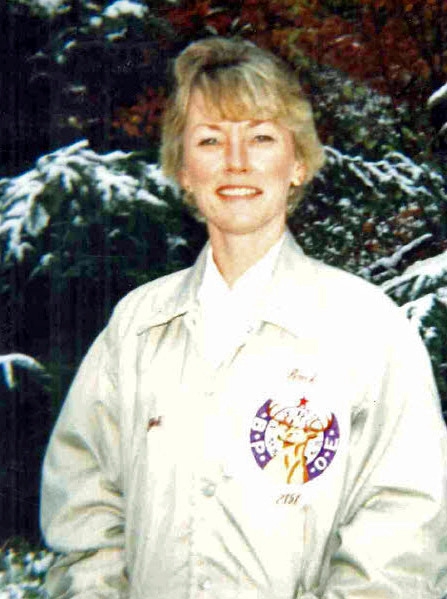
Sharon Lynn Kedzierski, a 47-year-old white woman, was found deceased on April 9, 1992, near the Universal Truck Mall parking lot in Austintown, Ohio. Her body had been there for approximately 24 hours before being discovered. The cause of death was determined to be multiple blunt force injuries to the head, face, and upper chest, with asphyxiation listed as the official cause. Kedzierski had been missing since October 1989, and her identity remained unknown for over two decades until DNA analysis in 2013 confirmed her identity.
Authorities initially struggled to identify her, despite submitting fingerprints to the FBI, conducting dental comparisons, and distributing composite sketches. It was only through the National Missing and Unidentified Persons System that her daughters' DNA samples led to a match, finally confirming her identity. At the time of her disappearance, Kedzierski was supposed to take a train from Florida to New Jersey, but she was never seen again.
Investigators suspected that Kedzierski had been killed elsewhere before her body was dumped at the truck stop. Her case was linked to a broader pattern of homicides occurring at truck stops during that period. In the early 1990s, police had a suspect, Dennis Hetzel, a former truck driver from Knoxville, Tennessee. Hetzel was secretly indicted in December 1993, even before Kedzierski was identified. Investigators matched bite marks on her body to Hetzel, but he was not considered a suspect in other truck stop killings. Hetzel was later extradited to Texas in 1995 to face charges for the rape of his daughters, ages five and seven, and was convicted. He later died in prison.
Years later, another suspect emerged. Samuel W. Legg III, an Arizona man, was indicted for Kedzierski’s murder in 2019. Legg, a long-haul truck driver at the time of the crime, was charged with three counts of aggravated murder and one count of murder. His indictment was linked to DNA evidence that also connected him to a 1997 rape case and three other homicides. Legg was residing in the Medina County Jail on rape charges from the 1997 cold case, held on a $1 million bond. Authorities stated that DNA evidence conclusively linked Legg to Kedzierski’s death, asserting that no other individual could have contributed the DNA found in the evidence.
Legg pleaded not guilty to all charges, and his jury trial was scheduled to begin in April. His indictment marked a significant breakthrough in a case that had remained unsolved for decades. Kedzierski’s daughters, who had submitted their DNA to help identify their mother, expressed relief that justice was finally being pursued. They described their mother as a middle-class woman who had worked as a bookkeeper and branch manager for H&R Block, rejecting any notion that she was on the fringes of society.
Despite the years of uncertainty and multiple suspects, Kedzierski’s murder remains a tragic case that highlights the challenges of solving cold cases. Advances in DNA technology played a crucial role in identifying her and linking suspects to her death, demonstrating the importance of forensic science in criminal investigations.