Bennie Demps: The Twice-Condemned Killer
Overview
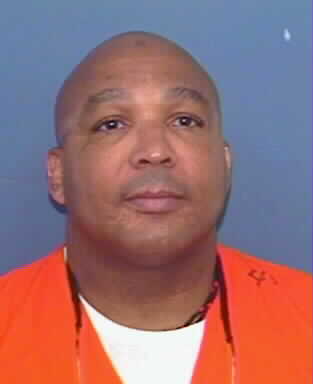
Bennie Eddie Demps was a twice-convicted murderer whose path of violence began in a Florida orange grove and ended, decades later, on a gurney in the state’s execution chamber. A Vietnam veteran, Demps committed a brutal double murder in 1971, for which he was sentenced to death. He was spared by a landmark Supreme Court decision, only to kill again while serving a life sentence. His second murder, the fatal stabbing of a fellow inmate, placed him back on death row. For over two decades, he fought his sentence through a winding series of appeals, maintaining his innocence in the second killing until the very end. His execution in 2000 was marked by controversy, as Demps alleged he was "butchered" during the lethal injection procedure. His case remains a stark illustration of a life defined by repeated violence and the complex, often fraught, workings of the American capital punishment system.
Early Life and Background
Bennie Eddie Demps was born in Florida on June 17, 1950. Little is publicly known about his childhood or upbringing. As a young man, he served in the U.S. Marine Corps during the Vietnam War, where he was wounded in combat. His military career, however, ended with a dishonorable discharge. By early 1971, at the age of 20, Demps was back in Central Florida, where his life would take a decisive and violent turn.
The 1971 Lake County Murders
On February 15, 1971, Demps and his 16-year-old accomplice, Jackie Hardie, embarked on a crime spree. After robbing a man of his car at gunpoint, they broke into a home in Mount Dora, stealing weapons and a safe. They drove the stolen goods to a secluded orange grove near Eustis, Florida, to pry the safe open.
Their efforts were interrupted by the arrival of three people: Robert N. Brinkworth, a local real estate agent, and a Connecticut couple, Nicholas and Celia Puhlick, who were viewing the property as a potential retirement spot. Demps and Hardie confronted the trio at gunpoint. After robbing them, the two criminals forced all three into the trunk of a car. When the victims tried to get out, Demps and Hardie opened fire, riddling the trunk with bullets. Robert Brinkworth and 64-year-old Celia Puhlick were killed. Her 62-year-old husband, Nicholas, was wounded in the arm but survived by pretending to be dead. He would later provide crucial testimony identifying his attackers.
Investigation and Capture
After the murders, Demps and Hardie fled the state. Their escape was short-lived. On February 18, 1971, just three days after the killings, they were pulled over for speeding in New Jersey. During the traffic stop, a highway patrol officer spotted a weapon in the vehicle, leading to their arrest. The two were identified as fugitives wanted for the double homicide in Florida and were extradited to face charges. The surviving victim, Nicholas Puhlick, positively identified both Demps and Hardie as the men who had killed his wife and Robert Brinkworth.
First Trial and Commuted Sentence
Due to intense local publicity, the trial was moved from Lake County to St. Augustine. In court, Demps and Hardie turned on each other, each claiming the other was solely responsible for the shootings. On July 2, 1971, a jury found both men guilty of two counts of first-degree murder and one count of attempted murder. The court sentenced both Demps and Hardie to death for the murders, with an additional 20-year sentence for the attempt on Nicholas Puhlick's life.
Demps was sent to death row at Florida State Prison. However, his time there was cut short by a major legal shift. In 1972, the U.S. Supreme Court's decision in *Furman v. Georgia* effectively invalidated death penalty statutes across the country, ruling their application to be arbitrary and capricious. As a result, the Florida Supreme Court commuted the death sentences of Demps and 96 other inmates to life in prison. On February 28, 1973, Demps's sentence was officially changed to two consecutive life terms. He had escaped the executioner, but his freedom was permanently gone.
The Murder of Alfred Sturgis
By 1976, Demps was an established inmate at the notoriously tough Florida State Prison near Starke. There, he became involved with a prison gang that called itself "Perjury Incorporated," a group known for targeting inmates suspected of being informants, or "snitches." Their methods were violent and intended to enforce a code of silence.
On September 7, 1976, Demps and two other inmates, James Jackson and Harry Mungin, targeted 23-year-old Alfred Sturgis, a fellow prisoner serving a life sentence for murder. They cornered Sturgis in his cell and brutally attacked him. According to testimony, Demps and Mungin held Sturgis down while Jackson stabbed him repeatedly with a homemade knife. Prison personnel found Sturgis bleeding profusely from multiple wounds. He was rushed to a series of medical facilities but died shortly after arriving at a hospital in Gainesville.
The timing of the murder was critical. Just two months earlier, in July 1976, the U.S. Supreme Court had upheld Florida's newly rewritten capital punishment law, effectively reinstating the death penalty in the state. For Demps, this meant a third murder could once again put him on a path to the execution chamber.
Second Trial and Death Sentence
The case against Demps and his accomplices was built on powerful evidence. As he was being transported for medical care, a dying Alfred Sturgis told a correctional officer, A.V. Rhoden, that Demps, Jackson, and Mungin were his attackers. This "dying declaration" became a cornerstone of the prosecution's case. Additionally, another inmate, Larry Hathaway, testified that he witnessed the attack, seeing Demps holding Sturgis down while Jackson did the stabbing.
In 1978, the three men were tried for the first-degree murder of Alfred Sturgis. On March 16, 1978, the jury found all three guilty. During the penalty phase, the jury recommended life sentences for Mungin and death for both Demps and Jackson. However, the judge ultimately sentenced both Jackson and Mungin to life in prison. For Bennie Demps, who already had two murder convictions, the judge imposed a sentence of death on April 17, 1978. He was, for the second time in his life, condemned to die.
The Victims
- Robert N. Brinkworth, age unknown — A real estate agent from the Eustis area, he was showing a property on February 15, 1971, when he and his clients were tragically ambushed.
- Celia Puhlick, 64 — A resident of Connecticut, she and her husband Nicholas were looking forward to finding a retirement home in Florida when their lives were shattered by a senseless act of violence on February 15, 1971.
- Alfred Sturgis, 23 — An inmate at Florida State Prison, he was killed on September 7, 1976, in an attack by fellow prisoners who accused him of being an informant.
Appeals and Final Days
For the next 22 years, Bennie Demps lived on death row, fighting his sentence through a relentless series of legal appeals. His lawyers challenged his conviction on numerous grounds, but his appeals were repeatedly denied by state and federal courts. Demps consistently maintained his innocence in the Sturgis murder, arguing he was the victim of a prison frame-up. He claimed that officials wanted him executed for the 1971 murders he had originally escaped punishment for.
A central claim in his later appeals revolved around a prison investigator's memo written the day after Sturgis's death. The memo, which Demps's lawyers only discovered in 1998, stated that Sturgis had named James Jackson as his assailant but did not mention Demps. The courts, however, ruled that this memo was not sufficient to warrant a new trial, given the weight of the trial testimony, including the dying declaration heard by Officer Rhoden and the eyewitness account of Larry Hathaway.
Execution
After exhausting all his appeals, Demps's fourth death warrant was signed, and his execution was set for June 7, 2000. Florida had recently switched its method of execution from the electric chair to lethal injection. Demps was to be the third inmate executed by this new method.
The procedure was delayed for over half an hour. When it began, Demps delivered a final, chilling statement from the gurney, claiming the execution team had injured him while trying to insert the IV lines. "They butchered me back there," he said, his voice trembling. "They cut me in the groin; they cut me in the leg. I was bleeding profusely... This is not an execution, it's murder."
Prison officials later confirmed that a "surgical procedure" had been necessary to find a suitable vein but denied any wrongdoing. Governor Jeb Bush dismissed the inmate's claims, stating, "When the execution took place, there was no cruel or unusual punishment." Bennie Eddie Demps was pronounced dead at 6:53 p.m. at the age of 49, having spent more than half his life on death row.