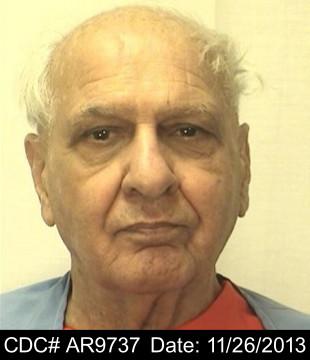
John Sapp: California Killer Linked to Four Murders
Background and Pattern of Violence
John Sapp was a California drifter, drug dealer, and convicted serial killer whose known crimes stretched across more than a decade. His victims included longtime friends, a former girlfriend, and, according to evidence presented during his trial, his own mother. The murders occurred between 1975 and 1985 in Northern California, primarily in Contra Costa, Colusa, and Butte counties. Sapp commonly relied on personal relationships to gain access to his victims, after which he transported them to isolated locations and shot them.
Money, drugs, revenge, and personal resentment were recurring elements in Sapp’s crimes. He claimed that two of the killings were contract murders, although he refused to identify the people who allegedly hired him. In other cases, he described becoming angry with victims because of failed drug transactions, accusations of informing police, or deteriorating personal relationships. His willingness to discuss his crimes after his arrest eventually helped investigators resolve cases that had remained mysteries for years.
Victims
- John Abono, 22 — disappeared December 22, 1975 — Mount Diablo area, Contra Costa County, California: Abono was living in Concord when he went to purchase marijuana from Sapp on December 22, 1975. His exact date of death was never independently established because his remains were not recovered, but Sapp confessed that he killed Abono within days of the disappearance. Sapp said he forced Abono at gunpoint to walk into an isolated area near Castle Rock on Mount Diablo, shot him several times in the head, covered the body with brush, and later returned to bury it.
- Elizabeth Duarte, 24 — killed January 25, 1981 — Lime Ridge area of Mount Diablo, Contra Costa County, California: Duarte was Sapp’s former girlfriend and a coworker he had met while employed at Chevron Research in Richmond. She disappeared after arriving at the home of another man late on January 24, 1981. Sapp later admitted attacking her, transporting her to a grave he had prepared near Mount Diablo, and shooting her around sunrise on January 25. Her remains were recovered in April 1986 after Sapp directed investigators to the burial site.
- Geraldine Sapp, 67 — believed killed June 4 or June 5, 1985 — near Oroville and Gridley, Butte County, California: Geraldine was John Sapp’s mother and was living with him near Oroville when she vanished. A neighbor last saw her on June 4 or June 5. Her purse, wallet, clothes, vehicle, and other belongings remained at her home. Prosecutors argued that Sapp killed her and disposed of her body in a remote area near Gridley, although he denied responsibility and was not separately convicted of her murder.
- Robert Weber, approximately 34 or 35 — killed in August 1985 — Walker Ridge, Colusa County, California: Weber was a friend of Sapp’s and a small-scale cocaine dealer who reportedly owed money to several people. He left Concord with Sapp on August 13, 1985, carrying approximately $17,000 and two firearms for what he believed was a drug transaction. Hunters found Weber’s body on August 18 on a hillside near Walker Ridge, about 18 miles from Clearlake. He had been shot repeatedly in the head, chest, throat, back, and arms. The available evidence did not establish a precise date of death, but investigators determined that he had been dead for at least 24 hours when discovered.
The Disappearance and Murder of John Abono
John Abono had known Sapp for years and trusted him enough to arrange a marijuana purchase through him. On the afternoon of December 22, 1975, Abono and his friend Tim Bowler drove to the area of Sapp’s Concord residence. Bowler gave Abono between $200 and $300 to purchase approximately two pounds of marijuana. Bowler then left on foot while Abono remained behind to meet Sapp.
When Abono failed to return with the drugs, Bowler drove past Sapp’s home several times. Abono’s sports car remained parked nearby, but Abono had vanished. Sapp initially told police that Abono had left town because he was afraid of him. More than ten years later, Sapp confessed that Abono had angered him through dishonest and dangerous drug transactions.
Sapp said he met Abono under the pretense of completing the marijuana purchase. He placed a gun against Abono’s head and drove him to the Castle Rock area of Mount Diablo. Sapp forced him to walk for approximately 45 minutes into an isolated section of the mountain before shooting him several times in the head. He initially concealed the body beneath brush and later returned with a shovel to bury it. Although Sapp took investigators to the general area in 1986, searches failed to locate Abono’s remains.
The Murder of Elizabeth Duarte
Elizabeth Duarte met Sapp while the two worked at Chevron Research in Richmond. They dated for several years, but their relationship became increasingly hostile. In July 1980, Duarte obtained a restraining order against Sapp and began seeing another coworker, James Luddon. Sapp later characterized his relationship with Duarte as one in which affection had been replaced by hatred.
Late on January 24, 1981, Duarte’s father picked up her five-year-old son from her Richmond home. When he returned the child the following morning, Duarte was missing. Her father contacted police, beginning an investigation that would remain unresolved for more than five years.
Sapp was questioned shortly after the disappearance. He made several disturbing statements, including telling an investigator that Duarte angered him so much that he wanted to kill her. Police searched his van and found dried human blood consistent with Duarte’s blood type, along with dirt caked around the pedals. Despite these suspicious discoveries, investigators did not yet have enough evidence to recover Duarte or charge Sapp.
After his 1986 arrest, Sapp confessed that he had arranged for Luddon to bring Duarte to his home. Sapp waited inside and struck Duarte in the head when she arrived. He then placed her in his van, bandaged her injury, wrapped her in a blanket, and transported her to the Lime Ridge area of Mount Diablo, where he had already prepared a grave.
Sapp claimed that someone had offered him $20,000 to kill Duarte because she was believed to be an informant. He also admitted having personal motives. Around sunrise on January 25, he shot Duarte with a .38-caliber revolver and buried her body in the blanket. On April 27, 1986, he guided detectives to the burial site. Dental records confirmed the remains belonged to Duarte, who had been shot at least four times in the chest.
The Suspected Murder of Geraldine Sapp
In 1984 and 1985, Geraldine Sapp lived on rural property near Oroville in Butte County. During the months before her disappearance, she withdrew more than $60,000 from bank accounts and certificates of deposit. She reportedly told bank employees that the money was intended for a business venture involving her son John.
A neighbor saw Geraldine on either June 4 or June 5, 1985, but never saw her again. Sapp left the property in his van during the afternoon of June 5 and returned two days later. On June 7, he began asking neighbors whether they had seen his mother and reported her missing to the Butte County Sheriff’s Department.
Geraldine’s disappearance appeared suspicious because her clothes, purse, wallet, checkbook, vehicle, and other possessions remained at home. Prosecutors later presented evidence that Sapp killed her on June 4 or June 5 and disposed of her body in a secluded location near Gridley. They argued that he traveled to the Bay Area to construct an alibi and then attempted to direct suspicion toward other people.
Sapp denied killing his mother. Her body was never conclusively recovered, and he was not tried for her murder as a separate criminal charge. Nevertheless, the prosecution presented the case during the penalty phase of his capital trial, and the jury was allowed to consider evidence that he had murdered Geraldine when deciding whether he should receive the death penalty.
The Contract Killing of Robert Weber
Robert Weber lived in Concord and was involved in small-scale cocaine dealing. He owed money to other dealers, including Sapp. On August 13, 1985, Weber told his girlfriend, Linda Brown, that he and Sapp were leaving for several days to purchase drugs. Weber carried approximately $17,000, a sawed-off shotgun, and a 9-millimeter semiautomatic pistol.
That evening, Weber called Brown from Clearlake and said the people they intended to meet had not arrived. Sapp and Weber stayed at a motel in Clearlake on August 13 and 14. A few days later, Sapp appeared at Weber’s condominium and claimed that Weber had disappeared after failing to meet him at the motel.
On August 18, 1985, deer hunters discovered Weber’s body on a hillside at Walker Ridge in Colusa County. Investigators found bloodstains and four spent 9-millimeter cartridge cases near the body. Weber had suffered numerous gunshot wounds to his head, throat, chest, back, and arms.
Sapp later led a Colusa County deputy to the location and described the killing. He said Weber had been walking ahead of him along the top of a hill. When Weber turned around, Sapp shot him repeatedly with a 9-millimeter pistol. He then dragged Weber’s body and rolled it down the hillside, where vegetation prevented it from falling farther.
Sapp claimed unnamed people had paid him $10,000 in advance to murder Weber. He said he used the promise of a drug transaction to lure Weber to the remote area. Sapp refused to identify the people he alleged had ordered the killing, and no additional person was convicted of hiring him.
Attempted Murders and Other Violence
Evidence presented during Sapp’s penalty hearing included two attempted murders. On November 9, 1983, Al Redenius was standing outside his home in Willits, Mendocino County, when someone fired a shotgun from a passing vehicle. Redenius was struck in the face, neck, and hip but survived. Sapp later claimed he had been paid $10,000 to kill Redenius and admitted firing three shotgun blasts at him.
Prosecutors also presented evidence concerning the attempted murder of Donna Smith in 1986. These episodes demonstrated that Sapp’s violence was not limited to the four people identified as his murder victims. He was willing to attack people for payment and possessed firearms despite being legally prohibited from doing so.
Arrest and Confessions
Sapp’s crimes began to unravel after he was arrested in Grass Valley on April 25, 1986, on an outstanding warrant for being a convicted felon in possession of a concealable firearm. The following day, he began confessing to the unsolved murders of Robert Weber, Elizabeth Duarte, and John Abono.
Sapp provided investigators with details that had not been publicly released. He accurately described the remote locations where Weber and Duarte had been killed and directed officers to Duarte’s grave. He also guided police toward the area where he said Abono was buried, although they could not find the remains.
During his statements, Sapp acknowledged that he had personally pulled the trigger in all three murders. He said Abono was killed for personal reasons, while Duarte and Weber were killed partly for money. His refusal to identify the alleged people who hired him left unanswered questions about whether others had participated in planning the crimes.
Trial, Conviction, and Death Sentence
A Contra Costa County jury convicted John Sapp of the first-degree murders of John Abono, Elizabeth Duarte, and Robert Weber. The jury also found that he had personally used a firearm in each murder. The Duarte and Weber killings included special circumstances involving multiple murders and murder for financial gain.
During the penalty phase, prosecutors introduced evidence that Sapp had also murdered his mother, attempted to kill Al Redenius and Donna Smith, illegally possessed weapons, and maintained a long history of criminal behavior. The defense presented evidence of Sapp’s severe substance abuse, troubled childhood, possible brain dysfunction, and tendency to make unreliable statements.
The jury returned death verdicts for the murders of Duarte and Weber. The court formally sentenced Sapp to death in 1991. He received additional prison time for being a convicted felon in possession of a concealable firearm.
In 2003, the California Supreme Court unanimously upheld Sapp’s convictions and death sentence. The court rejected arguments that his confessions had been improperly obtained and concluded that the evidence supporting the murder convictions was overwhelming. John Sapp remained condemned for a series of calculated shootings in which friendship, family relationships, drug dealings, and promises of money were repeatedly transformed into opportunities for murder.