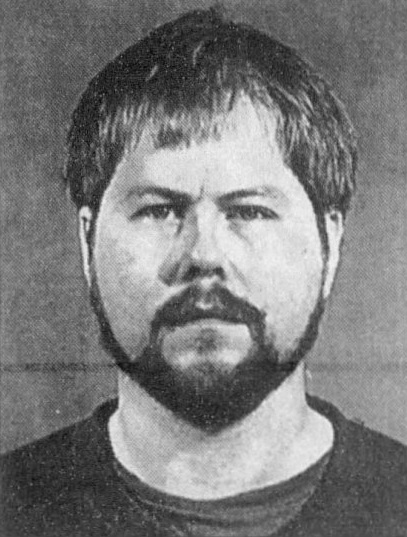
Jeremy Bryan Jones: Convicted Murderer and Suspected Serial Killer
Background and Criminal History
Jeremy Bryan Jones, sometimes known by the nickname “Oklahoma,” became the focus of a multistate investigation after his arrest in Alabama in September 2004. Jones was born on April 12, 1973, and spent portions of his life in Oklahoma, Kansas, Georgia, Louisiana and Alabama. He frequently moved between communities, used aliases and accumulated a record involving drugs, violence and sexual offenses. Investigators eventually examined whether his movements corresponded with numerous unsolved killings and disappearances across the southern and central United States.
Jones has often been described as a serial killer, but an important distinction must be made between the crime for which he was convicted and the many other cases in which he was only charged, investigated or identified as a possible suspect. He was convicted in Alabama of the capital murder of Lisa Marie Nichols and sentenced to death. His alleged connections to other victims were frequently based on statements that he later changed or withdrew, circumstantial evidence, geographic proximity or accounts that investigators could not independently confirm.
The Murder of Lisa Marie Nichols
Lisa Marie Nichols was a 45-year-old mother and grandmother who lived in Turnerville, an unincorporated community in Mobile County, Alabama. Jones had been staying at Nichols’s residence shortly before her death. On September 18, 2004, relatives found Nichols dead inside the bathroom of her home. The residence had been set on fire, but the blaze did not completely destroy the evidence inside.
Investigators determined that Nichols had been sexually assaulted and shot in the head. Prosecutors argued that Jones killed her during the course of rape and sexual abuse before attempting to conceal the crime by setting the house on fire. Jones was arrested nearby after law-enforcement officers learned that he had been at the residence and began searching for him.
Jones gave investigators statements containing details about the killing. At trial, the prosecution also presented physical and circumstantial evidence connecting him to Nichols and her home. In October 2005, a Mobile County jury convicted Jones on four counts of capital murder arising from Nichols’s death. The counts reflected different aggravating circumstances alleged by prosecutors, rather than four separate victims. The jury recommended the death penalty, and the trial judge formally sentenced Jones to death.
Victims and Cases Examined by Investigators
- Jennifer Dianne Judd — May 11, 1992 — Baxter Springs, Kansas: Twenty-year-old newlywed Jennifer Judd was found stabbed to death inside her residence at 219 North Park Avenue. The Kansas Bureau of Investigation continues to classify her murder as unsolved. Jones reportedly made statements claiming involvement, but investigators found problems with his account, and he was never charged with Judd’s murder.
- Doris Harris and Daniel Oakley — 1996 — Delaware County, Oklahoma: Harris, 41, and Oakley, 38, were found dead after the trailer in which they lived was burned. Both had reportedly been shot before the fire. Jones was investigated in connection with their deaths, but publicly available accounts do not establish a verified exact date of death or a murder conviction against him in the case.
- Danny Freeman and Kathy Freeman — December 30, 1999 — Welch, Oklahoma: The Freemans were shot inside their rural home, which was then set on fire. Their 16-year-old daughter, Ashley Freeman, and her friend, 16-year-old Lauria Bible, disappeared that night. Jones gave investigators an account in which he claimed involvement, but he later withdrew it. No reliable physical evidence established that Jones killed the couple or the teenagers, and another group of suspects was later prosecuted in connection with the girls’ presumed deaths.
- Tina Mayberry — October 31, 2002 — Douglasville, Georgia: Thirty-eight-year-old Tina Mayberry was attending a Halloween gathering at a Douglasville-area restaurant when she was attacked outside. She returned to the establishment suffering from stab wounds and later died. Because Jones lived in the area and was known to have visited the same establishment, investigators examined him as a possible suspect. He was not convicted or charged with Mayberry’s murder.
- Amanda Greenwell — March 12, 2004 — Douglasville, Georgia: Sixteen-year-old Amanda Greenwell disappeared after leaving her family’s residence in a Douglasville trailer park. Her remains were discovered in April 2004. Jones had lived nearby while using the name John Paul Chapman. Georgia authorities charged him with Greenwell’s murder, but the case did not result in a conviction against him.
- Katherine Collins — February 14, 2004 — New Orleans, Louisiana: Forty-five-year-old Katherine Collins was found stabbed to death inside her New Orleans residence. Jones had stayed with Collins and was accused of taking property from her home after her death. Louisiana authorities charged him with murder, but he was not convicted in the case.
- Patrice Tamber Endres — disappeared April 15, 2004 — Forsyth County, Georgia: Thirty-eight-year-old salon owner Patrice Endres vanished from Tamber’s Trim-N-Tan near Cumming, Georgia. Jones claimed that he abducted, sexually assaulted and killed her before disposing of her body in water. His description of the location did not lead investigators to Endres. Her remains were eventually found in December 2005 in Dawson County, Georgia, but authorities were unable to substantiate Jones’s confession, and he was never charged with her death.
- Lisa Marie Nichols — September 18, 2004 — Turnerville, Alabama: Nichols, 45, was sexually assaulted, shot and left inside her burning residence. Jones was convicted of her capital murder in October 2005 and sentenced to death. Nichols’s killing remains the murder for which Jones has been conclusively convicted.
Aliases and Missed Identification
During part of his time in Georgia, Jones used the identity John Paul Chapman. He was arrested on lesser offenses several times, and his fingerprints were submitted to the FBI under that name. The prints were not correctly matched to Jones, who was wanted in Oklahoma. The FBI later acknowledged that mistakes in the fingerprint-identification process allowed authorities to release him instead of recognizing his true identity and outstanding legal status.
The error became especially significant after Jones was accused of crimes committed during the period in which he remained free. Authorities emphasized that properly identifying him would have allowed Oklahoma officials to take custody of him. However, it cannot be stated with certainty that every later crime associated with his name would necessarily have been prevented, particularly because many of those allegations never resulted in convictions.
Confessions, Retractions and Questions of Credibility
Jones attracted national attention by claiming responsibility for numerous killings. He spoke at length with investigators from several states and described crimes involving women, couples and missing teenagers. Some reports suggested that he claimed to have killed more than a dozen people. The number varied depending on the interview and the version of events he provided.
Investigators soon discovered that several of Jones’s statements contained contradictions, unverifiable details or information that did not match the known evidence. In some instances, he appeared familiar with the victims or locations but could not provide facts proving that he had committed the crimes. He also withdrew or altered important confessions. This created the possibility that he was combining genuine knowledge with rumors, media reports or fabricated claims intended to gain attention and influence his treatment in custody.
The Freeman and Bible case illustrates the danger of treating Jones’s statements as established fact. Jones claimed that he killed Ashley Freeman and Lauria Bible and placed their bodies in an abandoned mine. Searches did not confirm his story. Years later, investigators developed evidence implicating other men, demonstrating that Jones’s confession could not be accepted without independent corroboration.
Trial, Conviction and Death Sentence
Jones was tried in Mobile County, Alabama, for the murder of Lisa Nichols. Prosecutors portrayed the killing as a calculated and violent attack followed by an attempt to destroy evidence. The defense challenged portions of the prosecution’s case and Jones’s statements, but the jury found him guilty of capital murder.
The four capital-murder counts were based on allegations that Nichols was murdered during rape, sexual abuse, burglary and kidnapping. After the penalty phase, jurors recommended that Jones receive the death penalty. The judge accepted the recommendation. Alabama appellate courts later upheld his conviction and sentence during direct review.
Jones subsequently pursued post-conviction challenges involving the conduct and fitness of a juror, the performance of his attorneys and other trial issues. Those proceedings did not erase the central result of the case: Jones remained convicted and sentenced to death for killing Lisa Marie Nichols.
The Scope of the Suspected Crimes
At the height of the investigation, law-enforcement agencies from Alabama, Georgia, Oklahoma, Kansas, Louisiana and other states reviewed unsolved cases for possible connections to Jones. His frequent travel, use of aliases, drug activity and relationships with people in several of the affected communities made him a plausible person of interest in multiple investigations.
Nevertheless, proximity and suspicious behavior are not proof of murder. Some publications have presented every death associated with Jones as one of his victims, even though the legal and investigative records are far more limited. Jennifer Judd’s murder remains officially unsolved. Jones was charged but not convicted in the deaths of Amanda Greenwell and Katherine Collins. His claim concerning Patrice Endres was never substantiated, and his statement about Ashley Freeman and Lauria Bible was contradicted by the later direction of that investigation.
Legacy of the Investigation
The case of Jeremy Bryan Jones demonstrates the difficulty investigators face when a convicted murderer begins confessing to additional crimes. Such statements may contain valuable leads, but they can also divert resources, deepen the suffering of families and create false impressions that unsolved cases have been resolved. Every confession must be compared with forensic evidence, timelines, witness accounts and information that was never released publicly.
Jones is unquestionably responsible in the eyes of the law for the murder of Lisa Marie Nichols. The jury’s verdict and death sentence established his guilt in that case. His responsibility for the other deaths attributed to him remains uncertain unless supported by separate evidence or future legal findings. Describing those people as suspected victims, rather than confirmed victims, preserves the distinction between documented fact, criminal accusation and an unproven confession.
Behind the extensive attention surrounding Jones are victims whose lives cannot be reduced to entries on a suspected killer’s list. Lisa Nichols was a mother of two daughters and a grandmother. Jennifer Judd was a newlywed whose family continues to seek answers. The families of Amanda Greenwell, Katherine Collins, Patrice Endres, the Freemans, Ashley Freeman, Lauria Bible and the other people connected to the investigation endured years of uncertainty. Their cases serve as a reminder that sensational claims should never replace careful evidence, accurate reporting and respect for those whose lives were taken.