The Connecticut River Valley Killer
Overview
The Connecticut River Valley Killer is the name given to an unidentified murderer associated with a series of unsolved killings in New Hampshire and Vermont from the late 1970s through the 1980s. Despite the name, the crimes were not centered in the state of Connecticut. The name refers to the Connecticut River Valley, the region surrounding the river that forms much of the boundary between Vermont and New Hampshire.
At least seven women have traditionally been grouped together as victims of the unidentified killer. Most disappeared or were attacked in rural communities along transportation corridors in western New Hampshire and eastern Vermont. Several were stabbed, several disappeared while traveling alone, and multiple victims were found in isolated wooded locations. Investigators noticed particularly troubling geographic similarities around Claremont, Newport, Unity, and the Connecticut River corridor.
It is important to note that law enforcement has never conclusively proved that a single person committed every murder traditionally attributed to the Connecticut River Valley Killer. The individual cases remain separate unsolved investigations, and New Hampshire authorities have cautioned against assuming that every popularly linked homicide was committed by the same offender. Nevertheless, the similarities between the crimes led investigators, journalists, and the public to associate them with an unidentified serial murderer.
The Beginning of the Murders
The earliest murder generally associated with the series was the killing of Catherine "Cathy" Millican in New London, New Hampshire, in October 1978. Millican was an artist, photographer, ornithologist, and accomplished sailor who went into a wetland area to watch and photograph birds. She never returned home.
Millican was last seen during the afternoon of October 24, 1978. Witnesses saw her brown Volkswagen Rabbit near the entrance to the wetlands off Route 11. At approximately 11:30 p.m. the following evening, October 25, her body was discovered several hundred yards into the wooded area. An autopsy determined that she died from multiple stab wounds. Because she was last seen alive on October 24 and discovered on October 25, the precise time of her death has not been publicly established.
Three years later, another woman disappeared while trying to travel north toward Vermont. That case would eventually become another important part of the suspected Connecticut River Valley pattern.
Victims Commonly Associated with the Connecticut River Valley Killer
- Catherine "Cathy" Millican, 27 - Last seen October 24, 1978, in New London, New Hampshire. Her body was discovered on October 25, 1978, in woods off Route 11 in the area now known as the Esther Currier Wildlife Management Area. She had been killed by multiple stab wounds. The exact time of death has not been publicly established.
- Mary Elizabeth "Betsy" Critchley, 37 - Last seen July 25, 1981, after a friend dropped her near Exit 13 of the Massachusetts Turnpike in Framingham, Massachusetts. She intended to hitchhike to Waterbury, Vermont. Her body was discovered on August 9, 1981, in woods off Unity Stage Road in Unity, New Hampshire. Because of the condition of her remains, the medical examiner could not determine her cause of death or an exact date of death.
- Bernice Courtemanche, 17 - Last seen at approximately 3:30 p.m. on May 30, 1984, in Claremont, New Hampshire. She was believed to be traveling toward Newport to visit her boyfriend. Her skeletal remains were discovered nearly two years later, on April 19, 1986, just off Cat Hole Hill Road in Newport, New Hampshire. Examination established that she had been stabbed to death. Her precise date of death is unknown.
- Ellen Ruth Fried, 26 - Last seen during the early morning hours of July 22, 1984, while using a payphone outside a convenience store in Claremont, New Hampshire. Her skeletal remains were discovered on September 19, 1985, in woods beside the Sugar River in the Kelleyville area of Newport. Her cause and exact date of death could not be conclusively determined because of the condition of her remains, although investigators have treated her death as a homicide and evidence at the scene was consistent with a sexual assault.
- Eva Morse, 27 - Last seen on the morning of July 10, 1985, hitchhiking along Route 12 in North Charlestown, New Hampshire. Her body was discovered by loggers on April 25, 1986, in West Unity, New Hampshire. The medical examiner determined that she had been stabbed to death. Her remains were recovered only a short distance from the area where Mary Elizabeth Critchley had been found years earlier. Morse's exact date of death has not been established publicly.
- Lynda Moore, 36 - Murdered April 15, 1986, inside her home in Westminster, Vermont, near the village of Saxtons River and Route 121. She was home alone while her husband was working. Moore was repeatedly stabbed and apparently fought violently against her attacker. Unlike several other victims, her date of death is known because she was seen alive shortly before her body was discovered that afternoon.
- Barbara Agnew, 38 - Disappeared January 10, 1987, while driving home to Norwich, Vermont, after skiing with friends at Stratton Mountain. Her green BMW was subsequently located at a northbound Interstate 91 rest area in Hartford, Vermont, with blood inside the vehicle. Bloodstained belongings were also recovered from a nearby dumpster. Agnew's body was discovered on March 28, 1987, in a wooded area near Advent Hill Road in Hartland, Vermont. She had suffered multiple stab wounds to her neck and chest and had defensive injuries. Although she disappeared on January 10, her exact date of death has not been conclusively established.
Mary Elizabeth Critchley's Disappearance
Mary Elizabeth Critchley was attending classes at the University of Vermont when she disappeared in July 1981. On July 25, a friend left her near the Massachusetts Turnpike in Framingham. Critchley planned to hitchhike north to Waterbury, Vermont, where she was living with a friend.
She never arrived. On August 9, her body was discovered in a wooded area off Unity Stage Road in Unity, New Hampshire. The remains were sufficiently deteriorated that the medical examiner could not establish how she died. Her death is officially classified as suspicious rather than having a medically established cause of death.
The importance of Critchley's case increased years later when another victim, Eva Morse, was discovered in the same general area. The proximity of the two recovery sites became one of the geographic similarities investigators considered while examining whether an unidentified offender was repeatedly using secluded areas in the region.
Bernice Courtemanche
Bernice Courtemanche was a 17-year-old high school student who also worked as a nurse's aide. On May 30, 1984, she was last seen in Claremont. She was believed to be heading toward Newport to see her boyfriend and may have attempted to hitchhike along Route 12.
Bernice never reached her destination and was reported missing the following day. For almost two years, there was no definitive answer about what had happened to her.
On April 19, 1986, her skeletal remains were found near Cat Hole Hill Road in Newport. Investigators determined that she had been stabbed to death. The discovery was significant not only because Bernice's disappearance was finally resolved as a homicide, but because other murdered women were being discovered in the same general region.
Ellen Fried
Ellen Ruth Fried was a nurse who disappeared from Claremont during the early hours of July 22, 1984. One of the most haunting details of her case concerns a telephone conversation she was having shortly before she vanished.
Fried stopped at a convenience store and used an outside payphone. While speaking with her sister, she reportedly became concerned about activity around the parking area. After the call, Fried disappeared. Her vehicle was later located abandoned away from the store.
More than a year passed before her remains were found. On September 19, 1985, skeletal remains identified as Fried were discovered in a wooded area beside the Sugar River in the Kelleyville section of Newport. Because only skeletal remains were available, the medical examiner could not determine a definitive cause of death. Evidence surrounding the recovery was nevertheless considered consistent with homicide, and investigators found indications that Fried may have been sexually assaulted.
Fried's recovery site became particularly important after Bernice Courtemanche's remains were discovered in the same general part of Newport the following year.
Eva Morse
Eva Morse was a 27-year-old mother who was last seen hitchhiking on Route 12 in North Charlestown on July 10, 1985. She disappeared while traveling through an area that would repeatedly appear in discussions of the Connecticut River Valley killings.
Her body remained undiscovered until April 25, 1986, when loggers found her remains in West Unity. The medical examiner determined that Morse had been stabbed to death.
The location was especially disturbing to investigators. Morse was found only a short distance from the location where Mary Elizabeth Critchley's body had been recovered in 1981. Two women who had vanished while attempting to travel through the region had therefore ended up in closely situated rural disposal areas years apart.
Lynda Moore
Lynda Moore's murder on April 15, 1986, differed from several of the other suspected Valley Killer crimes because she was not a hitchhiker and was not apparently abducted while traveling. She was attacked in her own home in Westminster, Vermont.
Moore was alive earlier that day while her husband was away working and her children were at school. During the afternoon, her husband returned and discovered her dead inside the residence. She had suffered numerous stab wounds, and evidence showed that a violent struggle had occurred.
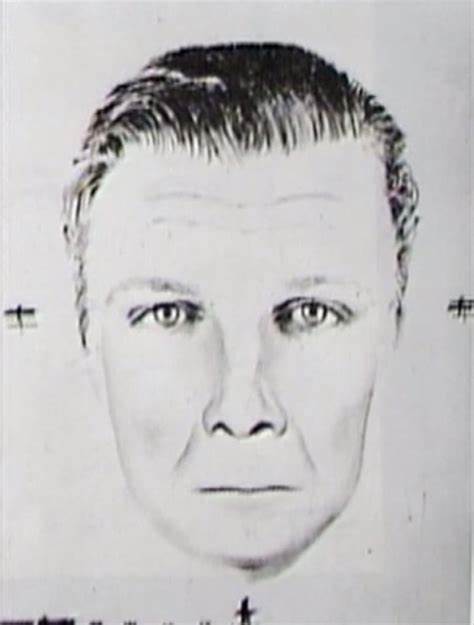
No obvious robbery motive explained the attack, and there were no indications that Moore had simply encountered a typical burglar. Witnesses reported seeing an unfamiliar young man in the area around the time of the homicide. Contemporary descriptions portrayed him as a dark-haired man, approximately in his twenties, with a somewhat stocky build and glasses. A composite drawing was produced during the investigation.
No one was charged with Moore's murder. Her case remains an unsolved Vermont homicide decades later.
Barbara Agnew
Barbara Agnew was a registered nurse who spent January 10, 1987, skiing with friends at Stratton Mountain in Vermont. Despite poor winter weather, she left that evening to drive home to Norwich.
She never arrived. Her green BMW was subsequently discovered at an Interstate 91 rest area in Hartford, Vermont. Blood was found inside the vehicle, including around the passenger compartment, and bloodstained personal belongings were recovered from a nearby trash container. The evidence indicated that something violent had happened after Agnew stopped at the rest area.
For more than two months, her location remained unknown. On March 28, 1987, her body was discovered in a wooded area near Advent Hill Road in Hartland, approximately a dozen miles from the rest area. Agnew had been repeatedly stabbed in the neck and chest. Defensive injuries indicated that she had fought her attacker.
Her disappearance beside Interstate 91 and the disposal of her body in rural Hartland strengthened fears that an offender familiar with the Connecticut River Valley's highways and back roads was targeting women traveling alone.
The Attack on Jane Boroski
The most important surviving witness in the suspected series is Jane Boroski. On August 6, 1988, the 22-year-old Boroski was seven months pregnant and returning from the Cheshire County Fair when she stopped near a closed convenience store in West Swanzey, New Hampshire.
A man approached Boroski and suddenly attacked her. During an extraordinary struggle, he stabbed her 27 times before leaving her critically wounded. Despite massive injuries, Boroski survived. Her unborn child also survived.
Boroski was able to give investigators a description of the attacker and information about his vehicle. Her account became one of the most valuable pieces of eyewitness evidence associated with the Connecticut River Valley investigation. A composite image based on the description of her attacker has circulated for decades.
No later murder has been definitively established as the work of the same attacker. The apparent end of the suspected series after Boroski survived has generated numerous theories. The killer could have died, moved away, been incarcerated for another crime, feared that Boroski had provided enough information to identify him, or simply stopped killing. None of those explanations has been proven.
Similarities Between the Cases
The theory of a serial killer developed from a combination of geographic and behavioral similarities rather than a single piece of evidence linking every crime. Several women disappeared while hitchhiking or traveling alone. Multiple victims were stabbed. Bodies were repeatedly found in secluded wooded locations, and some recovery sites were remarkably close to one another.
Claremont, Newport, Unity, Hartland, Westminster, and the highways running through the Connecticut River Valley appear repeatedly in the case histories. Route 12 and Interstate 91 provided convenient north-south travel through the region, while the surrounding countryside contained countless isolated roads, forests, riverbanks, and pull-offs.
If one offender was responsible for most of the murders, he apparently possessed substantial familiarity with the region. Some victims were left in places that could be reached relatively quickly from major roads while remaining concealed from ordinary traffic.
Were All of the Murders Connected?
The phrase "Connecticut River Valley Killer" can create the impression that police conclusively determined that one man committed all of these crimes. That is not the case.
New Hampshire's cold-case investigators continue to investigate the individual homicides and suspicious deaths, but authorities have publicly emphasized that the supposed connection between all of the cases has never been scientifically established. Solving even one of the murders could provide the evidence necessary to determine whether other cases truly belong to the same offender.
Some cases fit the suspected pattern better than others. The stabbing deaths, isolated body-recovery locations, Route 12 disappearances, and closely situated remains around Unity and Newport strongly fueled the serial-killer theory. Mary Elizabeth Critchley's cause of death, however, could not be determined, and Ellen Fried's exact cause of death was also undetermined because of the condition of her remains. These uncertainties make it important to distinguish popular attribution from proven responsibility.
Other Possible Victims
Over the years, additional unsolved murders in New Hampshire and Vermont have been discussed as possible Valley Killer crimes. These include the killing of teenager Joanne Dunham in 1968, the murder of Vermont teenager Heidi Martin in 1984, and the 1986 stabbing death of Steven Hill. Other names have also appeared in books, articles, online discussions, and independent investigations.
These possible connections remain speculative. Differences in victim type, cause of death, timing, and individual case circumstances make it unsafe to assume that every unsolved homicide occurring in the Connecticut River Valley during this period was committed by the same person.
Suspects and Michael Nicholaou
Numerous individuals have attracted investigative or public attention over the decades, but no one has ever been charged as the Connecticut River Valley Killer.
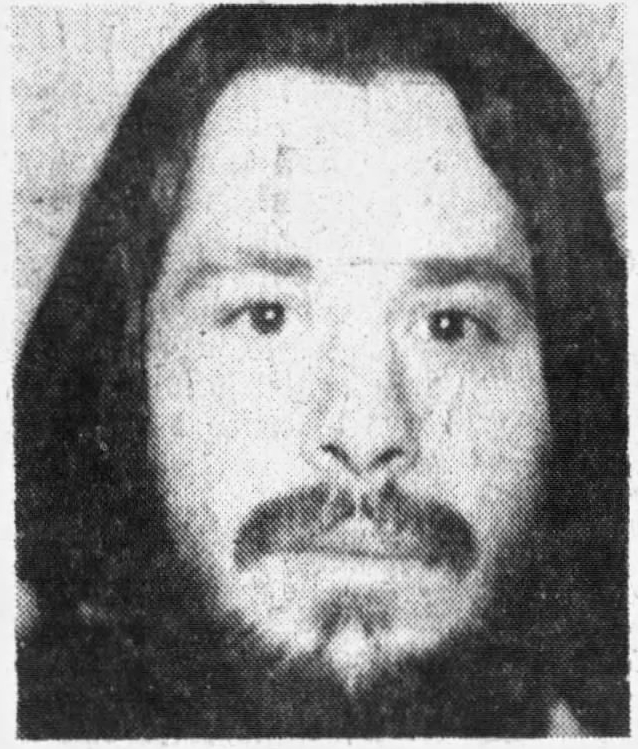
One of the most frequently discussed names was Michael Nicholaou. A private investigator suggested in the 2000s that Nicholaou might have been connected to the Valley murders. His personal history, movements, and violent behavior generated public interest after he killed his estranged wife and her daughter in Florida in December 2005 before killing himself.
The Nicholaou theory was never proven. No criminal charge connected him to any Connecticut River Valley homicide, and later statements from Jane Boroski cast significant doubt on the claim that Nicholaou was the man who attacked her. He therefore should be regarded as a proposed suspect rather than the identified Valley Killer.
Renewed Investigative Activity
The cases have not simply been forgotten. In May 2024, New Hampshire authorities conducted a court-authorized evidence search in the Kelleyville section of Newport, an area closely associated with several of the cold cases. Investigators did not publicly announce that the search had solved any of the murders, and officials warned against drawing premature conclusions from the operation.
Investigators continued revisiting individual cases afterward. In October 2025, the New Hampshire Cold Case Unit and New Hampshire Fish and Game personnel conducted another search in the New London area connected specifically to Catherine Millican's 1978 homicide. Authorities said the purpose was to locate potential physical evidence and apply modern investigative techniques to a crime that had remained unsolved for nearly half a century.
These searches demonstrate that investigators still consider the cases capable of producing new evidence. Advances in forensic science, DNA analysis, genealogical research, digital record reconstruction, and evidence testing have solved many murders once considered impossible to resolve.
An Unidentified Killer and an Unfinished Investigation
The Connecticut River Valley killings remain among New England's most enduring unsolved murder investigations. Seven women whose deaths or disappearances became associated with the suspected series left behind families who have spent decades without knowing who was responsible.
The surviving attack on Jane Boroski provided investigators with something most of the murder cases could not: a living eyewitness who had directly confronted the man trying to kill her. Even so, the attack did not produce an arrest, and the identity of her assailant has never been conclusively established.
Whether one murderer committed every traditionally attributed crime remains an open question. It is possible that a single offender traveled the highways and rural roads of the Connecticut River Valley for years, attacking women and using isolated sections of New Hampshire and Vermont to conceal his crimes. It is also possible that some of the murders now grouped under the Valley Killer name were committed by different people.
Until forensic evidence identifies an offender or investigators solve one or more of the individual homicides, the Connecticut River Valley Killer remains unidentified. The name represents not a convicted murderer with a known biography, but an unresolved theory connecting a disturbing collection of murders, disappearances, and one remarkable survival across the rural communities of New Hampshire and Vermont.