The Boca Raton Mall Murders
Overview
In 2007, a series of violent and brazen attacks originating at an upscale shopping mall terrorized the affluent community of Boca Raton, Florida. Over a ten-month period, an unidentified assailant targeted women at the Town Center at Boca Raton, culminating in the murders of three people: Randi Gorenberg-Gellman, Nancy Bochicchio, and her seven-year-old daughter, Joey Bochicchio-Hauser. The killer’s distinctive and cruel methods, which included the use of zip ties, handcuffs, and blacked-out goggles, linked two of the incidents with chilling certainty. Despite a massive investigation, a detailed eyewitness description, and a composite sketch, the killer has never been identified, leaving a legacy of fear and unanswered questions in South Florida.
The First Attack: The Murder of Randi Gorenberg-Gellman
The year of terror began on the afternoon of March 23, 2007. Randi Gorenberg-Gellman, a 52-year-old wife and mother of two, was last seen leaving the Town Center mall around 1 p.m. after a shopping trip. An hour and a half later, a 911 caller reported hearing gunshots and seeing a woman being pushed from the passenger side of a black Mercedes SUV in the parking lot of the South County Civic Center in nearby Delray Beach, about five miles from the mall.
The victim was Gorenberg-Gellman; she had been shot and killed. Her luxury SUV was found abandoned less than two miles away in the parking lot of a Home Depot. Her purse and cell phone were missing. Investigators from the Palm Beach County Sheriff's Office were left with a perplexing crime scene and little evidence to identify a suspect.
The Second Attack: A Survivor's Account
Four months later, on August 7, 2007, the attacker struck again at the same mall, but this time, the victims survived to provide the first clear description of him. A 30-year-old woman was returning to her own black SUV in the mall parking lot with her two-year-old son around 1 p.m. After she placed her child in his car seat, a man appeared and forced his way into the vehicle at gunpoint.
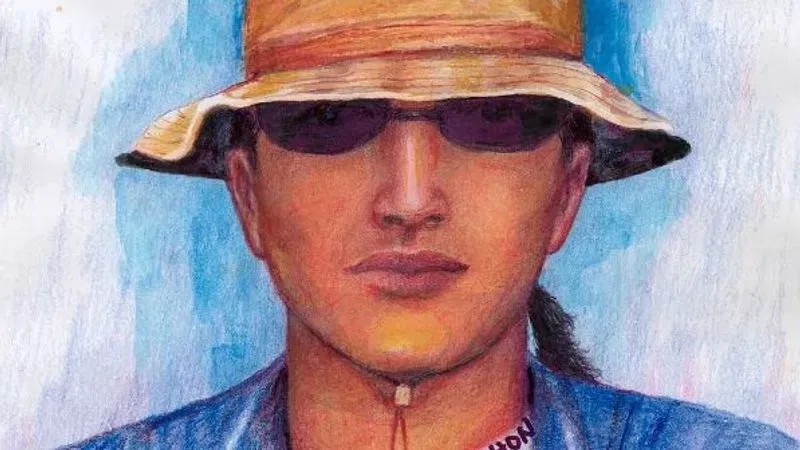
He was described as a white male, between 18 and 25 years old, with a slender build and long, shaggy brown hair. The assailant forced the woman to drive to a nearby ATM and withdraw $600. Throughout the ordeal, he used a chilling and specific method of control: he bound the mother and her young son with plastic zip ties and novelty-style handcuffs. He also forced them to wear blacked-out swimming goggles to prevent them from seeing where they were going or what he looked like. After getting the money, he drove them back to the mall's parking garage, where he abandoned them, still tied up but physically unharmed. The woman’s report to the Boca Raton Police Department provided investigators with their first tangible leads, including a composite sketch of the suspect.
The Third Attack: The Murders of Nancy and Joey Bochicchio
The final and most brutal attack occurred on December 12, 2007, just thirteen days before Christmas. Nancy Bochicchio, 47, a dedicated single mother, had picked up her daughter, seven-year-old Joey Bochicchio-Hauser, from school for a doctor's appointment before heading to the Town Center mall for some holiday shopping. Surveillance cameras captured them entering the mall between Sears and Neiman Marcus around 2:19 p.m. and leaving through the same doors at 3:11 p.m.
Minutes later, at 3:14 p.m., a 911 call was made from Nancy's cell phone but was disconnected before anyone spoke. A dispatcher’s attempt to call back went unanswered. Investigators believe that in these moments, the killer abducted Nancy and Joey in the parking lot. He forced Nancy to drive to a nearby ATM, where she withdrew $500.
Shortly before midnight, a mall security guard noticed Nancy’s black Chrysler Aspen SUV still running in the parking lot near Sears and called the police. Inside, officers discovered a horrific scene. Both Nancy and Joey had been bound with duct tape, zip ties, and handcuffs. At least one of them was wearing blacked-out goggles, just like the victims in the August abduction. Both mother and daughter had been shot to death at close range. The bindings on Nancy's wrists were broken, leading to speculation that she had fought back in a desperate attempt to protect her child.
The Victims
- Randi Gorenberg-Gellman, 52 — A wife and mother of two, she was killed on March 23, 2007. She was an active member of her community and synagogue in Boca Raton.
- Nancy Bochicchio, 47 — A single mother and stock analyst who ran her own business, she was murdered on December 12, 2007. Originally from New York, she was described as a hardworking and fiercely protective mother who dedicated her life to her daughter. Friends and family remembered her as tough on the outside but with a kind and generous heart.
- Joey Bochicchio-Hauser, 7 — Murdered alongside her mother on December 12, 2007, just five days before her eighth birthday. Joey was a second-grade student at St. Jude Catholic School. She was described as a bubbly, outgoing, and mature child who loved ballet, golf, and singing. She and her mother were inseparable, often described as being more like sisters than mother and daughter.
Investigation and Capture
The brutal murders of a mother and child sparked a massive investigation. On January 31, 2007, a joint task force was formed between the Boca Raton Police Department and the Palm Beach County Sheriff's Office to investigate the Gorenberg-Gellman and Bochicchio murders. The methods used in the Bochicchio murders and the August kidnapping were so similar that investigators were certain it was the same perpetrator. The items used to bind the victims—duct tape, zip ties, and blacked-out goggles—became the killer's calling card.
Evidence from the Bochicchio crime scene was extensive, with police collecting hundreds of items, including DNA samples. Nancy's purse, containing her credit cards and cell phone, was found discarded in Miami. Investigators later determined that the zip ties and duct tape used in the murders had also been purchased in the Miami-Dade area.
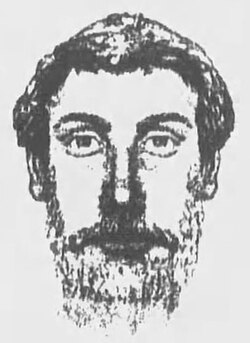
The composite sketch provided by the survivor of the August abduction was widely circulated, and the case was featured multiple times on "America's Most Wanted." A reward for information grew to $400,000. Despite thousands of tips, the identity of the man in the sketch remains unknown.
While police were confident about the link between the Bochicchio murders and the August kidnapping, the connection to the Gorenberg-Gellman case remained less certain. The task force was eventually disbanded, with each department pursuing its own investigation. The Palm Beach County Sheriff's Office noted differences in the Gorenberg-Gellman case, though some investigators, including a retired FBI agent who worked on the cases, believe one person is responsible for all three incidents.
Over the years, several potential suspects have been considered and ruled out, including serial killer Israel Keyes and Swedish convicted murderer Peter Mangs. As of today, the killer has never been caught.
Trial and Sentence
The perpetrator of the Boca Raton mall murders has never been identified, and therefore no one has ever been charged, tried, or sentenced for these crimes.
Aftermath and Legacy
The 2007 attacks left a lasting scar on the Boca Raton community and prompted significant changes. The Town Center mall increased its security presence, adding more surveillance cameras, patrols by off-duty police officers, and eventually a dedicated police substation on the property.
The victims' families have continued to advocate for justice. Nancy Bochicchio's sister, JoAnn Bruno, has made numerous public pleas for information, determined to fulfill a promise she made to her sister to find the killer. The murders also inspired the invention of a personal security device called 'Trax 24' after its creator was moved by the story of Nancy's disconnected 911 call.
The Boca Raton Police Department considers the Bochicchio case to be an active investigation. They have stated that as DNA technology evolves, the evidence is continuously re-evaluated, and they remain optimistic that a technological breakthrough will one day lead them to the killer. The case serves as a chilling reminder of the vulnerability of public spaces and the enduring pain of unsolved crimes.