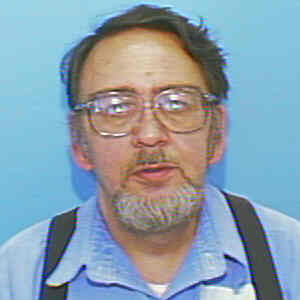
Dennis Ray Anderson
Overview
Dennis Ray Anderson was a Texas murderer whose known crimes stretched across nearly three decades. He was responsible for the January 5, 1972 killings of 54-year-old antique shop owner Mabel McCormick and her three-year-old granddaughter, Leslie Bowman, near Kountze, Texas. After receiving two life sentences, Anderson was paroled in 1989 after serving nearly 17 years. Years later, his wife, Stacie Lee Ann Lutz Anderson, disappeared in Houston. Her remains were eventually discovered concealed inside a metal barrel on Anderson's property in 2010. Anderson fled Texas and, shortly before taking his own life in Florida, left a written confession admitting that he had killed his wife.
Because Anderson killed victims during separate episodes many years apart, he is commonly classified as a serial murderer. Three homicide victims can be reliably connected to him: McCormick, Bowman, and Stacie Anderson. The exact date on which Stacie Anderson was killed has never been conclusively established, so no precise death date can responsibly be assigned to her.
The Kountze Antique Shop Murders
On January 5, 1972, Anderson and 21-year-old Fred Foy Young Jr. traveled to McCormick's Antique Shop, which operated from property along U.S. Highway 69 south of Kountze in Hardin County, Texas. Anderson was approximately 25 years old. Mabel McCormick lived at the property and operated the antique business there. With her that day was her three-year-old granddaughter, Leslie Bowman.
The men were not complete strangers to McCormick. Reports from the original investigation indicated that they had previously visited her shop. On the morning of the murders, McCormick reportedly told her husband that two men who had been there before had returned and were behaving suspiciously.
During the day, another man visited the business in connection with an insurance or freight claim. Anderson and Young were still present and showed him around the shop, and one of the men signed paperwork. The encounter later became important to investigators because it helped place the suspects at the property close to the time of the murders.
Murder of Mabel McCormick
Mabel McCormick, 54, was violently attacked inside her home and antique business on January 5, 1972. Contemporary accounts reported that she suffered repeated blows to the head from a ball-peen hammer and that her throat was cut. Anderson later pleaded guilty to her murder.
During subsequent court proceedings involving Fred Young, Anderson testified about the attack and accused Young of participating by helping restrain McCormick while Anderson assaulted her. Young disputed Anderson's version and testified that he saw Anderson strike McCormick but froze and did not participate in the killing. Whatever the precise division of responsibility between the two men, Anderson's own guilty plea established his criminal responsibility for McCormick's death.
Murder of Leslie Bowman
Three-year-old Leslie Bowman was also killed at the property on January 5, 1972. The child's murder became one of the most disturbing aspects of the case. In his eventual guilty plea, Anderson formally stipulated that he had participated with Fred Young in Leslie's murder by suffocating her and placing her head-first into a commode.
Testimony about who physically killed Leslie varied. Anderson attempted during Young's trial to place responsibility on Young, while Young denied killing the child and claimed he did not even know Leslie had been murdered until afterward. Anderson nevertheless pleaded guilty to Leslie Bowman's murder on February 19, 1973, accepting legal responsibility for her death and receiving another life sentence.
Robbery and Attempt to Destroy the Scene
The killings were connected to the theft of antiques from McCormick's business. Investigators reported that approximately $6,000 worth of antiques were taken, a substantial amount at the time. Anderson and Young used a rented green-and-silver truck to remove property from the shop.
An effort was also made to burn the property after the murders. Mattresses and other material inside the adjoining buildings were set on fire. Anderson later acknowledged setting fires in several rooms. The apparent objective was to destroy the property and potentially eliminate evidence of the robbery and killings.
Anderson also acknowledged during later testimony that he had previously been involved in at least three other antique thefts. Those thefts did not establish additional homicide victims, but they demonstrated that the visit to McCormick's business occurred within a broader pattern of stealing antiques rather than being an isolated encounter.
The Manhunt
After the bodies were discovered, authorities began searching for the two men and the rented truck. The investigation quickly grew to include the Hardin County Sheriff's Office, Texas Rangers, state authorities, local police agencies, aircraft from the Civil Air Patrol, and a Department of Public Safety helicopter.
Warrants were issued for Anderson and Young. Investigators located the rented truck and stolen antiques during a raid at a residence in Pearland, Texas, but Anderson and Young had already left. Authorities considered the possibility that they had fled to Mexico or another distant location.
The fugitives ultimately traveled to Puerto Rico. After communication involving a priest, arrangements were made for them to return. On January 14, 1972, Anderson and Young arrived at Houston Intercontinental Airport on a flight that had traveled through Atlanta. They surrendered to waiting law enforcement officers and were transported back to Hardin County, where they were jailed on murder charges.
Convictions and Life Sentences
The enormous amount of publicity surrounding the murders resulted in changes of venue. Proceedings involving McCormick's death were transferred to Bell County, while the prosecution involving Leslie Bowman's death was handled in Smith County.
On September 12, 1972, Anderson pleaded guilty to murdering Mabel McCormick and received a life sentence. On February 19, 1973, he appeared in court in Tyler and pleaded guilty to participating in the murder of Leslie Bowman. He received another life sentence.
Anderson was also convicted of crimes associated with the robbery and destruction of the McCormick property. Texas prison records showed a 1973 arson conviction carrying a 20-year sentence and a theft conviction carrying a 10-year sentence. Those sentences were served concurrently with his life sentences.
Despite receiving two life sentences, Anderson did not remain imprisoned for life. He maintained a relatively favorable institutional record, pursued education while incarcerated, and was credited with assisting prison personnel during a disturbance. On July 31, 1989, after serving nearly 17 years, Anderson was released on parole. He remained subject to lifetime parole supervision.
Life After Parole
Anderson eventually lived in the Houston area. Approximately eight years after his release, he married Stacie Lee Ann Lutz, who was more than two decades younger than he was. Stacie was about 30 years old when she disappeared in late 1999.
Her disappearance did not immediately produce a homicide investigation. Anderson did not report his wife missing. Members of Stacie's family apparently believed that she might have returned to California, where she had previously spent time. Years passed without her family knowing what had happened to her.
Murder of Stacie Lee Ann Lutz Anderson
The precise date and location of Stacie Anderson's murder remain undetermined. Investigators established that she disappeared in late 1999, and Anderson later admitted that he had killed her. In his written confession, he said that he strangled his wife and claimed that the killing occurred following accusations involving missing money and personal property.
After killing Stacie, Anderson concealed her body rather than reporting her death. Her remains were placed inside a 55-gallon metal barrel. The body was wrapped and secured inside the container, and the barrel was kept hidden for years. Investigators later learned that Anderson apparently moved the barrel containing his wife's remains when he changed residences, carrying evidence of the murder with him from one property to another.
The Body in the Barrel
Anderson's secret finally began to unravel in October 2010. On October 18, authorities received information through Crime Stoppers suggesting that a dead woman might be concealed inside a barrel at Anderson's residence in northwest Harris County.
On October 21, 2010, Harris County Sheriff's Office homicide investigators searched the property on Split Oak Court and discovered a rusty 55-gallon barrel that had been secured shut. Inside were the skeletal remains of a woman. The remains were wrapped and concealed within the container, which had apparently been kept for years.
At first, investigators did not know the woman's identity. Anderson became the focus of the investigation and was charged with tampering with evidence involving a human corpse. By that point, however, he had fled.
Flight and Confession
Anderson left the Houston area and traveled east by Greyhound bus, passing through Louisiana and eventually reaching Florida. Authorities considered him dangerous and began a multistate search.
On October 29, 2010, Anderson was found dead inside a motel room in Pensacola, Florida. He had taken his own life by hanging himself. He was 64 years old.
Investigators discovered a written note in which Anderson confessed to murdering his wife. He admitted strangling her and acknowledged that no one had known about the killing. His confession transformed the unidentified remains found in his yard from evidence associated with a suspected homicide into the remains of a victim whose own husband had admitted killing her.
Identification of Stacie Anderson
Identifying the woman in the barrel presented an unusual forensic challenge because of the amount of time the remains had been concealed. The breakthrough came through Stacie's identical twin sister, Tracie De Ann Lutz.
Tracie had herself been murdered in Houston in 1990 in a separate case that remained unsolved. Biological material preserved from Tracie's autopsy allowed forensic scientists to make a DNA comparison with the skeletal remains recovered from Anderson's barrel. In April 2011, the comparison established that the woman was Tracie's twin, Stacie Lee Ann Lutz Anderson.
Authorities classified Stacie's death as a homicide. Anderson's suicide confession stated that he had strangled her. There is no reliable evidence establishing a specific calendar date for Stacie's death, and investigators were unable to determine exactly where the murder occurred. Her disappearance in late 1999 provides the best-supported time period. Anderson has not been conclusively connected to the 1990 murder of Stacie's twin sister, and that killing should not be attributed to him without additional evidence.
Known Victims
- Mabel McCormick, 54 — Killed January 5, 1972, at her residence and antique shop along U.S. Highway 69 south of Kountze, Hardin County, Texas. She was beaten in the head with a ball-peen hammer and suffered a cut throat. Anderson pleaded guilty to her murder on September 12, 1972.
- Leslie Bowman, 3 — Killed January 5, 1972, at her grandmother Mabel McCormick's residence and antique business south of Kountze, Texas. Anderson's guilty plea stipulated that Leslie was suffocated and placed head-first into a commode. Anderson pleaded guilty to her murder on February 19, 1973.
- Stacie Lee Ann Lutz Anderson, 30 — Exact date and place of death undetermined; she disappeared in late 1999 while living in the Houston, Texas area. Anderson later confessed to strangling her. Her remains were recovered October 21, 2010, from a barrel at Anderson's residence on Split Oak Court in northwest Harris County and were positively identified in April 2011.
Legacy of the Case
Dennis Ray Anderson's criminal history is particularly notable because of the extraordinary gap between his known murders. The brutal killings of Mabel McCormick and Leslie Bowman in 1972 resulted in two life sentences, yet Anderson was released from prison in 1989. Roughly a decade later, Stacie Anderson disappeared, and her remains remained concealed for more than ten years.
The discovery of Stacie's body in 2010 reopened public scrutiny of Anderson's release and raised questions about what he had done during his years outside prison. His suicide prevented prosecutors and investigators from questioning him fully about Stacie's murder or exploring whether he might have been responsible for additional violent crimes.
What can be established is that Anderson was responsible for at least three homicides occurring during separate periods: the January 5, 1972 murders of Mabel McCormick and Leslie Bowman and the later murder of Stacie Anderson following his release from prison. The McCormick and Bowman killings were established through guilty pleas and convictions, while Anderson himself confessed in writing to strangling Stacie. No additional homicide victims should be attributed to Anderson without stronger evidence.
()
: https://www.beaumontenterprise.com/news/article/A-timeline-of-a-killer-from-Kountze-murders-to-816472.php "A timeline of a killer: from Kountze murders to woman in barrel"