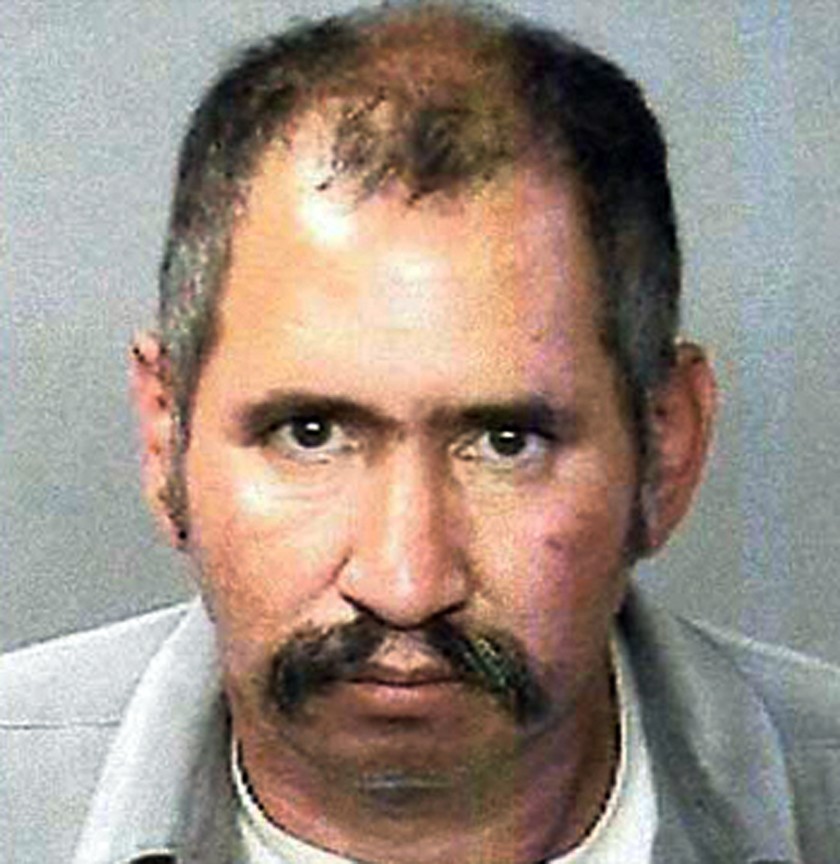
Lesley Eugene Warren: The “Babyface Killer”
Introduction
Lesley Eugene Warren was an American serial killer whose confirmed crimes stretched across New York, South Carolina and North Carolina between 1987 and 1990. Known as the “Babyface Killer” because of his youthful appearance, Warren used charm, familiarity and offers of assistance to gain the trust of his victims. Four women were conclusively connected to him, although he claimed responsibility for several additional killings that were never independently confirmed.
Warren’s murders did not follow a single geographical pattern. His movements through military service, trucking work and unstable personal relationships allowed him to encounter victims in several states. Strangulation was the recurring method in the four confirmed cases. He frequently attempted to conceal the bodies in water, isolated wilderness or vehicles, delaying their discovery and complicating the investigations.
Early Life and Violence
Lesley Eugene Warren was born on October 15, 1967, in Candler, North Carolina. His serious violent behavior began years before the confirmed murders. In 1982, when he was approximately 14 years old, Warren abducted a neighbor, Betty Pressley, and restrained her in the basement of his mother’s home. When one of Pressley’s friends discovered the situation and attempted to intervene, Warren shot the man with a revolver. The victim survived and freed Pressley.
Warren was arrested on October 4, 1982, and admitted his involvement. He was convicted as a juvenile of kidnapping and attempted murder and was sent to the Juvenile Evaluation Center in Swannanoa, North Carolina. During this period, he came into contact with counselor Jayme Denise Hurley, who would later become one of his murder victims.
After leaving juvenile custody, Warren joined the United States Army on April 4, 1986. He was eventually assigned to the 10th Mountain Division at Fort Drum, New York. His military record deteriorated because of unauthorized absences and other misconduct. He was later discharged from the Army and moved through New York, Pennsylvania, North Carolina and South Carolina while struggling with drug abuse, financial instability and troubled relationships.
The Murder of Patsy Diane Vineyard
Warren’s first confirmed victim was 20-year-old Patsy Diane Vineyard, the wife of another soldier stationed at Fort Drum. While her husband was participating in a military field exercise, Warren began spending time with her. On May 15, 1987, Warren and Vineyard went out together near Sackets Harbor, New York.
During the encounter, Warren sexually assaulted and strangled Vineyard. He then disposed of her body in the Black River. Approximately one month later, her remains were discovered floating in Lake Ontario. Warren was not immediately charged with her death, and the case remained unresolved while he continued moving between states.
After his eventual arrest in 1990, Warren admitted killing Vineyard. New York authorities considered him the principal suspect, but he was never prosecuted for the crime. Prosecutors reportedly decided against pursuing a separate trial after he received death sentences for murders committed in North Carolina.
The Murder of Velma Faye Gray
On August 26, 1989, 42-year-old Velma Faye Gray experienced a traffic accident several miles from her hometown of Travelers Rest, South Carolina. Warren, who was working as a truck driver, approached her under the appearance of offering assistance. Instead of helping her reach safety, he persuaded or forced her into his truck and drove her to an isolated wooded location.
Warren beat and strangled Gray before placing her body in Lake Bowen. Two fishermen later discovered her remains. Her abandoned vehicle was found in Greenville County, although investigators determined that another individual had stolen the vehicle after Gray’s disappearance and had no involvement in her murder.
The Gray investigation eventually connected Warren to a pattern of killings in several jurisdictions. He pleaded guilty to her murder in South Carolina in 1993 and received a life sentence.
The Murder of Jayme Denise Hurley
Jayme Denise Hurley was a 39-year-old former counselor and teacher at the Juvenile Evaluation Center in Swannanoa. She had known Warren when he was held there as a troubled juvenile. Years later, Warren reestablished contact with her and presented himself as someone in need of assistance.
On May 24, 1990, Warren arrived at Hurley’s residence and told her that he needed help. Hurley agreed to allow him to sleep on her couch. Late that evening, Warren attacked and strangled her inside the home. He removed her clothing and transported her body to a remote section of Pisgah National Forest.
Warren told his brother, Laron Warren, what had happened. His brother helped him move and bury Hurley’s body in a shallow grave in a rocky, isolated area approximately 210 feet from a paved road. Rocks and part of an engine were placed over the grave in an effort to conceal it.
Hurley’s family reported her missing after she failed to appear as expected. Her father informed investigators that Warren was believed to have been the last person with her. Police questioned Warren on May 28, 1990. Although he admitted seeing Hurley on May 24, he denied harming her. A search of his vehicle uncovered Hurley’s purse, but without a body or direct proof of murder, authorities initially charged him only with offenses connected to her property.
Warren was released on bail in June 1990. During the following weeks, he reportedly told family members that he had killed Hurley and Patsy Vineyard. His mother contacted police after hearing his admissions. Warren later fled while facing proceedings connected to Hurley’s stolen property. After his final arrest, he confessed and directed investigators to the area where Hurley had been buried.
The Murder of Katherine Noel Johnson
While fleeing the investigation surrounding Hurley’s disappearance, Warren traveled to High Point, North Carolina. On July 15, 1990, he attended a hotel employees’ picnic at Cedrow Park with acquaintances. There he met 21-year-old Katherine Noel Johnson, who worked part time in a hotel gift shop and was attending college.
During the gathering, Warren expressed his intention to leave with Johnson before the night was over. The group later visited a restaurant and a private residence. Warren and Johnson eventually departed together on his motorcycle. Warren took her to an isolated soccer field, where he sexually assaulted and manually strangled her. He also used her bra as a ligature.
After killing Johnson on July 16, 1990, Warren placed her body in the trunk of her automobile. He parked the car in a parking garage near the Radisson Hotel in downtown High Point and attempted to create the impression that she had remained at a motel and planned to attend class.
Police arrested Warren on July 20, 1990, while he was staying at the home of an acquaintance. Officers found keys to Johnson’s car in his possession. During questioning, Warren admitted killing her and revealed that her body was inside the trunk. Investigators located the car and found Johnson’s remains. Warren’s fingerprints and palm print were recovered from the vehicle, and Johnson’s shoes were discovered near the field where the attack occurred.
Confirmed Victims
- Patsy Diane Vineyard, 20 — Murdered on May 15, 1987, near Sackets Harbor, New York. She was sexually assaulted and strangled, and her body was placed in the Black River before being recovered from Lake Ontario approximately one month later.
- Velma Faye Gray, 42 — Murdered on August 26, 1989, near Travelers Rest and Lake Bowen, South Carolina. Warren approached after her traffic accident, took her to an isolated location, beat and strangled her, and disposed of her body in Lake Bowen.
- Jayme Denise Hurley, 39 — Murdered on May 24, 1990, at her residence in the Asheville and Swannanoa area of North Carolina. Warren strangled her and buried her body in a shallow grave in Pisgah National Forest.
- Katherine Noel Johnson, 21 — Murdered on July 16, 1990, in High Point, North Carolina. She was sexually assaulted and strangled at an isolated soccer field, after which her body was concealed in the trunk of her car in a downtown parking garage.
Additional Claimed Victims
Following his arrest, Warren claimed that he had committed four additional murders. These accounts were not supported by enough evidence to produce additional convictions, and the identities of the alleged victims were never conclusively established.
- “Mary” — Warren claimed that in August 1988 he killed a young Hispanic woman known only as Mary and buried her in a peach orchard near Campobello, South Carolina. No verified date of death, full identity or confirmed recovery of her remains has been established.
- “Ronald” — Warren claimed that during the summer of 1989 he killed a male hitchhiker named Ronald and buried him somewhere in Tennessee. Investigators were unable to confirm the victim’s identity or locate a body connected to the confession.
- Two unidentified men — Warren claimed that he killed two men during a drug transaction in Asheville, North Carolina, in 1989. No exact dates, identities or conclusively linked homicide cases were established.
Confession and Arrest
By July 1990, police agencies in North Carolina, South Carolina and New York were comparing their investigations. Warren’s connection to Hurley, his possession of her property, statements made to relatives and similarities among the strangulation cases caused investigators to view him as a possible serial killer.
After being arrested on July 20, 1990, Warren was transported to Asheville for questioning. He confessed to the murders of Hurley, Gray and Vineyard and then admitted killing Johnson. He provided information about the locations of the bodies and signed a statement detailing his responsibility. His cooperation gave authorities evidence connecting crimes that had previously been investigated in separate jurisdictions.
Warren attempted to minimize portions of his conduct. He sometimes claimed that Hurley had died from an accidental drug overdose, despite the prosecution’s evidence that she had been deliberately strangled. In other statements, he acknowledged assaulting and killing her. The physical evidence, his possession of her belongings, his admissions and the discovery of her concealed body supported the murder charge.
Trials and Sentences
Because Warren’s crimes crossed state lines, officials had to determine the order in which he would be prosecuted. He was first sent to South Carolina to face the charge involving Velma Gray. After being evaluated and found competent to stand trial, Warren pleaded guilty to Gray’s murder in 1993 and received a life sentence.
Warren was then returned to North Carolina. In February 1995, he pleaded guilty to the first-degree murder of Jayme Hurley. A jury considered the circumstances of the crime and recommended a death sentence. The court formally sentenced him to death on October 6, 1995.
In 1996, Warren was tried for Katherine Johnson’s murder. The prosecution presented his confession, physical evidence from Johnson’s automobile, testimony about his actions before and after the killing and evidence showing that he had attempted to conceal her body. The jury convicted him of first-degree murder based on premeditation and deliberation and recommended another death sentence.
New York officials continued to consider Warren the leading suspect in the murder of Patsy Vineyard. However, because he had already received a life sentence in South Carolina and two death sentences in North Carolina, New York did not bring him to trial for Vineyard’s death.
Pattern of the Crimes
Warren’s confirmed victims were women whom he could approach through familiarity, apparent romantic interest or an offer of assistance. Vineyard was the wife of a fellow soldier, Gray believed he was helping her after an accident, Hurley knew him from her work as a counselor, and Johnson met him through mutual acquaintances at a social gathering.
Strangulation was central to each confirmed murder. Warren also attempted to distance himself from the crimes by moving bodies and abandoning them in places where discovery might be delayed. Vineyard and Gray were placed in bodies of water, Hurley was buried in a national forest, and Johnson was locked inside the trunk of her automobile.
The crimes demonstrated planning both before and after the attacks. Warren isolated the victims, controlled the locations of the encounters and took steps to conceal evidence. In the Johnson case, he returned to an acquaintance’s home and offered a false explanation for Johnson’s absence. In the Hurley case, he removed her body from the residence and enlisted his brother’s help in hiding it.
Legacy of the Case
Lesley Eugene Warren was conclusively linked to four murders and convicted of three. His admissions raised the possibility that additional unidentified victims may have existed, particularly because his military service and work as a truck driver allowed him to travel extensively. Nevertheless, the four additional killings he described have never been confirmed with the same degree of evidence as the Vineyard, Gray, Hurley and Johnson cases.
The investigation showed the importance of cooperation among law-enforcement agencies in different states. Individual cases that initially appeared unrelated were ultimately connected through Warren’s relationships with the victims, his movements, his confessions and the repeated use of strangulation. His youthful appearance and ability to appear vulnerable or helpful allowed him to gain access to people who did not recognize the danger he presented until it was too late.