Thomas David Carr: The Civil War Veteran and Self-Confessed Serial Killer
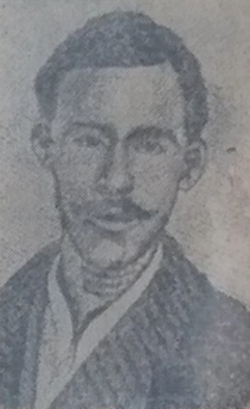
Thomas David Carr was a 19th-century American murderer whose violent history stretched from the Civil War era into the years immediately following the conflict. Born on March 6, 1846, in Virginia, Carr eventually became associated with Ohio and West Virginia and served in several Union Army units while still a young man. He was ultimately convicted and executed for the 1869 murder of 13-year-old Louiza Catharine Fox in Belmont County, Ohio. Before his execution, however, Carr claimed that Fox was only the last in a much longer series of killings. He confessed to involvement in the deaths of as many as fourteen men in several states, giving him a possible total of fifteen victims.
Carr's reputation as a serial killer depends heavily upon his own statements. Only the murder of Louiza Fox resulted in his conviction, and his claimed participation in the murder of Aloys Ulrich is connected to an independently documented homicide. Many of his remaining stories concerned unidentified soldiers and civilians killed during the confusion of the Civil War. Contemporary observers questioned portions of Carr's confession, and some details could not be reconciled with known evidence. He is therefore most accurately described as a self-confessed serial killer whose true victim count remains uncertain.
Early Life and Military Service
Carr was born Thomas David Carr on March 6, 1846. His family moved repeatedly during his childhood, eventually living in communities around what is now West Virginia and eastern Ohio. Accounts of his youth describe frequent fighting, disciplinary problems and early involvement in criminal behavior. Still a teenager when the Civil War began, Carr entered Union military service and served with several Ohio units during the conflict.
His military record was reportedly troubled. Carr was repeatedly punished for misconduct and later claimed that he had twice been condemned to be shot for violations of military regulations. Contemporary accounts even related that he had once been forced to dig what he believed would be his own grave before receiving clemency. Carr's years in the military also formed the basis of most of the murders to which he later confessed.
The Alleged Civil War Murders
Shortly before his execution, Carr described a succession of killings that he claimed occurred while he was moving through different states during the war. His stories involved civilians, Confederate soldiers, Union soldiers and other people he encountered while traveling. Exact dates and names were usually absent from Carr's accounts, making independent verification extremely difficult.
One of his earliest alleged victims was an unidentified civilian near Greenleaf Mountain in Virginia. Carr claimed that he had wandered away from his regiment and was drinking when the man attempted to arrest or detain him. Carr said he drew a firearm and shot the man in the chest. According to his confession, the victim survived the initial shooting but died the following day.
While Carr was reportedly a prisoner in Columbia, South Carolina, he claimed that he and two other Union soldiers killed a man named Edward Berringer. Carr said Berringer intended to join the Confederate military and that the three men strangled him. Berringer is one of the relatively few alleged victims Carr identified by name, although a reliable exact date for his death has not been established.
Carr also confessed to shooting two Confederate soldiers while serving in Mississippi. He claimed that one was killed while performing picket duty. Later, during the Battle of Franklin in Tennessee, Carr said he killed and robbed two more men. He offered few identifying details about them, and no reliable individual dates of death can be assigned to these unidentified victims solely from his confession.
In North Carolina, Carr claimed that he killed a Confederate sergeant near Wise's Forks after hiding behind a fallen or low-lying pine log. Carr said he subsequently took clothing from the dead soldier. In another incident, he claimed that a Union soldier placed under his guard attempted to escape and that Carr killed him. Carr identified the prisoner as belonging to the 84th Ohio Infantry, but aspects of his military stories have long been difficult to verify.
Carr further claimed that he participated with a group of soldiers in the robbery of a sutler's establishment in Petersburg, Virginia. According to his account, the shopkeeper was attacked and trampled or beaten to death during the raid. The victim's identity and an exact date have not been reliably established.
Other killings described by Carr allegedly occurred near Raleigh, North Carolina, and while he traveled between military locations. He said he shot a man attempting to enter a house he was guarding and claimed that he threw a waiter overboard from a steamer traveling between Morehead City and Fort Monroe after an argument over food. He also described a violent encounter in Baltimore in which a streetcar employee intervened during an argument over Carr's refusal to pay his fare. Carr claimed that he stabbed the employee, who subsequently died.
Another alleged incident occurred in Newark, Ohio. Carr said that after drinking whiskey he threw a bottle at a stranger standing near a railroad platform, striking the man in the head. Carr then supposedly jumped onto a passing train carrying soldiers and escaped. Whether the victim died exactly as Carr claimed has not been independently established.
The Murder of Aloys Ulrich
One of Carr's most significant confessions concerned the murder of German immigrant Aloys Ulrich in West Virginia. Unlike most of Carr's alleged victims, Ulrich was a real murder victim whose death and circumstances were independently documented. Ulrich was killed on June 29, 1867, along the Hempfield Railroad near Wheeling, West Virginia.
The principal killer was Joseph Eisele, who also used the name John Schaefer. Carr later claimed that he encountered Eisele in Wheeling after Eisele had arrived from Parkersburg. According to Carr, Eisele proposed murdering his traveling companion, Aloys Ulrich, and robbing him.
Carr claimed that as the men traveled along the railroad, Eisele attacked Ulrich with a hatchet. Carr said he also struck Ulrich with a stone before Eisele completed the killing. The killers then searched the victim's clothing and divided the stolen money. Carr said he received a share of the proceeds before separating from Eisele.
The Ulrich confession is important because it demonstrates both the potential truth and the problems contained in Carr's later statements. Ulrich unquestionably had been murdered, but investigators familiar with the case disputed part of Carr's description of the victim's injuries. Carr claimed to have seriously crushed Ulrich's head with a stone, while officials indicated that the physical evidence did not completely support that version. Carr's possible participation therefore remains based substantially on his own confession.
Louiza Catharine Fox
The crime for which Carr's guilt was established occurred in Belmont County, Ohio. Louiza Catharine Fox was only 13 years old and worked as a domestic servant for a family connected with Carr's employment as a coal miner. Carr became intensely interested in the girl and wanted to marry her despite their substantial age difference.
Accounts differ over whether Carr and Louiza had actually become formally engaged, but her family opposed the relationship. Carr reacted badly to the rejection. By January 1869, he had become increasingly determined to confront Louiza. He obtained a razor and waited along the route she traveled.
On January 21, 1869, Louiza was walking through the countryside with her younger brother Willie when Carr approached them. Carr sent the boy ahead so that he could speak privately with Louiza. The conversation centered on Carr's desire to marry her and the opposition of her family. When Louiza continued to reject the proposed marriage, the confrontation became violent.
Carr attacked Louiza with the razor, inflicting repeated cutting wounds to her neck and body. The injuries were fatal. Her younger brother was able to raise the alarm, and the killing quickly brought local residents into the area searching for Carr.
Louiza Catharine Fox died on January 21, 1869, in Kirkwood Township, Belmont County, Ohio, near the community of Sewellsville. Her gravestone records that she was 13 years, 11 months and 13 days old and specifically identifies Carr as her murderer.
Attempted Suicide and Arrest
After killing Louiza, Carr initially avoided capture and remained near the area. He later described watching people gather around the Fox residence and observing the aftermath of the murder. By the following morning, however, the search was closing in.
Carr attempted suicide by arranging a firearm so that he could shoot himself. The bullet entered his chest but failed to kill him. He then used the razor in another attempt to take his life, severely injuring his throat. Despite the wounds, Carr survived.
He was apprehended on January 22, 1869, one day after Louiza's murder. His injuries required treatment, but they did not prevent authorities from proceeding with the murder case.
Victims and Alleged Victims
- Louiza Catharine Fox — Died January 21, 1869, age 13. Murdered in Kirkwood Township near Sewellsville, Belmont County, Ohio. Carr was convicted of her murder.
- Aloys Ulrich — Murdered June 29, 1867, along the Hempfield Railroad near Wheeling, West Virginia. Carr later confessed that he assisted Joseph Eisele in the robbery and killing, although portions of Carr's account were disputed.
- Edward Berringer — Carr claimed that he and two other soldiers strangled Berringer while Carr was a prisoner in Columbia, South Carolina, during the Civil War. An exact verified death date has not been established.
- Unidentified Virginia civilian — Carr confessed to shooting a man near Greenleaf Mountain, Virginia. He claimed the man died the following day. The victim's identity and exact date of death remain unverified.
- Unidentified Confederate soldier — Carr claimed to have shot and killed a Confederate soldier while serving in Mississippi. The name, location within Mississippi and exact date have not been established.
- Unidentified Confederate picket — Carr confessed to killing another Confederate soldier while the man was performing picket duty in Mississippi. The victim's name and exact death date are unknown.
- Two unidentified men at the Battle of Franklin — Carr claimed that he killed and robbed two men during the Civil War battle at Franklin, Tennessee. Their identities and individual death records have not been verified.
- Unidentified Confederate sergeant — Carr claimed to have killed a Confederate sergeant near Wise's Forks in North Carolina and then taken clothing from the victim. The man's identity and exact death date remain unknown.
- Unidentified Union soldier — Carr claimed that he killed a soldier he had been assigned to guard after the prisoner attempted to escape. Carr associated the victim with the 84th Ohio Infantry, but the death has not been independently verified.
- Unidentified sutler or shopkeeper — Carr claimed that he participated with a group of soldiers in a raid on a sutler's shop in Petersburg, Virginia, during which the proprietor was killed. No reliable exact death date or victim name is known.
- Unidentified man near Raleigh — Carr claimed that while guarding a house near Raleigh, North Carolina, he shot and killed a man attempting to enter. The identity and exact date are unknown.
- Unidentified waiter — Carr claimed that he threw a waiter overboard from a steamer traveling between Morehead City, North Carolina, and Fort Monroe, Virginia. Carr included the episode among his violent acts, but the victim's identity and death have not been independently confirmed.
- Unidentified Baltimore streetcar employee — Carr said that during a dispute involving a streetcar in Baltimore, Maryland, he stabbed an employee who attempted to intervene. According to Carr, the man died soon afterward. His identity and exact date of death have not been established.
- Unidentified Newark victim — Carr claimed that he struck a stranger in the head with a bottle at a railroad platform in Newark, Ohio. The identity of the man and whether his death occurred exactly as Carr described have not been independently confirmed.
Trial and Death Sentence
Carr was prosecuted for the murder of Louiza Fox rather than for the numerous additional killings he would later claim. The physical circumstances surrounding Fox's death, the testimony connected to the crime and Carr's own conduct left little doubt about his responsibility.
In June 1869, Carr was convicted of first-degree murder and sentenced to death. His attorneys challenged the judgment, delaying the execution while appeals were considered. During his imprisonment, Carr again attempted to take his own life, but survived.
As his execution approached, Carr began describing his earlier violent acts in greater detail. His statements transformed what had appeared to be the case of a single murderer into the story of a man claiming to have killed repeatedly across several states during and after the Civil War.
The Question of Carr's Confessions
There are substantial reasons to treat Carr's claimed victim count cautiously. He generally did not provide precise dates, full names or enough identifying information to connect his stories with specific wartime casualties. The Civil War created an environment in which thousands of soldiers and civilians died under circumstances that were poorly documented, giving investigators little opportunity to confirm many of his claims years later.
At least one part of Carr's account was challenged by people familiar with the original evidence. His description of the injuries inflicted upon Aloys Ulrich did not completely match observations recorded during the investigation. Other statements Carr made about earlier criminal cases were contradicted by witnesses.
For these reasons, the frequently repeated total of fifteen victims should not be interpreted as fifteen independently proven murders. Louiza Fox is Carr's confirmed murder victim through his conviction. Aloys Ulrich was unquestionably murdered, but Carr's participation rests primarily on his later confession. The remaining deaths were largely claims made by Carr himself and cannot all be independently verified.
Execution
Thomas David Carr was executed by hanging at St. Clairsville, Ohio, on March 24, 1870. He was 24 years old. Contemporary accounts described him speaking publicly before his execution and blaming alcohol for much of the violence and criminal behavior that had shaped his life.
When the execution was carried out, the hanging did not immediately break Carr's neck. He died by strangulation after the trap was released and was pronounced dead by attending physicians. His execution became historically notable as the first legal execution carried out in Belmont County.
Legacy
Thomas David Carr occupies an unusual place in American criminal history. His confirmed murder of Louiza Catharine Fox was a deeply personal killing motivated by obsession and rejection, while the additional murders he described involved wartime violence, robbery, impulsive attacks and killings of strangers. If all of his confessions were true, his crimes stretched across Virginia, South Carolina, Mississippi, Tennessee, North Carolina, Maryland, West Virginia and Ohio.
Yet the uncertainty surrounding his confession is essential to understanding the case. Carr unquestionably murdered Louiza Fox and was legally executed for that crime. He also possessed information about the Aloys Ulrich murder and claimed personal involvement. Beyond those cases, however, historians are left with the words of a condemned man describing violent episodes that were often impossible to verify.
Louiza Fox remains the person most closely associated with Carr's name. Her death on January 21, 1869, is preserved in cemetery and local historical records, and her grave in Salem Cemetery became a lasting memorial to a child whose life ended shortly before her fourteenth birthday. Carr's execution fourteen months later closed the legal case, but his extraordinary confession ensured that questions about the true extent of his crimes would survive long after his death.